Melbourne Student Housing Decision Guide
Melbourne is home to RMIT University (ranked 125 globally) and hosts 137 student accommodation listings with a minimum weekly rent of AUD 219. This guide covers neighbourhoods organised by commute and budget, how RMIT’s campus connects to surrounding areas, three common renting pitfalls, a booking calendar for the 2026–2027 academic year, and four frequently asked questions. All prices are indicative — confirm with the operator.
Neighbourhoods by Commute and Budget
Melbourne’s student housing clusters around the central business district (CBD) and extends into inner suburbs served by trams, trains, and buses. Commute time to RMIT’s city campus (near Swanston Street) is the main factor when choosing an area.
Budget bands (weekly rent, indicative)
- Entry-level: AUD 219–350 – Shared houses or basic studio apartments in outer suburbs such as Footscray, Sunshine, or Brunswick West. Typical commute: 25–40 minutes by train or tram.
- Mid-range: AUD 351–499 – Private studios or one-bedroom units in Carlton, Fitzroy, Collingwood, or North Melbourne. Commute: 10–20 minutes by tram or walking.
- Premium: AUD 500+ – Modern studio apartments or en-suite rooms in purpose-built student housing within the CBD, Docklands, or Southbank. Walk to campus in under 15 minutes.
The 137 listings cover all three bands, with the lowest price at AUD 219 per week for a shared room in a suburban property. Listings in the CBD and Carlton tend to be around AUD 400–600 per week. Note that most listings are for single occupancy; shared room prices are lower but availability is limited.
High-frequency transport corridors
- Tram routes: 1, 3, 5, 6, 16, 64, 67, 72 run along Swanston Street, providing direct access to RMIT. Suburbs like Fitzroy (route 11), Carlton (route 1), and Southbank (route 1 or 58) are well connected.
- Train lines: The Craigieburn, Sunbury, and Werribee lines stop at Melbourne Central or Flagstaff stations, both within a 10-minute walk of RMIT. Outer suburbs along these lines (e.g., Reservoir, Coburg) offer cheaper rents but longer commutes.
- Bus routes: Less frequent but useful for areas without train stations, such as parts of Brunswick East or Kensington.
Neighbourhood quick reference (indicative rent per week)
- CBD – AUD 350–700. Direct walk to RMIT. High density of purpose-built student housing. Noise levels can be high.
- Carlton – AUD 300–550. Student hub, close to RMIT and the University of Melbourne (other institutions). Many terrace houses converted into shared flats. Lygon Street has restaurants and cafes.
- Fitzroy / Collingwood – AUD 280–500. Trendy, with cafes and nightlife. Tram ride 10–15 minutes. Older housing stock, but more character.
- Brunswick / Brunswick East – AUD 250–400. Popular with students, 20–30 minutes by tram. Mix of shared houses and modern apartments. Good food scene.
- Southbank / Docklands – AUD 400–700. Modern high-rise apartments, river views, walkable to campus in 20 minutes or short tram ride. Generally quieter but more expensive.
- Footscray / Sunshine – AUD 219–350. Cheaper options, 25–40 minutes by train. Multicultural neighbourhoods with affordable groceries.
- North Melbourne / West Melbourne – AUD 280–450. Residential area near the CBD, 15–25 minutes by tram. Mostly houses and low-rise apartments.
RMIT University and Its Surrounding Areas
RMIT University’s main campus is in the Melbourne CBD at the corner of Swanston and La Trobe Streets. The campus is integrated into the city grid, with buildings spread across several blocks. Because RMIT does not have a single gated campus, students typically live within walking distance or along tram lines.
How the university maps to residential areas
- Immediate vicinity: The CBD itself is the most convenient option. Student accommodation on Swanston Street, Elizabeth Street, or A’Beckett Street places you within a five-minute walk of lecture theatres. Many purpose-built student residences are concentrated here.
- Carlton and Fitzroy: These neighbourhoods border the campus to the north and east. Carlton is dominated by students from RMIT and other nearby universities, so cafes, libraries, and budget supermarkets are abundant. Fitzroy offers a mix of student housing and creative spaces.
- Southbank: Across the Yarra River, Southbank is about a 15-minute walk via the pedestrian bridge near Flinders Street Station. While slightly more expensive, it provides a quieter living environment and easy access to the Arts Precinct.
- Northern suburbs: Brunswick, Coburg, and Thornbury are connected by the Upfield train line (stop: Jewell or Brunswick) or by tram route 19. These areas are more affordable and have a strong student community, but the commute can exceed 30 minutes.
No other specific universities are listed in the data for this guide, but the patterns above apply to any student attending RMIT. Note that some areas (e.g., Clayton) are associated with other institutions not covered here.
Typical rental lengths
Most student housing in Melbourne is leased on 6-month or 12-month agreements, with the academic year starting in late February (Semester 1) and late July (Semester 2). Some purpose-built properties offer semester-long contracts, especially for international students. Always confirm the lease start date and whether it aligns with your course intake.
Three Common Pitfalls for Student Renters in Melbourne
1. Underestimating the upfront costs
In addition to the first month’s rent, landlords and agents typically ask for a bond (usually four weeks’ rent) and sometimes a letting fee. Purpose-built student housing may require a holding deposit equal to one or two weeks’ rent. Many students arrive with limited funds and are caught off guard by these upfront payments. Budget for at least AUD 2,000–3,000 in initial costs even for a low-budget room.
2. Signing a lease without inspecting the property
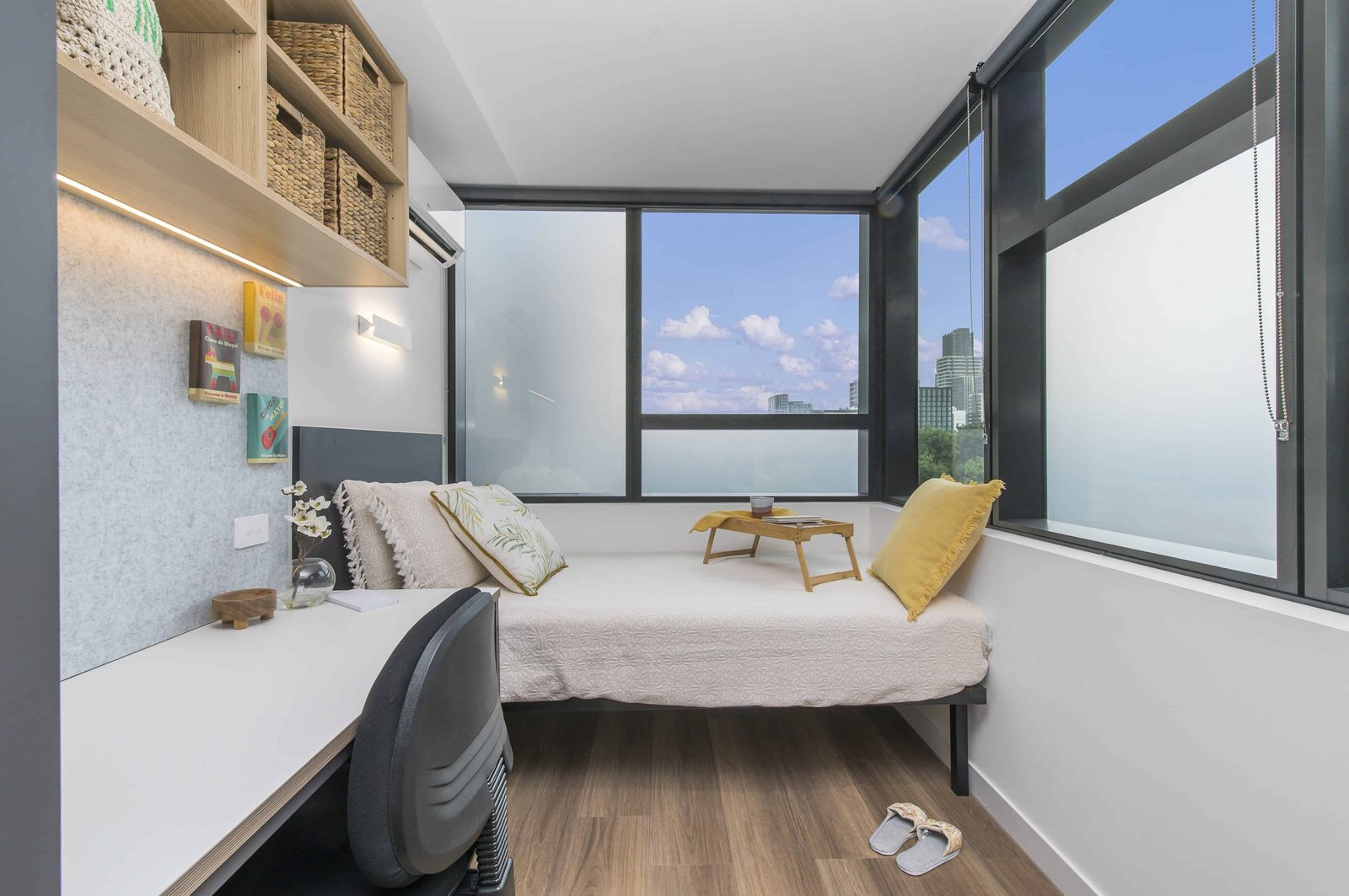
Renting sight-unseen is risky. Photos can be outdated, and “shared accommodation” may mean a living room converted into a bedroom. If you cannot visit in person, request a live video tour and ask for clear images of the kitchen, bathroom, and common areas. Check the condition of appliances, windows, and locks. Some listings are for entire apartments shared among multiple tenants — clarify whether the rent is per room or per person, and whether utilities are included.
3. Ignoring the tram zone system
Melbourne’s trams operate in a zoned fare system (Zone 1, Zone 2, or both). Many student neighbourhoods like Brunswick and Coburg are in Zone 1+2 overlap, meaning a Myki pass covers both zones. However, if you live further out (e.g., Sunshine or Footscray), you may need a Zone 2 pass only. The annual cost difference between a Zone 1 and a Zone 1+2 pass is around AUD 300–400. Factor this into your commute budget — sometimes a slightly higher rent in Zone 1 saves you money on transport.
Booking Calendar for 2026–2027
The student housing cycle in Melbourne peaks around November to February for Semester 1 (starting late February 2026 or 2027). Semester 2 intake (starting late July) sees a smaller peak in May to July.
Key timeline for the 2026 academic year
- October 2025 – January 2026: Most purpose-built student residences open bookings for the upcoming year. Early-bird discounts may be available. Listings on the platform are updated regularly.
- February 2026: Last-minute availability, but prices may be higher and choices limited. Move-in dates typically align with orientation week (mid-February).
- March 2026 – April 2026: Semester 1 underway. Very few vacancies in popular properties. Mid-year lease starts are possible if you plan to come in July.
- May 2026 – June 2026: Listings for July 2026 intake appear. Similar pattern: early booking gives more options.
- July 2026 – August 2026: Semester 2 starts. Last-minute rooms exist but are often in less desirable locations.
For the 2027 academic year, the same pattern applies: start searching from October 2026. Book 4–6 months ahead to secure your preferred neighbourhood and price range. If you need a short-term rental (e.g., 3 months), purpose-built studios or serviced apartments are more flexible, but expect higher per-week rates.
Important dates to check
- RMIT orientation weeks usually fall in the third or fourth week of February. Move-in at least one week before orientation to settle in.
- Semester break in June–July may allow you to switch properties if your lease is ending.
- Some landlords require notice of 30 or 60 days to vacate. Plan accordingly to avoid overlapping rent payments.
Frequently Asked Questions
What is the cheapest student accommodation in Melbourne?
The lowest listed price among the 137 properties is AUD 219 per week, typically for a shared room in an outer suburb like Footscray or Sunshine. This price is indicative — confirm the exact costs (including utilities) with the operator. Cheaper options may exist off-platform but often involve longer leases or substandard conditions.
How long does it take to commute from Brunswick to RMIT?
By tram (route 19 or 11), Brunswick to RMIT takes about 20–30 minutes depending on your exact stop. By train (Upfield line to Melbourne Central), the journey is around 15–20 minutes plus walking. Brunswick is a popular student area with rents starting around AUD 250 per week for shared housing.
Can I get a 6-month lease for student housing in Melbourne?
Yes. Many purpose-built student accommodation providers offer 6-month contracts, and some even offer semester-long leases (around 5–6 months). Private landlords may be less flexible but can sometimes negotiate if you pay slightly higher rent. Always ask before signing.
Are utilities included in the indicative rent prices?
Inclusion varies. Purpose-built student housing often includes electricity, water, gas, and internet in the weekly fee. Shared houses and apartments rarely include utilities — expect to pay an additional AUD 20–50 per week depending on usage and season. The platform listing should state what is covered; if unclear, confirm with the operator.
Data as of early 2026 for the 2026–2027 academic year. All prices are indicative — confirm with the operator.
See also: listing details · browse more