United States Student Housing: Market Structure, Price Map, and Planning Guide
The United States student housing market is one of the largest and most diverse in the world. According to platform data, the directory includes 1,454 student housing properties across 135 cities, serving students affiliated with 98 universities. This scale reflects both the size of the U.S. higher education system and the variety of accommodation options available to international and domestic students. Understanding how this market is structured, what rents look like in different cities, and what contract norms apply can help you make an informed choice. This overview covers the market structure, a price map based on typical city tiers, deposit and lease norms, and a five-step planning process. All prices mentioned are indicative — confirm with the operator.
Market Structure: Three Main Segments
The U.S. student housing market can be divided into three broad categories:
-
On-campus dormitories – Owned and operated by universities. Usually the most convenient option, with meal plans and built-in community. However, availability is often limited for upper-year and international students, and costs can be comparable to off-market rentals.
-
Private rental apartments and houses – The largest segment by number of beds. Students lease directly from private landlords, often in multi-bedroom apartments or single-family homes near campus. Leases are typically 12 months, and students are responsible for utilities and internet.
-
Purpose-built student accommodation (PBSA) – Professionally managed buildings designed specifically for students. These offer furnished rooms, on-site amenities (gym, study lounges, laundry), and all-inclusive rent (utilities, Wi-Fi). PBSA is the fastest-growing segment in major college towns and big cities. The 1,454 properties in the directory are mostly PBSA or student-focused private rentals.
The distribution of properties across 135 cities suggests a highly dispersed market. While large cities like New York, Los Angeles, and Boston have many options, smaller college towns (e.g., Ann Arbor, MI; Madison, WI; College Station, TX) also have a significant number of purpose-built properties. The 98 universities referenced in the data indicate that the directory covers most major public and private institutions, but not every university in the country.
City Price Map: What Students Can Expect
Because the U.S. is geographically large and cost of living varies dramatically, student housing rents span a wide range. The following city tiers are based on typical market observations and should only be used as a rough guide. Confirm current prices with the operator, as rates change with demand, season, and lease terms.
-
Tier 1 – High-cost metro areas (e.g., New York City, San Francisco, Los Angeles, Boston, Washington D.C.)
Monthly rent for a private room in a shared apartment or PBSA: usually between $1,500 and $2,500. Studios or one-bedroom units can exceed $3,000. These cities have high demand and limited supply near universities. -
Tier 2 – Mid-cost cities and large college towns (e.g., Chicago, Seattle, Philadelphia, Austin, Berkeley, Ann Arbor, Madison)
Rent for a private room: typically $900 to $1,600 per month. Studios range from $1,200 to $2,000. These cities offer a mix of on-campus, private, and PBSA options. -
Tier 3 – Affordable college towns and smaller metros (e.g., Urbana-Champaign, IL; Gainesville, FL; Athens, GA; Bloomington, IN; Raleigh, NC)
Rent for a private room: often $500 to $900 per month. Utilities may be separate. These locations generally have lower overall living costs and more budget-friendly housing. -
Tier 4 – Very low-cost rural or suburban campuses (e.g., Stillwater, OK; Lubbock, TX; Manhattan, KS)
Rent can be as low as $350 to $600 per month for a private room. Many students also choose to share houses for even lower costs.
Keep in mind that “off-campus” does not always mean cheaper. In some college towns, PBSA rent includes all utilities, gym access, and furnished rooms, which can be more convenient than traditional apartments where you pay for electricity, gas, water, and internet separately. Always compare the total monthly cost, not just the base rent.
Contract and Deposit Norms
Lease agreements in the U.S. follow a fairly standardized pattern, but there are important differences depending on whether you rent through a university, a private landlord, or a PBSA operator.
-
Lease length: Most leases are for 12 months (August/September to July/August). Some operators offer shorter terms (e.g., 9-month academic year or 6-month semester), but these are less common and often come with a premium. Month-to-month options exist but are usually more expensive.
-
Deposit: Typically one month’s rent, refundable at the end of the lease if no damages occur. Some PBSA operators offer “zero-deposit” options for an extra fee or require a security deposit of $500–$1,000. Confirm the exact amount and terms before signing.
-
Guarantor requirement: International students without a U.S. credit history or co-signer are often required to pay the first term’s rent upfront or use a third-party guarantor service (e.g., The Guarantors, Rhino). Some PBSA operators accept a larger deposit in lieu of a guarantor.
-
Utilities: In PBSA, utilities (electricity, water, gas, internet) are usually bundled into the rent. In private rentals, you are typically responsible for setting up and paying for utilities separately. Always ask which utility costs are included and which are not.
-
Roommate matching: Many PBSA properties offer individual leases (per-bedroom contracts) with roommate matching. This means you are only responsible for your own rent, even if a roommate moves out. This is a major advantage over joint leases common in private rentals, where all tenants are jointly liable.
-
Cancellation policy: Most leases have a strict policy. If you need to cancel before move-in, you may lose your deposit or owe a cancellation fee (often one month’s rent). Read the clause carefully; some operators allow cancellation before a certain date with a fee.
-
Move-in inspection: Always do a detailed walkthrough and take date-stamped photos of any existing damage. Submit a written condition report to the landlord within the first 48 hours. This protects your deposit.
Five Steps to Plan Your Student Housing in the U.S.
Planning ahead is critical because the U.S. market moves quickly, especially in popular cities. Here is a step-by-step guide.
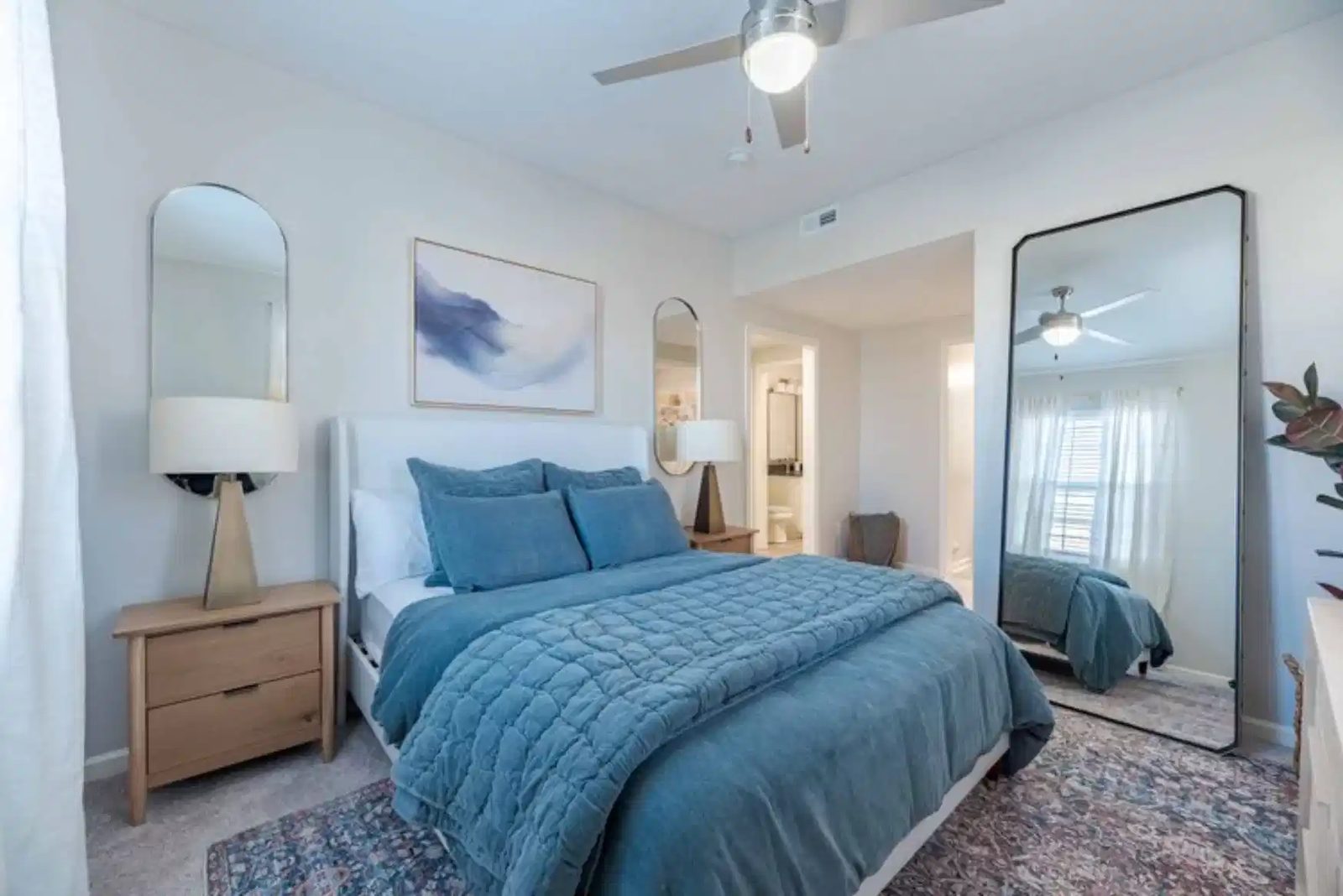
Step 1: Define your priorities and budget
Start by listing your must-haves: location (walking distance to campus, access to public transit), budget (total monthly cost including utilities), room type (private room, studio, single bedroom in a shared apartment), and amenities (gym, laundry, parking). For the 2026/2027 academic year, set a realistic budget with a buffer of at least $200 per month for unexpected costs. Use the indicative price map above as a starting point, but verify with current listings.
Step 2: Start research 4–6 months before move-in
Many PBSA operators begin releasing rooms for the next academic year in December or January. Private rentals often become available 2–3 months before the lease start. Use the platform to filter by city, property type, and price. Look at at least five properties to gauge the range. Note that some properties may already be fully booked by March or April for August move-in.
Step 3: Compare lease terms and total cost
For each property, calculate the true monthly cost: rent + utilities (if not included) + any amenity fees + parking fees. Check whether the lease is per-bedroom or joint. If you plan to live with friends, a joint lease may be cheaper, but it carries the risk of joint liability. Read reviews from past tenants if available, but be aware that individual experiences vary.
Step 4: Secure housing early – with caution
Once you find a suitable property, apply as soon as possible. You will need to provide proof of enrollment (e.g., acceptance letter, I-20), a copy of your passport, and financial documentation. Some operators require a credit check or a deposit to hold the room. Never send money without a signed lease and a clear receipt. Use a secure payment method. If possible, ask a current student or friend to visit the property in person or arrange a virtual tour.
Step 5: Prepare for move-in and manage your lease
After signing, pay the first month’s rent and deposit as required. Confirm move-in date and procedures (key collection, check-in time). Set up your utilities if needed. Upon arrival, inspect the unit and document any pre-existing issues. Join any tenant portal to pay rent online and submit maintenance requests. Keep copies of all documents. Before the lease ends, follow the move-out instructions to ensure a full deposit refund.
Frequently Asked Questions
Q: Do I need a U.S. guarantor to rent student housing?
A: It depends on the operator. Many PBSA operators accept international students without a U.S. co-signer if you provide proof of enrollment and financial capacity (e.g., bank statements or scholarship letters). Some may require an upfront payment of a full semester or year’s rent. Private landlords often demand a guarantor, but you can use a third-party guarantor service for a fee (typically one month’s rent). Always ask about the specific policy before signing.
Q: What is the typical lease start date for student housing in the U.S.?
A: The most common lease start date is August 1st or September 1st, aligning with the fall semester. Some properties offer flexible start dates in June or July for summer programs. If you need housing for a spring semester (January), you may find fewer options, but many PBSA properties offer renewal or sublet opportunities. Confirm with the operator for the 2026/2027 academic year.
Q: Can I cancel my lease if my visa is denied?
A: Some PBSA operators have a visa-denial clause that allows you to cancel with a full refund of deposit and prepaid rent if you provide official documentation of denial. This is not universal, so you must check the cancellation policy before signing. Without such a clause, you may be liable for the lease even if you cannot enter the country. It is wise to purchase travel insurance that covers visa-related cancellations.
Q: How do I pay rent if I am an international student without a U.S. bank account?
A: Most platforms and operators accept international wire transfers, credit cards (with a processing fee), or online payment services like Flywire or TransferWise. Some allow you to pay through a tenant portal using a foreign bank card. Open a U.S. bank account after arrival to avoid high transaction fees. Check the payment methods offered by the specific property before committing.
Data Date
This article uses data available as of March 2026. Prices, property availability, and contract terms are subject to change. Always confirm the latest information directly with the housing operator.
See also: listing details · browse more