Market Structure: How Student Housing Works in Singapore
Singapore is a city-state with a single urban market for student accommodation. According to the platform’s dataset, it lists 129 student housing properties across the country, serving 4 major universities. Because the entire nation is effectively one city, the housing landscape is dense and competitive.
The market splits into three broad categories:
- University-operated halls and residences – Each of the four universities (National University of Singapore, Nanyang Technological University, Singapore Management University, Singapore University of Technology and Design) offers its own on‑campus or affiliated housing. These are typically the first choice for first‑year students and come with meal plans or shared facilities. Allocation is often lottery‑based, and international students usually have a separate quota.
- Private purpose‑built student accommodation (PBSA) – This is the segment most represented on the platform. These are commercially run buildings designed for students, offering single or shared rooms with common areas, study lounges, gyms, and sometimes inclusive utilities. They are located near university campuses or within a short public‑transport ride. The 129 listings include a mix of PBSA operators.
- HDB flats and private condominiums – Some students rent HDB (public housing) rooms or entire condos, either directly from landlords or through agents. This option can be cheaper than PBSA but requires more legwork, and contracts are typically less standardised. The platform does not generally list these DIY rentals; it focuses on managed student properties.
The market is heavily concentrated geographically. Most properties are in the central and southern parts of the island – Clementi, Jurong East, Novena, Newton, and the city centre – because that is where the universities are located. University‑owned accommodation tends to be inside or immediately next to the campus, while PBSA properties cluster within a 20‑minute commute.
Because there is only one city, there is no “inter‑city” price differential the way you would see in a large country. Instead, prices vary by proximity to campus, property age, room type, and included amenities. The platform’s 129 listings cover a wide range: from dorm‑style rooms with shared bathrooms to studios with private kitchens. All prices shown are indicative — confirm with the operator before booking.
City Price Map: What to Expect Across Singapore
Given that Singapore is a single city, a “price map” is really a neighbourhood‑by‑neighbourhood guide. The dataset does not provide exact average rents, but the distribution of the 129 properties across the island gives a sense of where student accommodation clusters and how pricing tends to behave.
High‑cost zones (generally > SGD 1,500 per month for a single room)
- Newton / Novena / Bukit Timah – Close to the city centre and several university campuses (NUS and SMU). Many PBSA projects are here. A single en‑suite room often starts around SGD 1,800.
- City centre / Downtown Core – Near SMU. Studios can go above SGD 2,200. These are premium locations with immediate access to shopping, dining, and transport.
Mid‑range zones (SGD 900–1,500 per month for a room)
- Clementi / Dover – Adjacent to NUS. The area has a large stock of PBSA and HDB rentals. A twin‑sharing room may fall into this range.
- Jurong East – Close to NTU. Purpose‑built accommodation here tends to be slightly cheaper than the central corridor because the campus is farther from the city.
- Geylang / Aljunied – Farther from the universities, but accessible by MRT. Some budget PBSA exists.
Lower‑cost zones (under SGD 900 per month, usually twin‑share or HDB room)
- Choa Chu Kang / Woodlands / Tampines – These are suburban areas. Few PBSA options exist; most student housing here is university‑affiliated halls or private HDB sublets. Commute times to NUS/NTU can be 45–60 minutes.
Because the dataset is limited to 129 properties, it does not include every rental transaction in Singapore. The prices quoted are indicative — confirm with the operator. Many PBSA operators adjust rates term‑by‑term, and early‑bird discounts are common for contracts signed before May.
Contract and Deposit Norms in Singapore
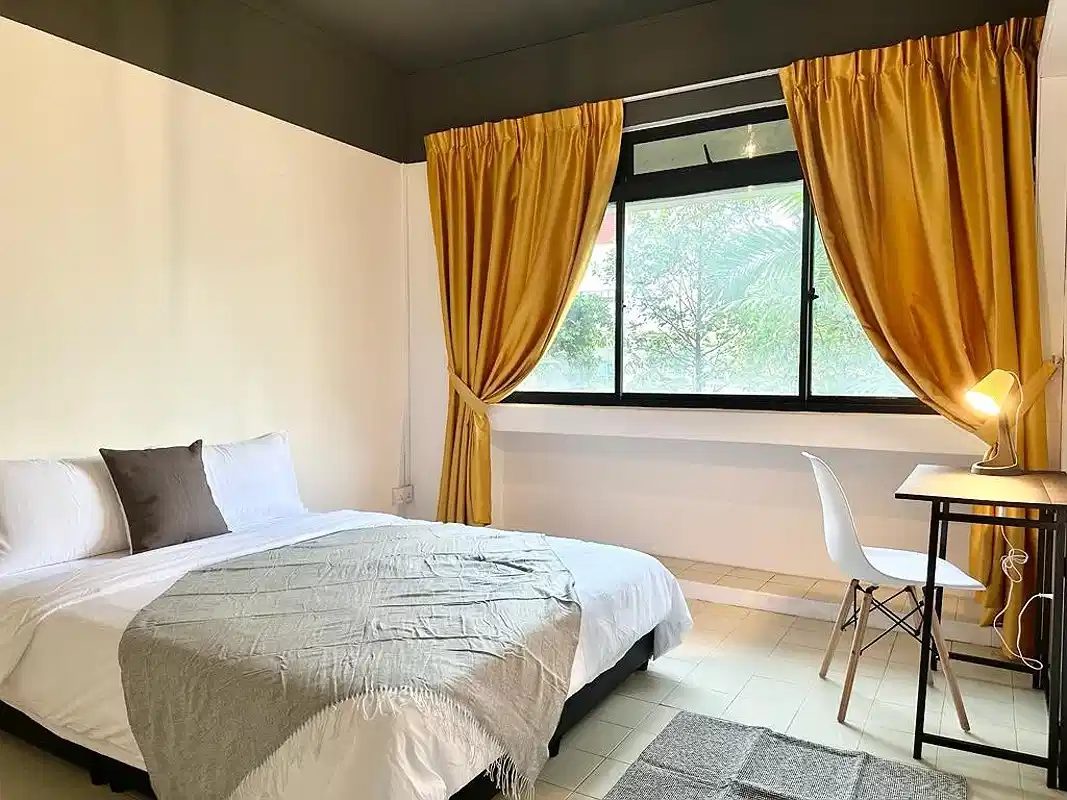
Student housing contracts in Singapore follow standard lease practices, with some adaptations for the academic calendar.
Tenure length
- Most PBSA contracts run for 6 or 12 months, aligned with semesters. Some offer shorter “summer” stays (2–3 months) for exchange students, but these are less common and often at a premium.
- University halls typically require a full academic year (August to May). Early termination is usually not allowed, or penalties apply.
Deposit
- Standard deposit is one month’s rent for most purpose‑built accommodation. Some operators ask for two months if you are a foreigner without a Singapore guarantor.
- Deposits are refundable within 2–4 weeks after check‑out, subject to inspection for damages and return of keys.
- Always take photos of the room condition upon move‑in and keep a copy of the inventory list.
Additional fees
- Administration fee: Some PBSA charge a non‑refundable booking fee (SGD 100–300) to reserve a room.
- Utilities: In many PBSA, utilities (electricity, water, internet) are included in the rent. If not, expect to pay separately – roughly SGD 80–150 per month depending on usage.
- Stamp duty: For private leases, tenants pay a nominal stamp duty (0.2% of total rent) on the signed tenancy agreement. This does not apply to most PBSA contracts because they are service‑style agreements rather than pure leases.
Guarantor requirements
- PBSA often waive the need for a local guarantor if you pay the full contract amount upfront. Some accept a higher deposit (two months) instead.
- University halls usually require a parent or guardian to co‑sign, but they are more flexible with international students.
Early termination
- If you leave before the contract ends, you are typically liable for the remaining rent until a replacement tenant is found, plus a penalty (often one month’s rent). Read the clause carefully.
All contract terms should be provided in writing. The platform lists property policies, but confirm directly with the operator before signing.
5 Planning Steps for Securing Student Housing in Singapore
Step 1: Confirm your university and campus location
Because Singapore is small, your choice often comes down to which campus you will attend most frequently. NUS has two main campuses (Kent Ridge and Bukit Timah); NTU is in Jurong West; SMU is in the city; SUTD is in the east (Changi). Check your faculty’s location — some courses may be at multiple sites. A property that is 10 minutes from NUS may be an hour from SMU.
Step 2: Set your budget and room type
Using the platform’s 129 listings, filter by price range. Be realistic:
- Single room with attached bathroom (en‑suite) typically costs SGD 1,200–2,200 per month.
- Twin‑share room (shared with one other) is SGD 600–1,000 per month.
- Studio apartment (private kitchen and bathroom) can exceed SGD 2,500.
- University hall rates are subsidised but limited in availability; they often cost SGD 400–800 per month for a shared room.
Remember to include other costs: utilities (if not included), food, transport, and the initial deposit. All prices are indicative — confirm with the operator.
Step 3: Shortlist properties by commute time
Singapore’s MRT is efficient, but a 40‑minute ride each way adds up. Use the platform’s location tool to see properties within a 15‑ or 30‑minute travel radius to your campus. The 129 properties are spread across the island, so there will be options. Read reviews on the platform to gauge noise level, cleanliness, and management responsiveness.
Step 4: Check contract terms and book early
Most PBSA open bookings from October for the next August intake. Popular properties fill up by February or March.
- Compare cancellation policies. Some operators offer free cancellation within a 14‑day cooling‑off period after booking.
- Ask about payment plans: full‑year upfront, or term‑by‑term. The latter may require a local bank account.
- If you are an international student, confirm whether the operator can issue a letter of accommodation needed for your student visa application (some operators do, some don’t).
Step 5: Prepare move‑in documents and inspection
Once you sign the contract, you will need:
- Passport and Student’s Pass (or in‑principle approval letter)
- Signed tenancy agreement
- Proof of payment (deposit + first month’s rent)
On move‑in day, do a thorough walk‑through. Note any damages (stains, broken fixtures, mould) and report them in writing within 48 hours. This protects your deposit return. If the property offers an inventory checklist, use it.
FAQ: Commonly Asked Questions About Student Housing in Singapore
Q1: Can I find short‑term student accommodation in Singapore (e.g., for a summer exchange)?
Yes, but options are limited. Most PBSA contracts are for 6 or 12 months. A few operators offer 2‑ to 3‑month stays during the mid‑year break (May–July), often at a premium of 15–30% over the monthly rate. University halls rarely accept short‑term students. The platform’s 129 listings can be filtered by minimum stay — look for “short‑term” or “flexible” tags.
Q2: Do I need to pay the full rent upfront as an international student?
Not always. Many PBSA allow payment in two instalments (per semester) or quarterly. However, if you do not have a local guarantor, some operators may require a higher deposit (two months) or a full‑year payment. Check each property’s policy. The deposit is normally one month’s rent, but confirm with the operator because terms vary.
Q3: Are utilities included in the rent?
It depends on the property. In the PBSA segment, most listings include water, electricity, and internet in the monthly rent. Some premium properties even include weekly cleaning. University halls usually include utilities in the hall fees. HDB and condo rentals almost never include utilities — you will set up your own accounts.
Q4: How far in advance should I start looking for student housing?
Begin your search 6–9 months before your course start date. For the August intake, the majority of PBSA open applications in October of the previous year. By February, many popular rooms are booked. The platform’s 129 properties can be toured virtually or booked online, but early action gives you the widest choice.
Data as of March 2026. All prices are indicative — confirm with the operator before making any booking decision.
See also: listing details · browse more