Understanding Toulouse’s Neighbourhoods by Commute
Toulouse is a compact city where public transport – mainly the metro, tram, and bus network operated by Tisséo – connects most student areas within 30 to 45 minutes. For students attending Université Paul Sabatier Toulouse III, which sits in the southern suburb of Rangueil, the choice of neighbourhood largely depends on how much time you are willing to spend commuting and what kind of environment you prefer.
Neighbourhoods close to the campus (walking or short bike ride)
-
Rangueil – The university campus itself and surrounding residential streets. Many purpose-built student residences and private apartments are within 10–15 minutes on foot. The area is quiet, green, and dominated by students and hospital staff (the CHU Rangueil hospital is nearby). Amenities are limited: a few supermarkets, bakeries, and fast-food outlets. Commute to the city centre takes about 25 minutes by bus or metro (line B).
-
Saouzelong – Just north of Rangueil, also within walking distance (15–20 minutes to campus). More residential with small local shops. Bus lines connect to the metro station “Saouzelong” on line B.
-
Le Busca – A slightly more lively area to the northwest of the campus, about 20 minutes by bus. It has a small market street, cafes, and a park. Still feels residential but closer to the city centre.
Neighbourhoods with a short metro commute (15–25 minutes)
-
Saint-Agne / Côte Pavée – South of the city centre, along metro line B. Both areas offer a mix of older apartments, shops, and parks. Saint-Agne has its own station on the line, giving a 10-minute ride to “Paul Sabatier” station. Côte Pavée is a bit more upmarket but still affordable for students sharing a flat.
-
Les Minimes – North of the centre, on metro line B (station “Minimes”). A 20-minute metro ride to the university. This neighbourhood is diverse, with cheaper rents, a large market, and good connections to the central station. It is popular among students who prefer a more urban, lively vibe.
-
Compans-Caffarelli – Near the city centre, about 25 minutes by metro + bus or a 30-minute bike ride. This area has the big Jardin des Plantes and many 1970s blocks with affordable studios. It is well served by tram lines T1 and T2 and bus lines heading south.
Neighbourhoods with a longer commute (35–45 minutes)
-
Capitole / Esquirol / Carmes (city centre) – The historic heart of Toulouse. Students living here might cycle to campus (around 25–30 minutes) or take the metro (line B to “Palais de Justice” then an additional bus). The commute door-to-door is generally 35–45 minutes. The city centre offers vibrant nightlife, many shops, and cultural venues, but rents are higher and apartments tend to be smaller.
-
Saint-Cyprien – Across the Garonne river, west of the centre. Connected by line A metro (station “Saint-Cyprien – République”), then a change to line B or a bus. Commute around 40 minutes. This area is popular with international students for its market square and cheaper rents.
-
Sept Deniers / Lalande – Suburban areas to the north-west. Bus lines go to the university, but journey times can exceed 45 minutes. Only consider these if you prioritise low rent and a quiet residential setting.
Commute logic summary: Use metro line B as the backbone. Stations from “Ramonville” (south of campus) up to “Borderouge” (north) are all one line. The closer you live to a line B station, the shorter the trip. If you need to change to a bus or tram, add 10–15 minutes. For cyclists, the campus is at the far south, and the elevation is gentle – most of central Toulouse is flat or gently sloping.
Price Bands for Student Housing
As of the 2026–2027 academic year, student housing prices in Toulouse vary significantly by location, property type, and condition. The data available from our platform shows that there are currently 2 student properties listed, with a starting price of €680 per month (indicative — confirm with the operator). This entry-level figure typically represents a furnished studio or a one-bedroom apartment in a purpose-built residence in a mid-range neighbourhood. Based on broader market observations (not from our platform’s limited count), we can break down typical price bands:
-
€400 – €550: Shared flats (colocation) in the suburbs or less central neighbourhoods such as Les Minimes, Saint-Cyprien, or Lalande. A private room in a shared apartment, often with a shared kitchen and bathroom. Utilities may be separate (€50–€80 per month extra). This is the most affordable option for students.
-
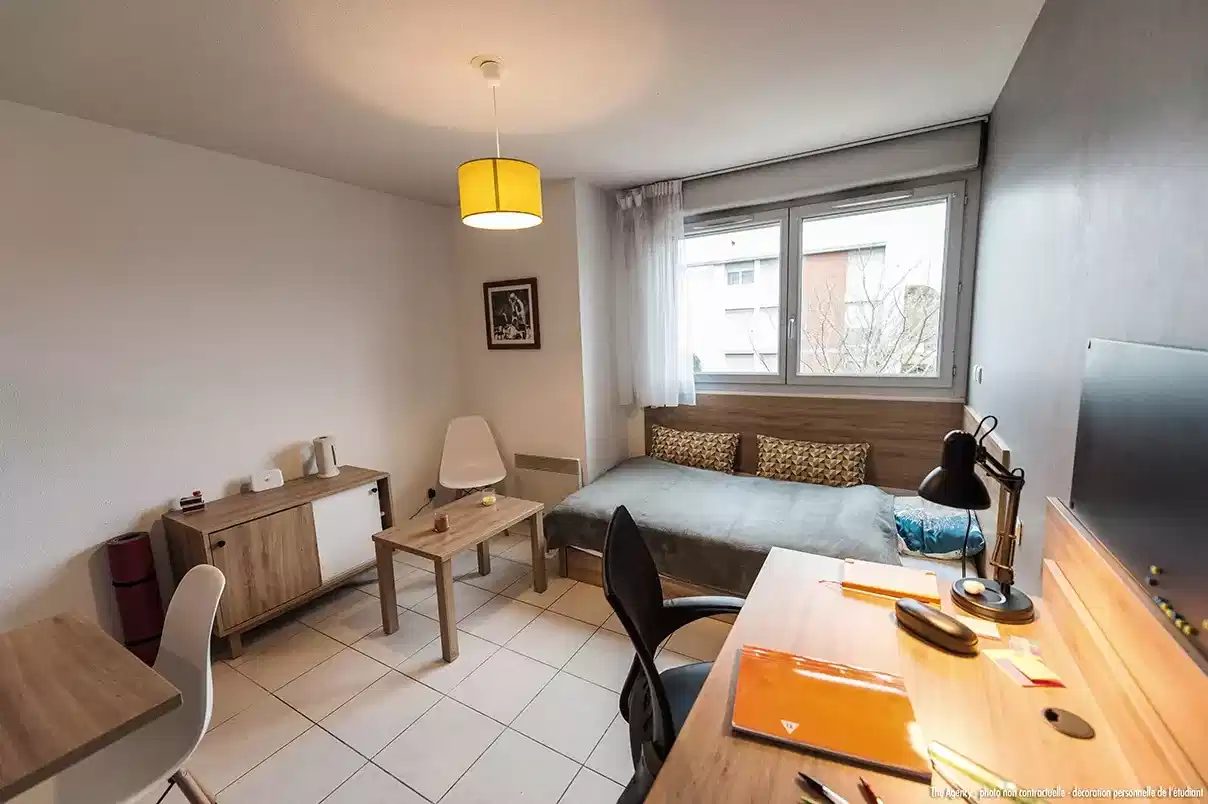
€550 – €700: Small studios (18–25 m²) in zones like Saint-Agne, Rangueil, or Saouzelong. These are often on the outskirts of the city centre but still well connected. The €680 figure from our data falls into this band, likely a studio near the university.
-
€700 – €900: Larger studios or one-bedroom apartments in the city centre (Capitole, Carmes) or in well-connected areas like Compans-Caffarelli. These units tend to be older but have central heating and sometimes a balcony. A shared apartment in these areas would also cost around this per person.
-
€900+: Premium studios or two-bedroom apartments in prime locations. Uncommon for budget-conscious students, but possible for those sharing a high-end flat near the Jardin des Plantes or Place du Capitole.
Important: All figures are indicative and should be confirmed directly with the operator. Prices often exclude utilities (water, electricity, internet) unless stated otherwise. The two properties listed on our platform represent a snapshot; you can find many more listings through local agencies or student housing platforms. Always ask about the “charge” (service charges) which typically cover building maintenance and garbage collection, and whether a housing allowance (APL/CAF) can be applied (most students in France are eligible for assistance).
Mapping Université Paul Sabatier Toulouse III to Areas
Université Paul Sabatier (often referred to as UPS or Toulouse III) is located on the southern edge of Toulouse, in the Rangueil district. The main campus is a large science, health, and technology campus with multiple faculties and research institutes. Its exact address is 118 Route de Narbonne, 31062 Toulouse.
-
Main study area: The campus is in the “Rangueil” quarter. Most lectures and labs take place here. There is also a smaller site at the “Hôpital Purpan” for medical students, but the majority of students spend their time at Rangueil.
-
Nearest metro station: “Ramonville” (line B) is a 10–15 minute walk from the western edge of campus. Alternatively, bus lines 44, 54, 81, 82, and 115 stop right at the campus gates. The campus also has extensive bicycle parking and access to the “Campus” VélôToulouse station.
-
Student housing locations by proximity:
- Rangueil / Saouzelong: Walking distance. Most private residences and some dormitories (CROUS) are located here.
- Saint-Agne / Côte Pavée: 10–20 minutes by bus or bike.
- Les Minimes / Compans-Caffarelli: 25–35 minutes by metro + bus.
- City centre (Carmes, Esquirol): 30–45 minutes using line A to “Palais de Justice” then bus 44 or a bike ride.
-
Why choose nearby versus central: Living near campus minimises commute time but may feel quiet and far from nightlife. The city centre offers more cultural and social opportunities but requires a longer trip each day. Many students choose a compromise like Saint-Agne (15 minutes) or Busca (20 minutes by bus).
-
Other universities in the city: While our data only lists Université Paul Sabatier, Toulouse also hosts Université Toulouse 1 Capitole (law and economics) and Université Toulouse 2 Jean Jaurès (arts and humanities). If you study at one of these, the neighbourhood logic shifts towards the city centre (for Toulouse 1) or the Mirail area (for Toulouse 2). This guide focuses on the given university.
Three Common Pitfalls When Renting in Toulouse
-
Overlooking the “Caution” and French rental process
- Most landlords require a “caution” (deposit) of one month’s rent (or sometimes two), plus proof of income or a guarantor (often a family member in France). International students without a French guarantor must use services like Visale (free) or a bank guarantee (paid). Many new tenants underestimate the paperwork and time needed. Start at least 2–3 months before the academic year begins.
-
Assuming public transport runs late at night
- Tisséo’s metro stops running around 00:30 (weekdays) and 01:30 (weekends). Buses stop earlier. If you plan to socialise in the city centre and return to Rangueil after midnight, you may need a taxi or night bus (which is infrequent). Living along the metro line B helps, but check the last train times carefully. Bicycles are a reliable alternative.
-
Ignoring the “Dossier de Location” and rental scams
- Toulouse has a high demand for student housing, especially near the university. Scammers post fake listings with low prices, demand upfront payment via wire transfer, and disappear. Always visit the property in person or ask a friend to do so. Never send money before signing a lease (contrat de location). Use reputable platforms and check the landlord’s identity through the “Fichier des Copropriétés” or ask for a showing with the property manager.
Booking Calendar for 2026–2027
Planning ahead is crucial because Toulouse’s student housing market heats up from late spring onward. Here is a timeline based on typical French academic cycles:
-
December 2025 – January 2026: Start researching neighbourhoods and typical rents. If you need a guarantor service (Visale), apply early (it can take a few weeks to get approval).
-
February – March 2026: Some early-bird listings appear, especially for purpose-built student residences (private dormitories). At this stage, you can contact residences directly to reserve a room (usually with a deposit, often refundable if you cancel by a certain date). Our platform’s 2 properties may have availability then, but confirm directly.
-
April – May 2026: Peak release of flats by private landlords, as tenants give notice at the end of the academic year (typically 3 months’ notice). Start visiting apartments in Toulouse or arrange remote viewings with a proxy. The month of May is when many CROUS results come out (for French students); international students may receive their accommodation offers later.
-
June – July 2026: The busiest period. Most student leases begin on July 1st or September 1st. If you have not secured housing by the end of June, options become limited and prices may rise (though the €680 starting price from our data is representative of the market). Consider temporary accommodation (e.g., Airbnb for the first two weeks of September) if you need to hunt in person.
-
August – September 2026: Last-minute scramble. Many students find flats in August, but quality may be lower. The university orientation week usually starts in early September, so aim to be housed by then. If you are arriving in September, use a short-term rental for the first month while you view apartments.
-
October – November 2026: After the start of term, availability drops significantly. Most leases run from September to the following August. If you move mid-year, you may find sublets (from graduating students) – but be cautious: subletting is legal only with the landlord’s written permission.
Note for 2027 arrivals: The same calendar applies one year later. If you are planning for the 2027–2028 academic year, shift all dates forward by one year. Always confirm your specific university’s calendar as some programmes start in October or February.
Frequently Asked Questions (FAQ)
-
Can I get a room in a CROUS residence near Paul Sabatier?
- Yes, CROUS manages several student halls on and around the campus (e.g., Résidence Rangueil). Applications for international students are handled through the “Dossier Social Étudiant” (DSE) or through the Campus France procedure. Deadlines are usually in January/February for the following academic year. However, demand exceeds supply, so you should also consider private options. Our platform’s two properties are private, but you can check local listings.
-
Is €680 a normal starting price for a studio near the university?
- Yes, a small studio (20 m²) in the Rangueil or Saint-Agne area typically costs between €550 and €700 per month, excluding utilities. The €680 figure from our data is indicative of a private, fully furnished unit with inclusive charges (e.g., water). Confirm with the operator whether electricity and internet are extra. Prices in the city centre are generally higher.
-
What documents do I need to rent a flat in Toulouse as an international student?
- Landlords typically request: a valid passport or national ID, a copy of your student visa (if applicable), proof of enrollment at the university (alternatively the acceptance letter), proof of financial resources (bank statements or scholarship letter), and a guarantor. If you do not have a guarantor in France, you can use the Visale guarantee (free) provided by Action Logement. You must apply online several weeks before you plan to rent.
-
How do I get from the campus to the city centre without a car?
- The easiest way is to take metro line B from the closest station “Ramonville” or “Saouzelong” to “Palais de Justice” (10 minutes), then change to line A for “Capitole” (2 more stops). Total journey time: about 25–30 minutes. Alternatively, you can cycle along the Canal du Midi (flat, safe path) which takes roughly 30 minutes. Buses are also available but slower.
Data date: February 2026. Prices are indicative and should be confirmed with the operator. Availability may change. This guide is for informational purposes and does not constitute an offer.
See also: listing details · browse more