Portland Housing Decision Guide for Students
Portland, Oregon, is a mid-sized, walkable city surrounded by natural beauty. For students looking to live here while studying, the rental market is competitive but offers more space relative to West Coast peers like Seattle or San Francisco. This guide covers neighbourhood selection by commute, price bands from available data, how local universities map to areas, three common pitfalls, and a booking timeline. All prices are indicative — confirm with the operator.
Understanding the Portland Rental Landscape
Portland’s student population is spread across several colleges and universities, though specific institutions vary. The city is divided by the Willamette River into the West Side and East Side, with distinct characters. Public transit includes buses, the MAX light rail, and the Portland Streetcar. Many students commute by bicycle; Portland is one of the most bike-friendly cities in the United States.
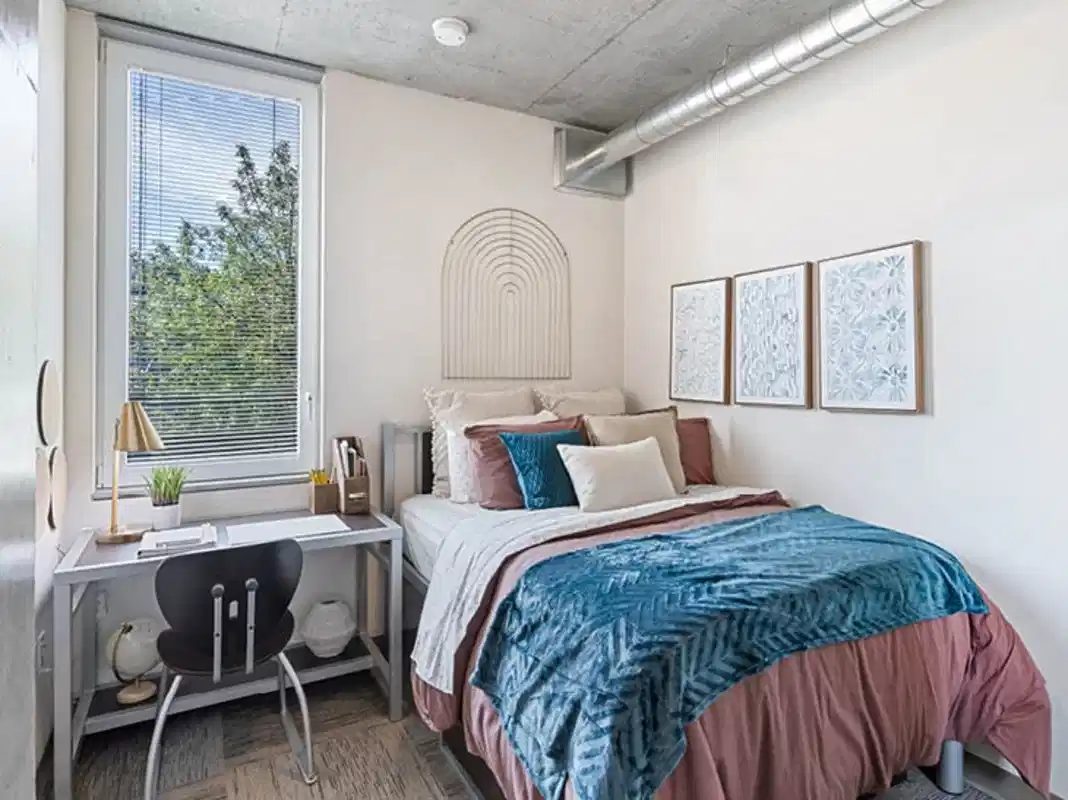
The single listed property in this dataset starts at USD 599 per month (indicative — confirm with the operator). This likely refers to a shared room or a small studio in a purpose-built student accommodation (PBSA). In the broader market, private rentals range from USD 800 for a studio in peripheral areas to over USD 1,800 for a one-bedroom in prime downtown locations. The guide will reference this floor price where relevant.
Neighbourhoods by Commute Logic
Choosing a neighbourhood depends on your campus location, preferred commute time, and lifestyle. Below are typical zones for student housing, ordered by proximity to the central university cluster (downtown/Pearl District).
1. Downtown / West End (MAX Red/Blue/Green lines)
- Commute: 0–15 minutes on foot or streetcar to Portland State University (PSU), University of Oregon in Portland, and Oregon Health & Science University (OHSU) hill campus via tram.
- Rent: High-end studios from USD 1,200–1,800. Shared rooms in PBSA may start around USD 600 (indicative).
- Vibe: Dense urban environment with high-rise apartments, restaurants, nightlife, and cultural venues. Good if your classes are downtown or you want to walk to campus.
2. Pearl District (north of Downtown)
- Commute: 5–10 minutes by streetcar or bike to downtown campuses; 20 minutes to OHSU via tram.
- Rent: Higher than Downtown; one-bedroom averages USD 1,600–2,200. Student housing options limited but available in newer buildings.
- Vibe: Upscale, art galleries, boutique shops, park blocks. Quieter than downtown but still central.
3. Northwest District / Nob Hill (west of Downtown)
- Commute: 15–20 minutes by bus or bicycle to downtown campuses; good for PSU and University of Portland (in North Portland).
- Rent: Studios from USD 1,000–1,400; shared houses from USD 700–900 per person.
- Vibe: Historic residential area with tree-lined streets, independent cafes, and a mix of students, young professionals, and families.
4. Southeast (Hawthorne, Belmont, Division)
- Commute: 20–30 minutes by bus or bike to downtown. MAX Orange line serves SE Portland to PSU.
- Rent: Cheaper than West Side; studios USD 800–1,200; shared apartments USD 600–900 per person.
- Vibe: Eclectic, artsy, with vintage shops, food carts, and a strong community feel. Popular among students who prefer a livelier, less corporate atmosphere.
5. Northeast (Alberta Arts, Hollywood, Lloyd District)
- Commute: 15–25 minutes by MAX Red/Blue/Green lines to downtown; Lloyd District is a short walk to PSU via MAX.
- Rent: Comparable to Southeast; one-bedroom USD 1,000–1,400.
- Vibe: Culturally diverse, with galleries, music venues, and parks. Alberta Arts district known for its street art and independent businesses.
6. South Waterfront (south of Downtown)
- Commute: Adjacent to OHSU tram and streetcar; 10–15 minutes to PSU.
- Rent: Modern high-rises; studios USD 1,200–1,600.
- Vibe: New development along the river, quiet, with parks and medical research facilities. Popular with OHSU students and medical residents.
7. Goose Hollow (west of Downtown)
- Commute: 5–10 minutes walk to PSU and downtown MAX stations.
- Rent: Moderate; studios around USD 1,100–1,400.
- Vibe: Residential neighbourhood near Forest Park, more laid-back than downtown, with convenient access to transit and hiking.
8. North Portland (Mississippi, St. Johns)
- Commute: 25–40 minutes MAX Yellow line to downtown; closer to University of Portland.
- Rent: Lower; studios from USD 700–1,000; shared rooms from USD 500–700 (indicative).
- Vibe: Mix of industrial, artistic, and family-oriented. Mississippi Avenue has many restaurants and bars.
Price Bands from the Given Data
The dataset includes one property at a minimum price of USD 599 per month. This price point is typical for a shared room in a PBSA or a bedroom in a group house in North or Southeast Portland. For context, here are indicative price bands across the city:
- Shared room/bed in PBSA: USD 599–900 per month (indicative). Limited availability; often includes utilities, internet, and furniture.
- Studio apartment (PBSA): USD 900–1,200 per month (indicative). Some PBSAs near downtown start at this range.
- Studio/one-bedroom in private market (average): USD 1,000–1,600 per month (indicative). Higher in Pearl and Downtown.
- Two-bedroom share per person: USD 600–1,000 per month (indicative). Common for students sharing a lease.
Note: The USD 599 figure is the minimum from the single listed property; actual rents vary. Always confirm with the operator or landlord.
How Universities Map to Areas
While the dataset does not list specific universities, Portland is home to several major institutions. Here is a general mapping:
- Portland State University (PSU) – located in the Downtown core. Students typically live in Downtown, Goose Hollow, Northwest, Southeast (45–60 minute walk), or along MAX lines.
- Oregon Health & Science University (OHSU) – main campus on Marquam Hill, accessible via the Portland Aerial Tram from South Waterfront. Students often choose South Waterfront, Downtown, or Goose Hollow.
- University of Portland – in North Portland near Willamette River. Most students live in North Portland, Mississippi, or St. Johns. Commute from Downtown is 25–30 minutes by bus.
- Reed College – in Southeast Portland (Woodstock neighbourhood). Students favour Southeast, especially Woodstock, Hawthorne, and Belmont.
- Lewis & Clark College – in Southwest Portland, further from downtown. Students typically live near campus or in the Southwest hills; bus service to downtown is available.
- Concordia University – closed in 2020, but nearby property is absorbed into other uses.
For students not affiliated with any listed university, the general rule: live within 30 minutes of your campus. Portland’s transit is oriented around downtown, so living outside the core may require longer commutes.
3 Common Pitfalls for Student Renters
Pitfall 1: Underestimating Utility Costs
In Portland, many private rentals do not include utilities (electricity, gas, water, sewer, trash). In winter, electric heating can add USD 100–200 per month. Always ask what is included. PBSAs often include utilities in the quoted price, but verify. Budget an extra USD 100–150 per month for utilities if not specified.
Pitfall 2: Not Verifying Lease Terms and Subletting Rules
Portland has strict renter protections, but student leases can be short (9–12 months). If you need to leave before the lease ends, understand the buyout or subletting policy. Some operators require a guarantor or a higher deposit for international students. Always read the lease and ask about early termination fees.
Pitfall 3: Ignoring Parking and Transportation Costs
If you own a car, off-street parking in popular neighbourhoods costs USD 100–250 per month. Street parking is often limited and may require a residential permit (USD 75 per year). Many students rely on bikes; Portland is bike-friendly but theft is common. Purchase a good lock and consider renter’s insurance covering bike theft. Monthly transit passes cost about USD 100 (student discounts available at some universities). Factor these into your budget.
Booking Calendar: When to Search and Sign
Portland’s rental market follows a typical academic calendar, but with some local nuances.
- September to November (Fall rush): Peak season. Many leases start in September. PBSAs and private rentals fill quickly. Start searching in June–July for September move-in. Expect higher prices and limited choice.
- December to February (Winter low season): Fewer students moving. Some landlords offer discounted rates for leases starting in winter. Good for late applicants or if you can start mid-year.
- March to May (Spring return): Rentals for summer and the following academic year appear. Some PBSAs have a “spring holding” period for renewals.
- June to August (Summer peak): Another busy period for summer terms and new arrivals. Inventory may be lower because many students renew. Search early (April–May) for June–August move-in.
General advice for international students: Start looking 2–3 months in advance. Many operators require proof of enrollment and visa. If you are not on the ground, use virtual tours and ask for a video walkthrough. Confirm the security deposit (typically one month’s rent) and any application fees (USD 30–50 per person).
Frequently Asked Questions (FAQ)
1. Is USD 599 per month a realistic budget for a student in Portland?
USD 599 per month (indicative — confirm with the operator) is at the low end and typically covers a room in a shared apartment or a small studio in a PBSA. This price is more common in North or Southeast Portland, or in older buildings with fewer amenities. If you want a private studio downtown, budget at least USD 900–1,200. Always factor in utilities, internet, and transportation.
2. What neighbourhoods are safest for students new to Portland?
Downtown, Pearl, Northwest, Goose Hollow, and South Waterfront are generally considered safe with good lighting and foot traffic. Like any major city, petty theft and car break-ins occur. Avoid walking alone late at night in less populated areas. Check crime maps for specific blocks. Southeast (Hawthorne) and Northeast (Alberta) also have safe pockets, but street parking theft is higher.
3. Do I need a car to get around Portland as a student?
No. Portland has excellent public transit, bike lanes, and a walkable core. Many students use a combination of bus, MAX, and a bicycle. A car is useful for weekend trips (e.g., coast, mountains) but adds significant cost (parking, insurance, maintenance). If you live near a MAX station or within 20 minutes by bike from campus, you can easily manage without a car.
4. When should I book my housing if I arrive in September for fall semester?
Start searching in March–April for PBSAs (some open early). For private rentals, begin in May–June and commit by July to ensure availability. If you arrive in August, you will compete with many other students. Consider a temporary short-term rental (e.g., AirBnB or a sublet) for the first two weeks to secure a lease in person.
Data date: January 2026
See also: listing details · browse more