Understanding Philadelphia’s Student Housing Landscape
Philadelphia is one of the largest cities on the U.S. East Coast and a major academic hub. For the 2026–2027 academic year, the city hosts a significant student population, with the University of Pennsylvania (ranked 15th globally) as a key institution. The student housing market here combines historic row houses, modern apartment towers, and converted Victorian homes. Unlike purpose-built student accommodation found in some college towns, most housing in Philadelphia is leased through private landlords or property management firms, often on an individual room or whole-unit basis.
The data available for this guide shows one student housing property in the city, with a minimum price of USD 1,957 per month (indicative — confirm with the operator). This price point serves as a baseline, but actual options vary widely depending on location, unit type, and lease terms. Students planning to study at the University of Pennsylvania should begin their search early, as the most convenient neighborhoods fill quickly by early spring for a fall move-in.
Neighborhoods and Commute to University of Pennsylvania
The University of Pennsylvania is located in the University City neighborhood, west of the Schuylkill River. Most students prioritize areas that allow a walkable or short transit commute. Below is a breakdown of the main neighborhoods and how they connect to campus.
University City (directly adjacent to campus)
This is the area immediately surrounding Penn’s campus, including the Penn campus itself, Drexel University’s campus, and the mixed-use blocks between. Housing here ranges from high-rise apartments targeted at students to older brownstones converted into multi-bedroom flats. Commute time to most academic buildings is under 10 minutes on foot. Students who value proximity and want to avoid a daily commute often choose this area. However, rents tend to be at the higher end of the market. The indicative starting price of USD 1,957 per month likely reflects a unit in or near University City.
Spruce Hill and Walnut Hill (west of campus)
These residential neighborhoods lie immediately west of University City, bordered by 40th Street to the east and roughly 50th Street to the west. They feature tree-lined streets with Victorian houses, many divided into student apartments. The walk to campus is 15–25 minutes, or a short ride on a SEPTA bus or the Market–Frankford Line. Spruce Hill is popular with graduate students and families, offering a quieter atmosphere while still being close to campus. Rental prices here are slightly lower than in University City core, though still above the city median.
Powelton Village (northwest of campus)
Located northwest of Drexel and Penn, Powelton Village has a mix of historic mansions and student rentals. The area is known for its large, shared houses and a strong sense of community. Commuting to Penn requires a 15–20 minute walk or a quick bus ride east. The housing stock is older, but many units have been renovated. Prices can be more budget-friendly than University City.
Center City (east of the Schuylkill River)
Center City Philadelphia (including neighborhoods like Rittenhouse, Fitler Square, and Graduate Hospital) is a 15–30 minute commute via SEPTA’s Market–Frankford line or the trolleys. The walk from 30th Street Station across the Schuylkill River to Penn’s campus takes about 20 minutes. Center City offers more urban amenities: restaurants, nightlife, and cultural venues. Rents vary widely, with studio apartments often starting above USD 1,500. A shared apartment in Center City could fall near or above the indicative USD 1,957 figure. The trade-off is a longer commute time and higher utility costs in older buildings.
Other neighborhoods of interest
- West Philadelphia beyond 50th Street: More affordable but with longer commutes (30+ minutes by bus or trolley). Safety and convenience vary block by block.
- Spring Garden / Fairmount: North of Center City, these areas are popular with graduate students who prefer a quieter residential feel. Commute to Penn is 25–30 minutes by bus or bike.
- South Philadelphia: Largely residential with Italian Market, East Passyunk, and stadium areas. Commute to Penn via subway and trolley is 30–40 minutes. Studios are possible around USD 1,200–1,500, but the distance is a drawback for many students.
Price Bands and What to Expect
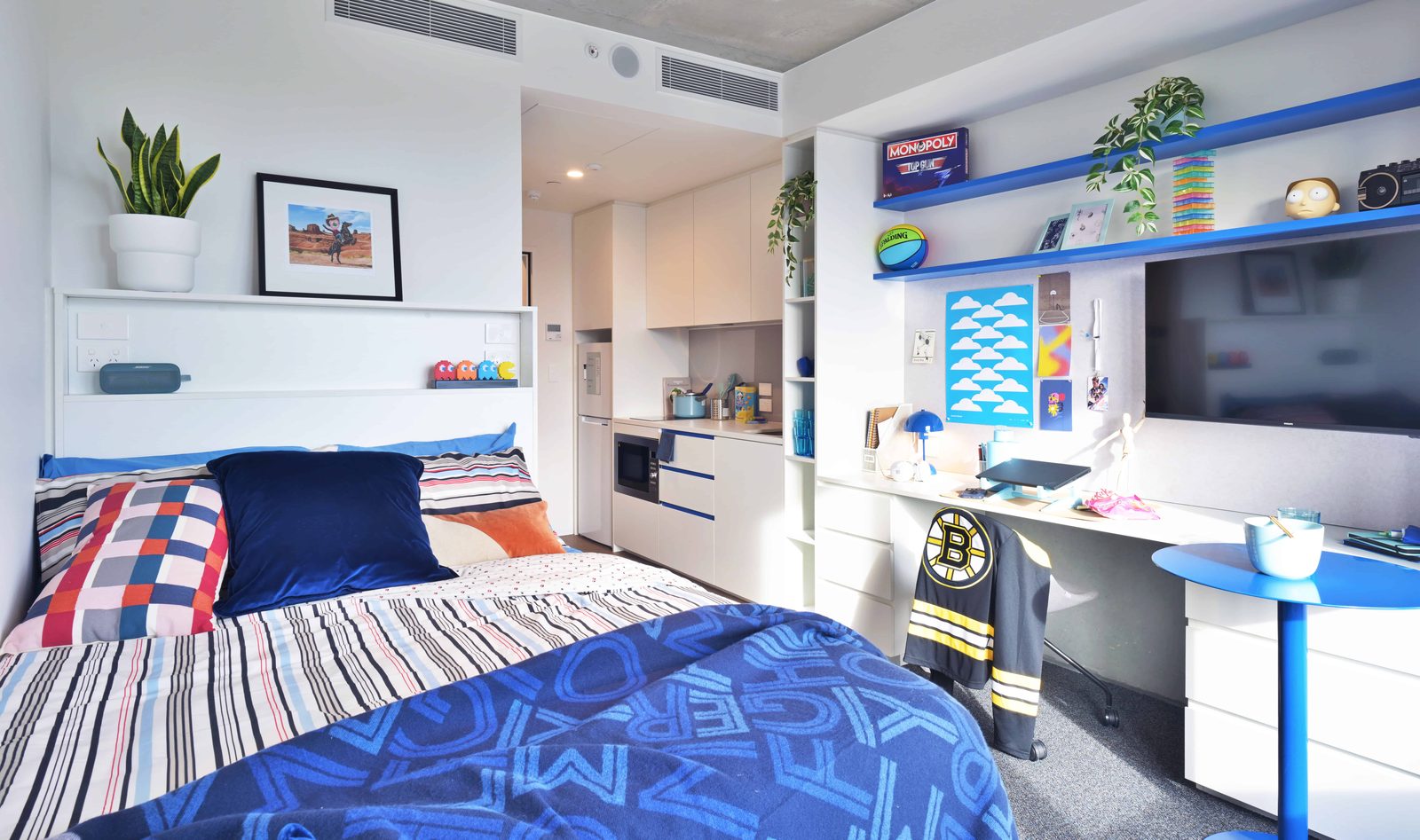
Based on the single property listing available, the lowest price point for student housing in Philadelphia is USD 1,957 per month (indicative — confirm with the operator). This is likely for a private room in a shared apartment or a studio in University City. Broader market trends (not derived from our data but useful for context) suggest that rents in Philadelphia for students range widely:
- Budget share (room in a shared house): USD 600–1,200 per month. These are often older units in West Philadelphia (beyond 42nd Street) or Powelton Village.
- Mid-range (private room in a newer development or studio): USD 1,200–1,800 per month. This bracket covers many units in University City and Center City.
- Premium (one-bedroom or luxury studio in University City or Rittenhouse): USD 1,800–2,500+ per month. The indicative USD 1,957 figure sits at the lower end of this band.
All prices are indicative — confirm with the operator. Most leases are signed 12 months (August to July), but shorter terms may be available at a premium. Utilities (electricity, gas, internet) are often not included; add USD 100–200 per month.
Common Pitfalls for Student Renters in Philadelphia
Pitfall 1: Signing a lease sight-unseen or without inspection
Many international students commit to a rental months before arriving. Photos can be misleading; units may have older appliances, mold, or rodent issues. Request a virtual walkthrough or have a trusted contact visit in person. Look for signs of water damage, check window seals, and ask about heating/cooling reliability. Landlords are not required to disclose past pest problems. Always insist on a detailed inventory of furnishings and appliances before signing.
Pitfall 2: Underestimating the cost and complexity of utilities
Philadelphia has four distinct seasons. Heating bills in winter (natural gas or electric) can add USD 150–300 per month in older buildings with poor insulation. Some apartments include heat in the rent; others do not. Ask for the utility provider and estimate average monthly cost. Also, internet and cable are always tenant‑paid. A common mistake is assuming the rent covers everything except electricity. Clarify with the landlord or property manager exactly which utilities are included.
Pitfall 3: Falling for rental scams and misleading listings
Philadelphia’s off-campus housing market has its share of scams — fake listings on social media, demands for wire transfer deposits before viewing, or “landlords” who cannot show the unit. Never send money without a signed lease and a physical address you can verify. Use reputable platforms and check if the person listing the property is the building owner or a licensed agent. The BBB and local university housing offices often maintain lists of suspicious operators. Trust your instincts: if the price seems too good for the location, it probably is.
Booking Calendar for 2026–2027 Academic Year
For the 2026–2027 academic year, the typical rental cycle follows the academic calendar of the University of Pennsylvania. Most leases start in August or September. Below is a timeline to keep in mind.
- November 2025 – January 2026: Early search phase. Some large apartment complexes release units for the following fall as early as November. This is best for securing premium properties. Deposit requirements may be lower.
- February – April 2026: Peak leasing period. Most landlords start advertising August 1 move‑in dates. This is when the widest selection is available. After April, choice units disappear quickly.
- May – July 2026: Late search. Inventory shrinks but some deals may surface from tenants who break leases. However, options are limited, and you may have to compromise on location or condition.
- August 2026: Move‑in month for most students. Expect heavy demand for moving trucks and potential delays. Try to arrive a few days early for inspections.
- December 2026 – January 2027: Mid‑year leases are much rarer. If you need spring‑start housing, expect higher per‑month rates and shorter lease terms.
- May 2027: Renewal season. If you plan to stay for 2027–2028, start talking to your landlord in April about renewal terms.
Frequently Asked Questions
1. Is it cheaper to live on‑campus or off‑campus near the University of Pennsylvania? On‑campus housing (university‑owned dormitories) typically costs between USD 8,000 and 14,000 per academic year for a shared room, which equates to roughly USD 900–1,600 per month on a 9‑ or 10‑month contract. Off‑campus options start from the indicative USD 1,957 per month for a private studio or room, but shared apartments with roommates can bring costs down to USD 700–1,200 per month. Overall, off‑campus shared housing is usually cheaper per person than on‑campus singles, but you must factor in utilities, furnishings, and the risk of a longer lease (12 months vs. 9 months).
2. Which neighborhoods are safest for students at night? University City, Center City (especially Rittenhouse and Fitler Square), and Spruce Hill are generally considered safe and well‑patrolled. Campus‑area streets are lit and have security presence. Avoid walking alone after midnight in poorly lit areas of West Philadelphia beyond 48th Street. Use SEPTA buses or the Penn Transit shuttle service (free with student ID) after dark. Crime rates vary block by block, so check the Philadelphia Police Department’s online crime map before signing a lease.
3. How do I find a roommate if I don’t know anyone in Philadelphia? Many students use university‑affiliated room‑finding tools (e.g., Penn’s Off‑Campus Living office maintains a listing board). Also, local housing platforms allow you to search for rooms already being shared by other students. Respecting the platform’s policies, you can also join official university social media groups where tenants seek replacements. Always meet potential roommates virtually or in person, discuss cleaning schedules, visitor policies, and financial responsibilities before committing.
4. What is the typical deposit and lease‑signing process? Most landlords require a security deposit equal to one month’s rent. Some may also ask for first month’s rent at lease signing. A credit check and proof of income (or a guarantor) are common. International students without a U.S. credit history might be asked to pay several months upfront or provide a guarantor service. Read the lease carefully — note the move‑in/move‑out dates, maintenance responsibilities, and penalties for early termination. Philadelphia law prohibits landlords from demanding more than two months’ rent as total upfront payment. Keep copies of all documents.
Data as of 2026 January.
See also: listing details · browse more