Los Angeles Student Housing: A Decision Guide
Los Angeles is home to two major universities – University of California, Los Angeles (UCLA) and University of Southern California (USC) – as well as a large number of international students. The local rental market reflects the city’s sprawl: commute times, neighbourhood character, and price vary significantly. This guide uses data from an independent student-housing platform (98 properties listed as of 2026, with a minimum monthly rent of 725 USD) to help you make an informed, neutral decision. All prices cited are indicative – confirm with the operator before committing.
Neighbourhoods by Commute Logic
Commuting in Los Angeles is heavily car-dependent, though some areas have decent bus and metro coverage. Your choice of neighbourhood should be driven by which campus you attend and how much time you are willing to spend travelling. The following breakdown groups areas by typical commute to UCLA (Westwood) and USC (Exposition Park / University Park).
For UCLA Students
- Westwood itself – walking distance to campus. The most convenient but also among the most expensive. Studios often exceed 1,800 USD per month. The platform lists several properties here, with prices starting around 1,500 USD (indicative).
- Palms – a 20–30 minute bus ride to UCLA; more affordable. One-bedroom units average 1,400–1,700 USD. Palms has a good concentration of student rentals and local shops.
- Culver City – slightly farther (30–45 minutes by bus or cycling), but rents can be lower, especially near the Expo Line station. Expect one-bedrooms from 1,200 USD (indicative).
- Mar Vista / Venice – west of UCLA. Venice is pricier; Mar Vista offers mid-range options. Commute by car is 15–25 minutes.
For USC Students
- University Park / North University Park – immediate campus vicinity. Similar to Westwood in convenience and cost. Many purpose-built student housing complexes exist. Prices start around 1,200 USD (indicative) for shared units.
- Koreatown – a popular area with many apartments, good metro access to USC via the B Line (20–30 minutes). Rents are moderate (studios from 1,000 USD, indicative).
- Downtown Los Angeles (DTLA) – a bus or metro ride of 15–30 minutes. A wide range of apartments, from older buildings to newer high-rises. Prices vary widely; budget options around 900 USD (indicative) are rare but exist.
- South Central / Exposition Park – directly adjacent to USC, but some blocks feel less student-oriented. Proximity is excellent; rents are slightly lower than University Park.
Overlap Areas
- Mid-City / Miracle Mile – roughly equidistant between UCLA and USC (about 20–30 minutes by car to each). A decent choice if you have friends at both campuses. Rent for a one-bedroom typically 1,300–1,600 USD (indicative).
- Culver City also serves both campuses if you have a car, but public transit to USC is less direct.
Price Bands and Property Count
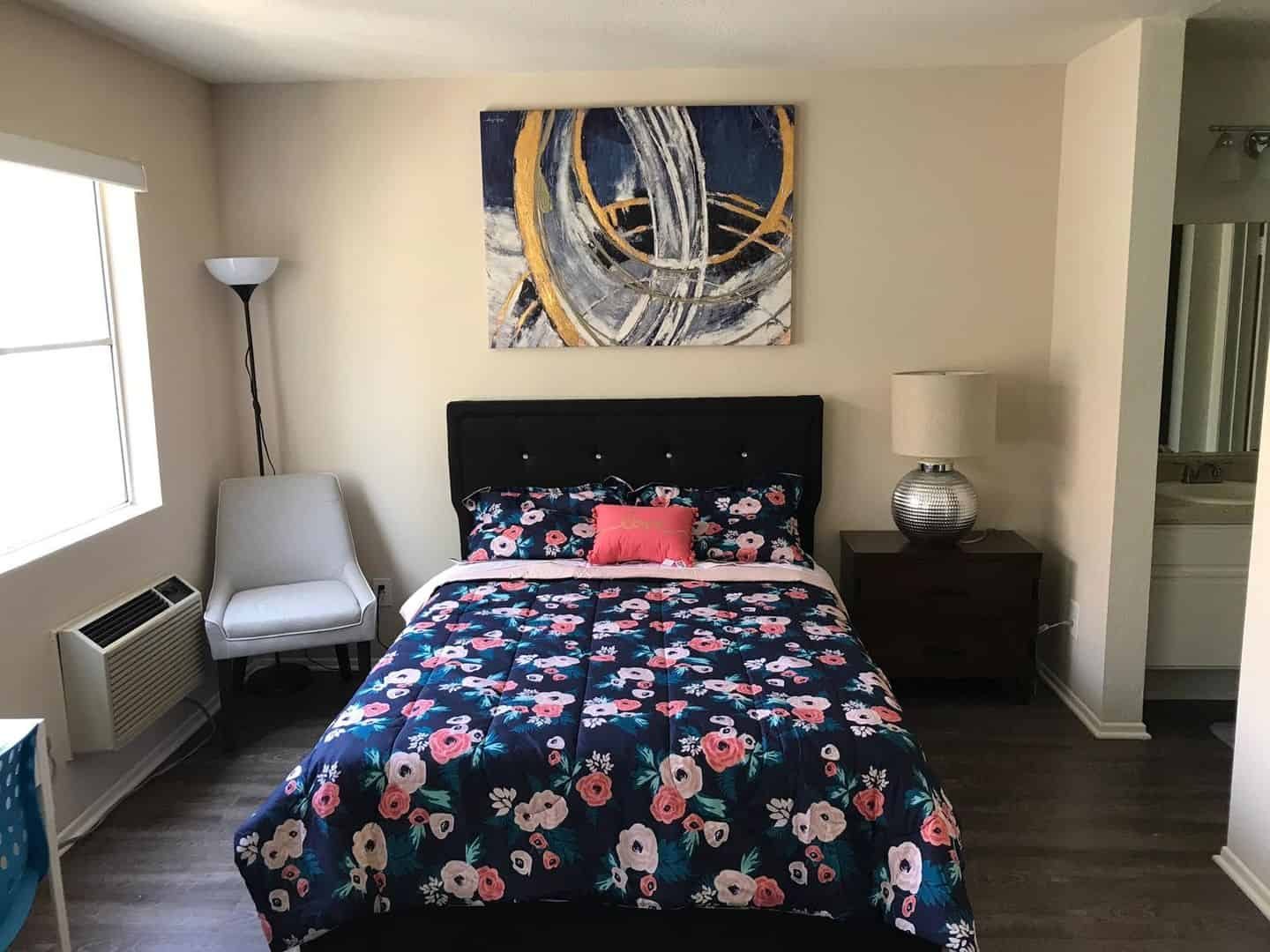
The platform lists 98 student-oriented properties across Los Angeles. The lowest price available is 725 USD per month (indicative – confirm with the operator). That figure likely corresponds to a shared room or a very small studio in a less central area such as eastern parts of South Central or Westlake.
Below is an indicative breakdown of price bands based on typical listings (note: exact counts by band are not available from the given data, but the platform’s inventory suggests a wide range):
- Under 1,000 USD – very limited. Usually shared rooms or guest houses kilometres from campus. Some properties near USC in older buildings fall into this band. Verify safety and lease terms.
- 1,000 – 1,400 USD – moderate. Studios and one-bedrooms in Koreatown, Palms, and parts of Mid-City. This is the sweet spot for many students. The platform’s properties in this range are numerous.
- 1,400 – 1,800 USD – comfortable one-bedrooms or two-bedroom shares in Westwood, Culver City, or DTLA. Also includes some purpose-built student apartments near UCLA.
- Above 1,800 USD – premium units, often new developments with amenities. Most common in Westwood and near USC’s gated campus.
Remember: all prices are indicative. Always check with the operator for inclusive utilities, deposit requirements, and any seasonal fluctuations.
How UCLA and USC Map to Key Areas
University of California, Los Angeles (UCLA) – QS World Rank 46
UCLA’s main campus sits in Westwood, a wealthy neighbourhood on the west side of Los Angeles. The immediate area is walkable and has many restaurants, but student-dedicated housing is scarce and expensive. Most platform listings within 2 km of UCLA are shared apartments or studios in old rent-controlled buildings. Travel times to other areas by public bus:
- From Palms: 20–30 minutes (bus 12, 8).
- From Culver City: 25–40 minutes (bus 6, 12).
- From Mar Vista: 15–30 minutes (bus 12, 3).
- From Koreatown or DTLA: 45–60 minutes (bus 720 + transfer).
University of Southern California (USC) – QS World Rank 146
USC’s main campus is located south of downtown in the University Park neighbourhood. The area has a distinct campus feel, with newer student housing complexes along Figueroa Street and Jefferson Boulevard. The platform’s inventory near USC includes both private apartments and purpose-built residences. Typical travel times:
- From Koreatown: 20–30 minutes (Metro B Line + DASH bus).
- From DTLA: 15–25 minutes (Metro E Line + walk).
- From South Central: walking distance or 5–10 minutes by bus.
- From Westwood/UCLA: 45–60 minutes by car (no direct train).
Both universities have shuttle services that cover some surrounding areas, but they are not reliable for long commutes.
Three Common Pitfalls for Student Renters
Pitfall 1: Underestimating Traffic and Commute Costs
Los Angeles is notorious for traffic. A 10-mile drive can take 45 minutes during peak hours. Many students sign a lease thinking they can drive to campus in 20 minutes, only to find that real-world drive times are double or triple. Additionally, parking permits at UCLA and USC cost several hundred dollars per semester. Public transit is cheaper but takes longer. When evaluating a listing, use a navigation app with real-time traffic data for the times you would actually travel. If the commute exceeds 40 minutes by bus, consider a different area.
Pitfall 2: Falling for Deposit and Fee Scams
The platform’s listings are verified, but individual landlords may ask for excessive deposits or non-refundable application fees. California law limits security deposits to two months’ rent (furnished units can require up to three months). Some landlords ask for last month’s rent plus a cleaning fee – always get receipts. Never wire money or send cash before seeing the property in person or via a verified video tour. If a deal seems too cheap (e.g., a Westwood studio for 725 USD), it is likely a scam.
Pitfall 3: Ignoring Lease Flexibility and Subletting Rules
Students often need short-term leases (semester or summer). Most LA landlords require 12-month contracts. The platform offers some properties with 6-month or month-to-month options, but they are rarer. If you book a 12-month lease but plan to leave early, you may be responsible for the remaining rent unless a sublet clause exists. Always read the lease terms regarding early termination fees and subletting permissions. Some purpose-built student housing allows unit transfers, but private landlords rarely do.
Booking Calendar: Timing Your Search
The academic year in Los Angeles start dates vary: UCLA’s fall semester begins in late September; USC’s fall semester starts in mid-August. Spring semesters start in January. To secure a desirable property at a fair price, follow this timeline.
For Fall 2026 move-in (August–September 2026):
- January – February 2026 – Start researching neighbourhoods and shortlist platforms. Check the 98 listed properties for availability and price ranges. Note that many listings become active 3–4 months before move-in.
- March – April 2026 – Begin contacting operators. Schedule video tours for properties that interest you. Prices are usually still at normal rates; early birds may find discounts. Confirm deposit amounts and lease lengths with each operator.
- May – June 2026 – Peak booking period. The best units are taken quickly. If you have not secured housing by June, options will be limited, especially near UCLA. Prices may rise as demand spikes. Use the platform’s filters to focus on remaining properties.
- July – August 2026 – Last-minute search. Expect higher prices and fewer choices. Some operators offer summer-only leases from June to August, but fall students will then need to find a new lease starting September. The platform’s count of 98 properties may be reduced by this time.
For Spring 2027 move-in (January 2027):
- October – November 2026 – Start looking. Many landlords offer lease renewals in fall, freeing up units for January. Prices may be slightly lower than fall peak. Book by late November to avoid holiday slow periods.
For Summer 2027 (short-term):
- April – May 2027 – Some purpose-built student housing offers 3-month leases. Private landlords rarely do; sublets from outgoing students are a better option. The platform may list these separately.
Always confirm with the operator whether the advertised price is for a full 12-month term or a shorter duration. Prices are indicative – verify before booking.
Frequently Asked Questions
1. Should I live near UCLA or near USC if I am considering both universities?
Unless you have classes at both campuses simultaneously (e.g., cross-registration program), choose the neighbourhood that minimises your personal commute. Both universities are far apart (about 15 miles). Living in a midpoint like Mid-City or Koreatown requires a 30–45 minute drive to either campus, which can be stressful. Most students pick one campus and stay close. If you absolutely need flexibility, consider a property with cancellation clauses.
2. What is a reasonable security deposit for a student apartment in Los Angeles?
California law caps security deposits at two months’ rent for unfurnished units and three months for furnished units. For a 1,200 USD per month apartment, expect to pay 1,200–2,400 USD upfront. Some platform-listed properties offer reduced deposits for international students or use insurance in lieu of cash. Always ask for a written receipt and an itemised deduction statement at move-out.
3. Can I find housing for under 1,000 USD per month through this platform?
The platform’s minimum listed price is 725 USD per month (indicative). However, units at that price point are rare and often located in areas with longer commutes or lower walkability (e.g., Westlake, eastern South Central). Most properties under 1,000 USD are shared rooms. It is feasible for a budget-conscious student, but verify the neighbourhood’s safety and access to public transit. All prices are indicative – confirm with the operator.
4. When is the best time to book to get the lowest price?
For fall arrivals, the window of March to April generally offers the best balance of selection and price. January to February has fewer listings but some operators offer early-bird discounts (5–10% off first month). Avoid booking after June, as prices often rise by 10–20% and inventory drops. For spring, November is optimal. Always compare the total cost (rent + utilities + deposit) from multiple operators on the platform. Prices are indicative – confirm with the operator.
Data as of 2026. All prices are indicative and subject to change. Confirm exact rates, lease terms, and availability with the property operator before signing any agreement.
See also: listing details · browse more