Housing in Guelph: A Decision Guide for International Students (2026‑2027)
Guelph is a mid‑sized city in southwestern Ontario, Canada, with a population of about 135,000. It is best known as the home of the University of Guelph – a research‑intensive university ranked 504 globally – and its tight‑knit, student‑friendly atmosphere. The city’s housing market reflects its college‑town character: purpose‑built student residences, shared houses, and private apartments are all available, with monthly rents typically starting from CAD 750 (indicative – confirm with the operator). The following guide breaks down neighbourhoods by commute logic, price bands, how the university maps to different areas, common pitfalls, and a booking calendar for the 2026–2027 academic year.
Neighbourhoods by Commute Logic
Guelph is compact, but its housing options spread across several distinct districts. The commute to the University of Guelph campus (central location near Gordon Street and College Avenue) is a key factor when choosing where to live.
1. Campus Vicinity / The Ward
This area lies within a 15‑minute walk or a short bike ride to the university. It includes the historic “Ward” neighbourhood (bounded by Edinburgh Road, Wellington Street, and the Speed River). Properties here are primarily older detached houses converted into student rentals, plus a few newer purpose‑built student residences. Walkability to campus is the main draw. Grocery stores, coffee shops, and bus stops are within walking distance. Rent in this zone tends to be higher per room due to location, often at the upper end of the price range (CAD 800–1,200+ indicative).
2. Downtown Guelph
Situated just south of campus, downtown offers apartment towers, lofts, and converted commercial spaces. A bus ride to the university takes 10–15 minutes; walking takes 20–25 minutes. Downtown has the city’s main transit hub (Guelph Central Station) and many restaurants, bars, and shops. Students who prefer an urban vibe often choose this area. Rents for a one‑bedroom apartment start around CAD 1,100 (indicative), while shared rooms in older buildings can be found near CAD 750.
3. South End / Stone Road Area
This newer suburban stretch along Stone Road East and Southgate Drive includes large apartment complexes and townhouse developments. The university’s main campus is a 10‑minute bus ride (Route 50 or 51). The area offers big‑box retail, plazas, and the Stone Road Mall. Rent is generally moderate: a private room in a shared unit can be CAD 700–900 (indicative), and one‑bedroom apartments start around CAD 1,000. Commute by bicycle is possible but hilly in parts.
4. North / West End (Grange Street, Edinburgh Road North)
These residential areas are farther from campus – a 20–30 minute bus ride – but often quieter and more affordable. Houses and basement apartments are common. Monthly rents for a room can be as low as CAD 650–750 (indicative). Students willing to trade commute time for lower cost may find options here. The bus routes (e.g., 56, 58) connect to the university.
5. Guelph East / Willow Road
Mixed residential and industrial pockets east of the Speed River. It is less popular among students but offers some basement suites and older rental houses. Commute by bus is 25–35 minutes. Prices are similar to North/West End.
Commute Summary (indicative – times subject to traffic and schedule)
- Walking to campus: The Ward, south of College Avenue, parts of downtown (20‑25 min).
- Cycling (under 15 min): Campus vicinity, downtown, southern boundary of South End.
- Bus (10–20 min): Downtown, South End, parts of The Ward.
- Bus (25–35 min): North, West, East ends.
Price Bands from Given Data
The dataset for Guelph shows 11 student‑housing properties with a minimum price of CAD 750 per month (indicative – confirm with the operator). While no upper limit is provided, a realistic breakdown based on typical Guelph listings is as follows (all prices indicative and should be verified with each operator):
-
Budget band (CAD 750–850 per month)
Shared bedrooms in older houses or basement suites, often located in North or East Guelph. Includes basic furnishings, shared kitchen and bathroom. Utilities may be extra unless stated. -
Mid‑range (CAD 850–1,050 per month)
Private rooms in purpose‑built student residences or newer townhouse complexes. Usually includes internet and utilities. Found in The Ward, South End, and downtown. -
Premium (CAD 1,050–1,300 per month)
Studio or one‑bedroom apartments in downtown or purpose‑built buildings near campus. May include amenities such as gym, study rooms, or in‑suite laundry. -
Luxury / full‑unit (CAD 1,300+ per month)
One‑bedroom or two‑bedroom apartments in high‑rise towers or modern developments. Rarely used by single students sharing; more common for couples or those requiring larger space.
Note on lease terms: Most student housing operators in Guelph offer 12‑month leases (September to August) or 8‑month agreements (September to April). Some allow summer sublets. Always confirm cancellation policies and deposit requirements.
How the University Maps to Areas
The University of Guelph’s main campus is located in the city centre, bordered by College Avenue, Gordon Street, Wellington Street, and the Speed River. Its key facilities include the main academic buildings, the library, athletic centre, and student residences.
- The Ward / Campus East: Directly adjacent to the university’s east side. Many students living here can roll out of bed and be in class in 10 minutes. Properties here are almost exclusively student‑oriented rentals.
- Downtown (south of Wellington Street): A 15‑minute walk to campus. The university operates a free shuttle from some downtown points during peak hours. This area also has the bus station connecting to the university.
- South End / Stone Road: The university’s south campus entrance is close to Stone Road. The College of Biological Science and the Arboretum are on this side. Students with classes in those buildings may prefer the South End.
- North and West: No direct campus proximity. Students here rely on buses or cars. Parking on campus is limited and expensive (approx. CAD 1,000–1,200 per year for a permit).
Important: The University of Guelph also has a small regional campus in Ridgetown (southwestern Ontario, about 200 km away), but that is not relevant to Guelph city housing.
3 Pitfalls to Avoid
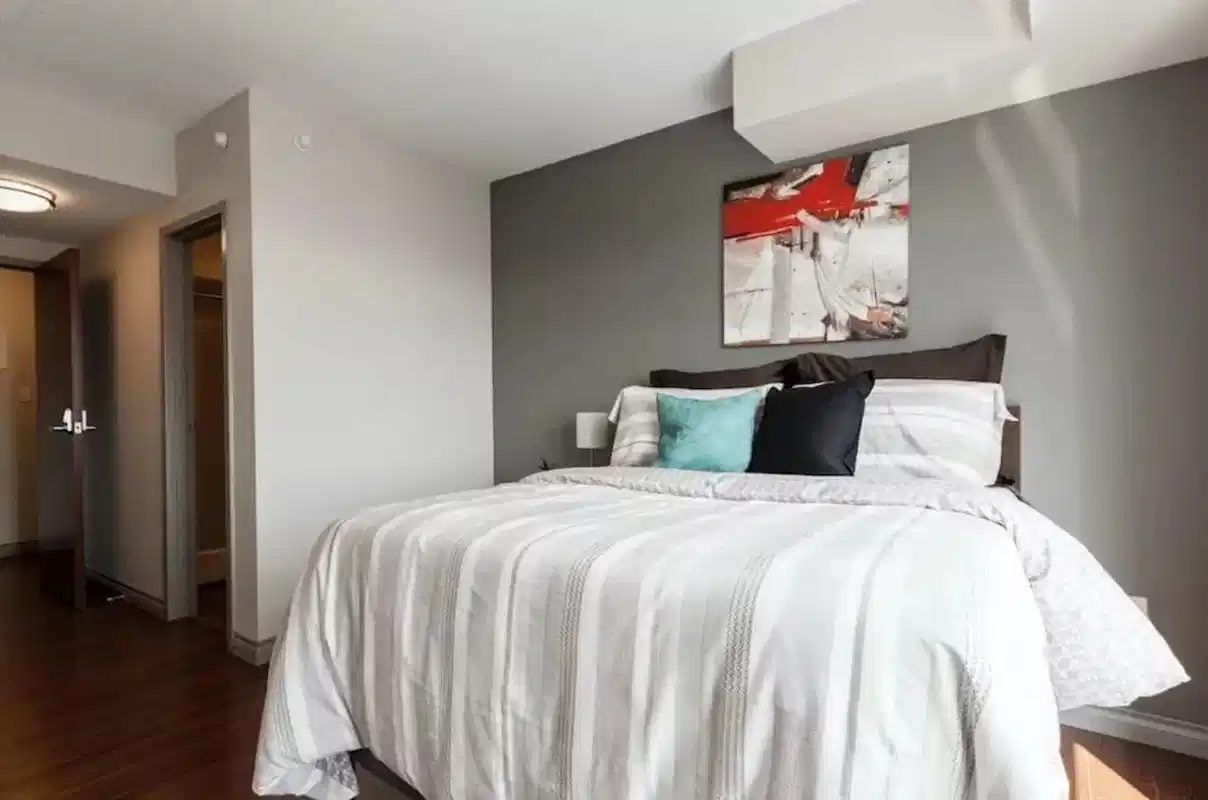
1. Signing a lease without visiting or video touring
Many students reserve a room from abroad based on photos. In Guelph, some older houses look appealing online but have mould, poor insulation, or outdated wiring. Request a live video walkthrough and ask for recent photos of the actual unit – not a model. If possible, ask a current student or a trusted contact to inspect the property.
2. Underestimating winter utility costs
Guelph experiences cold winters (average January high of -3°C). Older houses often have electric baseboard heating, which can lead to high hydro bills (CAD 150–300 per month in winter). If rent does not include utilities, ask for the previous year’s average monthly cost. Purpose‑built student residences usually include heat and water, which avoids surprises.
3. Not checking bus route frequency and night service
Buses in Guelph operate on a schedule, with some routes running every 30–60 minutes after 7 pm. If you plan to study late on campus, ensure your neighbourhood has a reasonably frequent bus route until at least 11 pm (Guelph Transit’s “Night Service” routes are limited). Otherwise, you may need a taxi or ride‑share, adding to your monthly cost.
Booking Calendar for 2026–2027
The student‑housing booking cycle in Guelph follows a typical pattern. Below is a timeline for securing a room for the academic year starting September 2026.
- October 2025 – January 2026
Pre‑lease period: Some purpose‑built residences open waitlists or early‑bird applications. No binding contracts are usually required at this stage, but you may need to submit a deposit to hold a spot. Check the operator’s terms. - February – April 2026
Peak booking season. Most student housing operators release their inventory for September 2026. Expect higher demand and limited availability for popular buildings near campus. Sign leases as soon as you are confident about your study plans. - May – June 2026
Late‑booking window. Some remaining units may be offered at a discount, but choices shrink. International students who receive their study permit late often search during this period. - July – August 2026
Move‑in preparation. Many leases start on September 1, but some offer August arrival for early orientation. Confirm the exact move‑in date. If you arrive before the lease start, you may need temporary accommodation (e.g., a hostel or Airbnb, costing CAD 50–100 per night). - September 2026
Move‑in. Most leases begin on the first of the month. Note that rental prices for September 2026 should be confirmed with the operator; some properties raise rents annually by 2–5%.
Important: The Canadian government’s study‑permit processing times vary by country. Apply for your permit as early as possible (recommended by February 2026) so you can secure housing without the stress of a last‑minute search.
Frequently Asked Questions (FAQ)
1. Is CAD 750 per month a realistic budget for student housing in Guelph?
CAD 750 (indicative – confirm with the operator) is the lowest price point observed among the 11 properties listed. At this price, you will likely be sharing a bedroom or living in a basement unit in a less central neighbourhood. For a private room in a standard shared house near campus, expect CAD 850–1,000. Always verify what is included (utilities, internet, furniture) before signing.
2. Can I find housing for less than 12 months?
Some operators offer 8‑month leases (September–April) specifically for students who go home for the summer. However, most private landlords require 12‑month terms. If you need a shorter lease, purpose‑built student residences (like the 11 properties in this dataset) may have flexibility. Ask about subletting options for the summer months.
3. What is the typical deposit required?
In Ontario, landlords can ask for a deposit of up to one month’s rent. This deposit is often applied to your last month’s rent. Some student housing operators also charge a “booking fee” (non‑refundable) of CAD 200–500 to hold a room. Clarify whether the deposit is refundable if your study permit is denied – many responsible operators offer a full refund in that scenario, but not all.
4. Are there any all‑inclusive housing options?
Yes, many purpose‑built student residences in Guelph include utilities (electricity, water, heating), high‑speed internet, and sometimes a meal plan or kitchen facilities in the rent. Always read the contract carefully: “all‑inclusive” may still exclude parking fees, laundry, or winter parking charges. For shared houses, utilities are typically extra.
Data as of 2026. Prices and availability are subject to change. All figures are indicative – confirm with the operator before making any financial commitment.
See also: listing details · browse more