Neighbourhoods Logic by Commute
Edinburgh is a compact city, but the commute from your accommodation to campus can still shape your daily routine. Two major universities anchor this city: the University of Edinburgh (central, near Old Town) and Heriot-Watt University (south-west, near Riccarton). Student housing is distributed across several neighbourhoods, each with a different trade-off between travel time, cost, and local amenities.
Central areas (Old Town, New Town, Bruntsfield, Marchmont, Newington)
These neighbourhoods lie within a 15–25 minute walk or a short bus ride from the University of Edinburgh’s main George Square campus. The Old Town and New Town are the most vibrant, with pubs, shops, and cultural venues right at your doorstep. Rents here tend to be higher, but you save on transport costs. Marchmont and Bruntsfield, just south of the city centre, offer a quieter residential feel while still being within walking distance of the University. Newington is popular for its grocery stores and eateries along South Clerk Street.
South-western corridor (Riccarton, Ratho, Gyle Park)
Heriot-Watt University is located in Riccarton, about 8 km west of the city centre. Most student accommodation near the campus is purpose-built, often within walking distance to the university. However, if you live closer to the city centre, you will need to rely on buses (Lothian routes 25, 34, 45) or the train from Haymarket to Edinburgh Park station, followed by a shuttle or walk. A typical commute from central Edinburgh to Heriot-Watt is 30–45 minutes by bus. Some purpose-built student accommodation (PBSA) is situated near the Gyle shopping centre, which is midway between the city centre and the university, offering a balance.
Northern and eastern fringe (Leith, Portobello)
Leith has become a popular student area, especially for those studying at the University of Edinburgh’s medical school or the Edinburgh College of Art. It is about 30 minutes by bus from George Square and 45–50 minutes from Heriot-Watt. Rent in Leith is generally lower than the centre, and the area has a strong community feel, with the Water of Leith walkway and many independent businesses. Portobello, on the coast, is less studenty and requires a longer bus ride.
West End and Haymarket
The West End is close to the city centre and well-connected by train and bus. It is convenient for both universities: to Heriot-Watt via train from Haymarket to Edinburgh Park (about 12 minutes) plus a shuttle, and to the University of Edinburgh via a 20-minute walk or short bus ride. Rent here is comparable to central areas, but the transport flexibility can be an advantage.
When choosing a neighbourhood, first decide your main campus. For University of Edinburgh students, central and southern areas (Marchmont, Bruntsfield, Newington) are ideal. For Heriot-Watt students, proximity to Riccarton or a direct bus route along the A71 corridor is crucial. If you are taking courses at both institutions (unlikely but possible), the West End or areas near Haymarket offer the best balance.
Price Bands from the Given Data
The dataset includes 34 student housing properties in Edinburgh, with a minimum weekly rent of £139.30. This indicative figure — confirm with the operator — likely represents a room in a shared flat or a low-cost purpose-built studio in a less central area. Actual rents vary widely by location, property type, and contract length.
Based on the available data, you can broadly divide the market into three price bands:
-
Under £160 per week: This range typically covers rooms in shared houses or older purpose-built blocks, often in neighbourhoods further from the city centre (e.g., Leith, Gorgie, or near Riccarton). At £139.30, the cheapest option might be a single room in a cluster flat shared with three or four others. Utilities (bills) are sometimes included in purpose-built accommodation but not always in private rentals — always check.
-
£160 to £220 per week: The mid-range includes most modern purpose-built studios, en-suite rooms in larger blocks, and some larger private flats in central locations. You can expect to find accommodation in Marchmont, Newington, or Bruntsfield at this price. Many properties in this band include bills and Wi-Fi. The majority of the 34 properties likely fall into this range.
-
Over £220 per week: Premium options include luxury studios, one-bedroom flats, or highly convenient central apartments. These are often in brand-new buildings in Old Town or the West End. The price can go well above £250 per week. While the dataset does not specify a maximum, Edinburgh’s high-end student rents can exceed £350 per week.
All prices are indicative — confirm with the operator. Always check what is included: some properties require a deposit of 4–6 weeks’ rent, and utilities may be billed separately. The cheapest option (£139.30) may also be subject to seasonal discounts or early-booking offers, but you should verify the total annual cost before committing.
How the Listed Universities Map to Areas
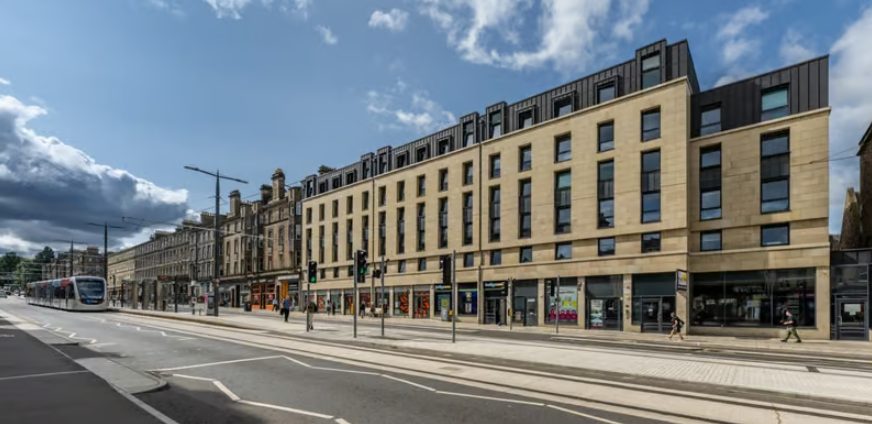
Two universities appear in the data: the University of Edinburgh (global rank 34) and Heriot-Watt University (global rank 287). Each has a distinct campus geography that influences where students typically seek housing.
University of Edinburgh
The main campus is located in the city centre, around George Square, with additional sites at King’s Buildings (science and engineering, about 2 km south) and Little France (medicine, about 5 km south-east). Most students choose to live within a 2–3 km radius of George Square. The most common residential areas are:
- Marchmont: Victorian terraced houses converted into student flats; very popular, 10-minute walk to George Square.
- Newington: Similar to Marchmont, with more shops and restaurants; 15–20 minute walk.
- Bruntsfield: Slightly further west, 20–25 minute walk; quieter but well-connected by bus.
- Old Town / New Town: Expensive but close to university buildings; many short-term lets, but long-term student flats exist.
- Leith: More affordable, but a 30-minute bus ride; chosen by those who prioritise lower rent over commute time.
Heriot-Watt University
Its main campus is in Riccarton, a greenfield site south-west of the city centre. The surrounding area is less dense than central Edinburgh. Students typically choose:
-
Riccarton / Hermiston: Purpose-built student accommodation right on campus or within a short walk. This is the most convenient option, though you will be isolated from city nightlife.
-
Gyle / South Gyle: A retail area with the Gyle shopping centre; a 15–20 minute bus ride from campus; slightly better access to city centre.
-
Murrayfield / Corstorphine: Residential suburbs about 20–25 minutes by bus from Heriot-Watt; also close to the city centre by bus.
-
City centre (West End): A 30–40 minute commute via bus or train; chosen by students who want city life and are willing to travel.
Students who plan to socialise mostly in the city centre may find it frustrating to live in Riccarton, while those who prefer quiet study may appreciate the campus environment. Some purpose-built accommodation near the city centre serves both universities, but the commute for Heriot-Watt students will be longer.
Three Pitfalls to Avoid
-
Underestimating the commute from Riccarton to central Edinburgh
Heriot-Watt students sometimes choose a city centre flat for the social scene, not realising that buses can be crowded and unreliable during peak hours. A journey that takes 30 minutes off-peak can stretch to 45–50 minutes in rush hour, and missing the last bus (around 11:30 pm on weekdays) means an expensive taxi. If you are enrolled at Heriot-Watt, seriously consider on-campus or near-campus accommodation, at least for the first year. -
Assuming all rents include bills
Many purpose-built student accommodations bundle water, electricity, gas, and internet into the weekly rent. However, private flats and some student blocks charge these separately. A seemingly low rent of £139.30 per week could rise by £25–£35 per week once you add utilities. Always ask for a breakdown of what is covered. If the property is managed by a private landlord, you may also need to pay council tax (though full-time students are exempt — you still need to apply for exemption or risk a large bill). -
Booking too late for the September intake
Edinburgh is a popular student city, and the best-value properties are often snapped up by February or March for a September move-in. If you wait until June or July, you may be left with only high-priced or inconvenient options. The 34 properties in the dataset are a snapshot; the actual pool of available rooms shrinks quickly. Start researching in October–December of the preceding year, and aim to secure a contract by March at the latest.
Booking Calendar for 2026–2027
For the academic year 2026/27, the typical booking timeline looks like this:
- October–December 2025: Many operators open early-bird reservations. Some allow you to secure a room with a small deposit (often refundable until a certain date). Rates at this stage may be lower than peak season, but not always.
- January–March 2026: Peak booking period. Most students send their applications by March. Demand is highest for central locations and rooms under £180 per week. If you have not started looking by January, you risk missing the best options.
- April–June 2026: Availability declines, especially for cheaper flats. Some properties still have vacancies, but you may need to accept a higher price or a longer commute.
- July–August 2026: Last-minute bookings. Operators sometimes reduce prices for leftover rooms, but choices are limited. If you are flexible, you can still find something, but you will have to act fast.
For a January 2027 start (second semester), booking typically opens around September 2026 and remains flexible until December. Fewer options are available compared to the September intake.
Remember: all dates and prices are indicative — confirm with the operator. Some operators have their own release schedules, so always check directly.
Frequently Asked Questions (4)
1. When should I start looking for student accommodation in Edinburgh?
Start your search in October of the year before your course begins. For September 2026 entry, begin browsing listings in October 2025. The best deals and widest selection appear between December and February. By March, many well-priced rooms are gone.
2. What is the typical rent for a student room in Edinburgh for 2026/27?
Based on the data, the lowest offered rent among 34 properties is £139.30 per week. However, most student rooms in central areas cost between £160 and £220 per week. Studios and premium flats can exceed £250. All figures are indicative — confirm with the operator.
3. Are bills (electricity, water, internet) included in the rent?
Many purpose-built student blocks include bills in the weekly rent. Private shared flats often do not. Always read the tenancy agreement carefully. Even if bills are included, check if there is a cap on usage (e.g., for excessive electricity use). Prepare to budget £15–£30 extra per week if bills are separate.
4. Can I book a short-term or semester-only contract?
Yes, some operators offer flexible tenancies (38 weeks, 42 weeks, or 52 weeks). Short-term contracts for January to June are available but are rarer and may cost a premium. Always confirm the minimum tenancy length and whether early termination is possible.
Data last updated: February 2026
See also: listing details · browse more