Berlin Student Housing Decision Guide
Berlin remains one of Europe’s most popular study destinations, attracting tens of thousands of international students each year. With three major universities – Freie Universität Berlin, Humboldt-Universität zu Berlin, and Technische Universität Berlin – the city offers a wide range of academic programmes across all fields. As of early 2026, the platform lists 97 student housing properties in Berlin, with a starting price of €440 per month (indicative — confirm with the operator). This guide helps you navigate neighbourhoods, price bands, university locations, common pitfalls, and the booking timeline for the 2026/27 academic year.
Neighbourhoods by Commute Logic
Berlin’s public transport system (U-Bahn, S-Bahn, bus, tram) is extensive, and most student areas are well connected. Your choice of neighbourhood should primarily be driven by which university you attend, as commute times can vary from 15 minutes to over 50 minutes depending on the route. The city offers a mix of lively central districts and quieter residential suburbs.
- Central districts (Mitte, Friedrichshain, Kreuzberg, Prenzlauer Berg) – high concentration of bars, restaurants, cultural venues; rents are generally above the city average. Direct connections to Humboldt-Universität (Mitte) and Technische Universität (Charlottenburg) via U-Bahn.
- Inner-ring neighbourhoods (Wedding, Neukölln, Moabit) – more affordable than central districts, still well connected by U-Bahn or S-Bahn. Commute to all three universities is possible within 20–35 minutes.
- Western districts (Charlottenburg, Wilmersdorf, Steglitz) – close to Technische Universität Berlin and Freie Universität Berlin. S-Bahn and U-Bahn lines provide direct access. Many student residences are located here.
- South-western suburbs (Dahlem, Zehlendorf, Lichterfelde) – house Freie Universität Berlin’s main campus. Quieter, green areas; commute to Humboldt-Universität or TU Berlin may take 30–50 minutes.
- Eastern fringe (Lichtenberg, Marzahn, Köpenick) – lower rents but longer commute times to central campus locations. Only suitable for students who prioritise affordability over time.
General commute rule of thumb: live along the same U-Bahn or S-Bahn line as your university to minimise transfers. For example, U3 serves both Freie Universität (Dahlem-Dorf station) and Technische Universität (Ernst-Reuter-Platz). The S-Bahn ring (Ringbahn) connects many districts but requires transfers to reach campus.
Price Bands and Property Count
The starting price of €440 per month (indicative — confirm with the operator) represents a room in a shared apartment or a small studio in a purpose-built residence located in outer districts. Across the 97 listed properties, rents typically fall into these bands:
- €440 – €550 per month: Shared apartments (WG) in Neukölln, Wedding, Lichtenberg, or older buildings in the south-west. Limited availability; early booking essential.
- €550 – €700 per month: Purpose-built student residences in areas like Friedrichshain, Charlottenburg, or Steglitz. Usually includes utilities and sometimes internet.
- €700 – €900 per month: Private studios or 1-room apartments in central districts. Can also be found in newer residences near major universities.
- €900+ per month: High-end studios or 1-bedroom flats in Mitte, Prenzlauer Berg, or directly on campus. Less common among students but available.
Note that the listed price is the minimum listed; actual rents vary based on size, location, amenities, and whether the property is furnished. All prices are indicative and should be confirmed directly with the operator before signing any contract. Rent in Berlin normally includes heating, water, and building costs (“Kaltmiete plus Nebenkosten”); electricity and internet are often separate.
The platform’s current inventory of 97 properties covers a mix of shared flats, single studios, and cluster apartments. Availability changes daily, especially during the peak booking months of July–September for the winter semester start.
How the Listed Universities Map to Areas
Three universities dominate Berlin’s higher education landscape. Each has a distinct campus location, which directly influences where students look for housing.
Freie Universität Berlin (FU Berlin) – Dahlem
- Campus location: South-west Berlin, in the leafy district of Dahlem. The main campus clusters around U-Bahn station Dahlem-Dorf (U3).
- Typical student housing areas: Dahlem itself has limited low-rise housing; many FU students live in Steglitz, Zehlendorf, Lichterfelde, or Friedenau. S-Bahn lines S1 and S25 also connect from central districts, but the commute from Friedrichshain or Prenzlauer Berg can be 40–50 minutes.
- Rental trends: Prices in Dahlem are moderate to high, but slightly lower than central districts. Shared flats in Steglitz start around €480 (indicative — confirm with the operator).
Humboldt-Universität zu Berlin (HU Berlin) – Mitte
- Campus location: City centre, with main buildings near Unter den Linden and the S-Bahn station Friedrichstraße. HU also has the Adlershof campus (south-east) for science faculties.
- Typical student housing areas: The central location makes almost any district accessible. Most HU students favour Mitte, Friedrichshain, Kreuzberg, Prenzlauer Berg, and Wedding. Commute times from Neukölln or Schöneberg are also short.
- Rental trends: Central districts are expensive. A studio in Mitte may cost €700+; shared flats in Friedrichshain start around €550 (indicative — confirm with the operator). For the Adlershof campus, consider living in Treptow, Köpenick, or southern Neukölln.
Technische Universität Berlin (TU Berlin) – Charlottenburg
- Campus location: In Charlottenburg, around Ernst-Reuter-Platz (U2 and U3) and nearby S-Bahn stations Tiergarten and Zoologischer Garten.
- Typical student housing areas: Charlottenburg, Wilmersdorf, Moabit, and Schöneberg are popular. The area west of the campus (westend) also has student residences.
- Rental trends: Charlottenburg is mid- to high-price, but a shared room can be found from €500 (indicative — confirm with the operator). Moabit offers slightly lower rents while still being only a 15-minute U-Bahn ride away.
Three Common Pitfalls
1. Short-term rental scams
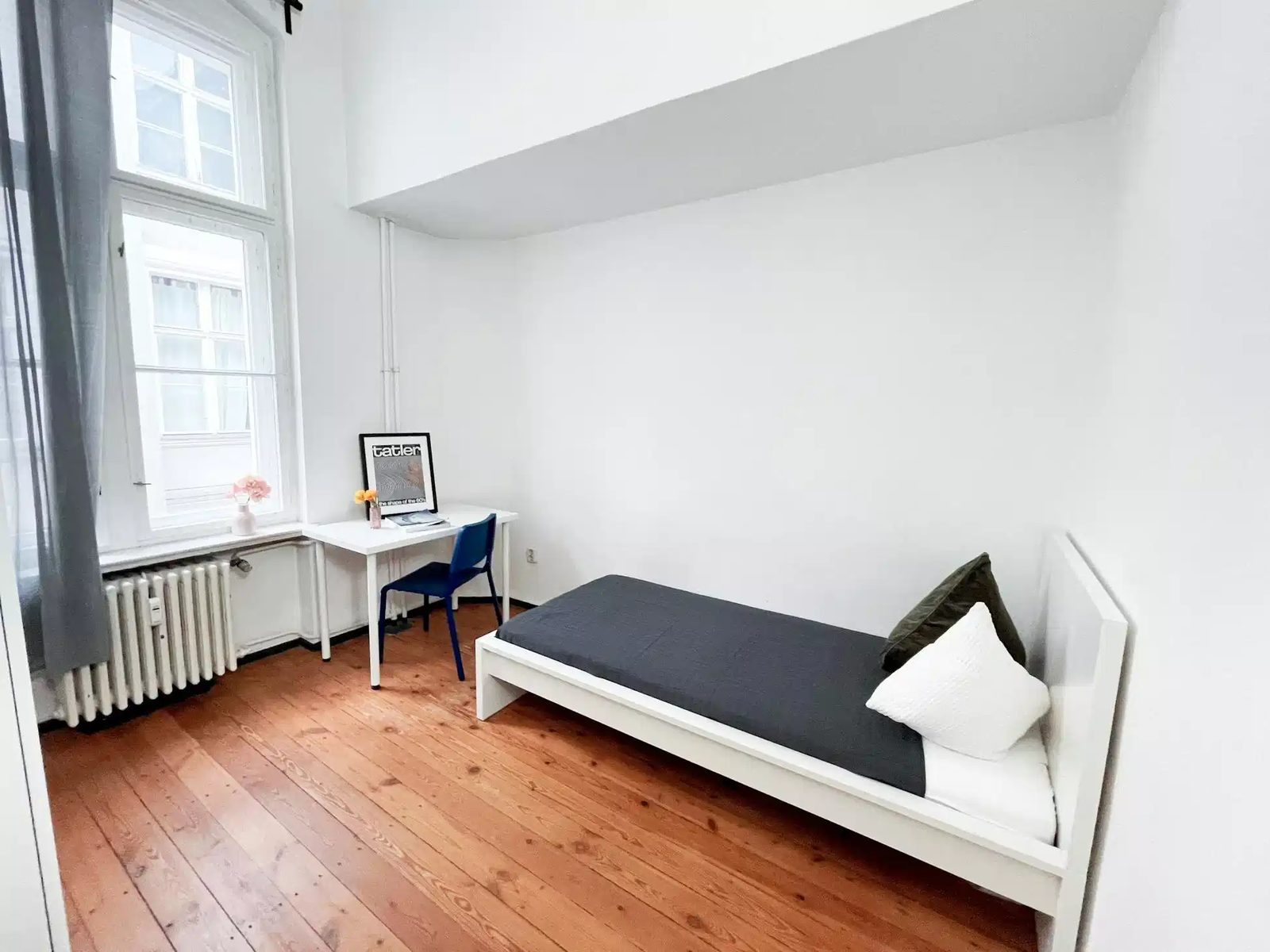
Berlin’s high demand for student housing makes it a target for fraud. Fake listings with too-good-to-be-true prices and requests for payment before viewing are common. Always verify the property exists by asking for a video call or an in-person viewing. Never wire money to a landlord you have not met. Use only reputable platforms that verify operators.
2. Minimum rental periods and contract traps
Many student residences enforce a minimum stay of 6 or 12 months. Some contracts auto-renew if you do not cancel in writing 3 months before the end date. Read the cancellation policy and termination notice period carefully. If you plan to stay only for a semester, look for “Zwischenmiete” (sublet) or short-term residences explicitly offering 3–6 month contracts.
3. Ignoring ancillary costs
The advertised rent often excludes electricity, internet, and sometimes additional fees (washing machine card, parking). In Berlin, “Warmmiete” includes heating and water, but electricity is billed separately. Check whether the rent is Kaltmiete or Warmmiete, and ask for an estimate of total monthly costs. A €440 offer (indicative — confirm with the operator) may become €520–€550 after utilities and electricity.
Booking Calendar
Berlin’s academic year consists of a winter semester (October – March) and a summer semester (April – September). Most international students arrive for the winter semester.
- November – December (year prior): Start research; browse listings on your platform. Prices and availability are stable.
- January – March: Begin active booking if you are applying for a summer semester start. Many student residences open applications 3–4 months before move-in.
- April – June: Peak booking for the winter semester. Demand surges. Properties listed at €440 may be gone within days. Book as soon as you receive your admission letter.
- July – August: High competition. Prices may increase for last-minute availability. Consider slightly more expensive options or less popular districts.
- September: Late booking is possible, but choices are limited. Expect to pay premium prices.
- October – December (semester start): Move-in. Some operators still have vacancies as students cancel.
Recommended timeline: Secure your housing at least 2–3 months before your planned move-in date. For winter semester, aim to confirm a contract by June. For summer semester, aim for January.
Frequently Asked Questions
1. What is the cheapest student accommodation in Berlin?
The lowest listed price on the platform is €440 per month (indicative — confirm with the operator). This typically corresponds to a room in a shared apartment (WG) in an outer district like Lichtenberg or Neukölln. Cheaper options may exist off-platform (e.g., student housing via Studierendenwerk Berlin), but availability is limited and wait lists can be long. Always contact the operator directly to verify the final price and included services.
2. Which neighbourhood is best for Freie Universität Berlin?
The most convenient areas are Dahlem, Steglitz, Zehlendorf, and Lichterfelde, all within a 15–25 minute walk or short bus ride to the campus. If you prefer a more lively environment, Schöneberg or Friedenau are good compromises, with a commute of about 30 minutes. Avoid central neighbourhoods like Mitte or Prenzlauer Berg unless you are willing to travel 40–50 minutes each way.
3. Do I need a German bank account to pay rent?
Most operators accept international bank transfers or credit cards. However, some require a German bank account for recurring payments (SEPA direct debit). Opening a free account can be done online or in a German bank branch upon arrival. Check the payment method in your tenancy agreement. If you are outside the EU, ensure your bank supports SEPA transfers to avoid high fees.
4. Can I arrive and find housing after I get to Berlin?
Yes, but it is risky. Berlin has a notoriously tight rental market, especially in September and October. Without a confirmed booking, you may need to stay in hostels or temporary housing for two to three weeks while searching. To minimise stress, book at least a temporary short-term property in advance (e.g., 1–2 months) and then search for a long-term option once you are in the city.
Data updated: January 2026. All prices shown are indicative and subject to change. Confirm details directly with the property operator before making commitments.
See also: listing details · browse more