Housing Near University of Waterloo: What Campus Reviews Reveal and Where to Look
The University of Waterloo is a large, research-intensive university in the city of Waterloo, Ontario, Canada. According to the QS World University Rankings, it is ranked 119th globally. It holds a Google rating of 4.4 based on 1,305 reviews. While the university is well-regarded academically, student reviews offer a more mixed picture of the campus experience—insights that are useful when considering where to live.
What Campus Reviews Reveal
Reviews from current and former students highlight both strengths and frustrations. One five-star review from Stanley C says:
“Love and hate with this place. Lots of memories there. Can’t go wrong with this university, one of the best universities in Canada or the world. Lots of efforts to spend there but certainly will lead you to success. You need to stay strong.”
This suggests that while the university is demanding, it is also rewarding. Another positive review from Ferdinand Filardo, who visited for an open house, notes:
“Took my daughter there for the University open house and the tour host was a lovely young lady Cailyn… very impressive grounds and school proved to me they had the foresight to think about a lot of the needs of the students.”
A five-star review from Zoe adds a nuanced perspective:
“Not perfect, but the best university I could have gone to. All the profs I had first year really cared about their students and teaching. Very flexible and understanding of your circumstances. I know we get a rep as a lame academic school that never parties, but it’s not true at all.”
However, one critical one-star review from Fgggs Gkgig points to dissatisfaction with tuition value:
“### Headline: Waterloo’s Math Doesn’t Add Up: Premium Tech Tuition for a Cancelled Route Rating: ⭐⭐☆☆☆ If you are paying first-class tuition for the University of Waterloo’s elite global reputation, prepare to be rerouted. The high-tech, co-op flagship has structurally degraded into a budget”
The review is cut off, but it clearly reflects concern over whether the cost justifies the experience. Taken together, these reviews indicate that Waterloo offers a strong academic environment with caring professors and worthwhile opportunities, but also carries a heavy workload and possibly high costs—factors that influence housing decisions.
City Context: Waterloo, Ontario
Waterloo is part of the Regional Municipality of Waterloo, often grouped with the cities of Kitchener and Cambridge. It is roughly 110 km west of Toronto. The city has a population of about 140,000, with a significant proportion being students. The local economy is anchored by technology companies, insurance firms, and the university itself. Public transit is provided by Grand River Transit (buses) and the Ion light rail, which connects Waterloo to Kitchener. The University of Waterloo campus is located at 200 University Ave W, on the northern edge of the city’s main student area.
Living in Waterloo means navigating a market that is shaped by the academic calendar. Many leases run from September to August, and demand peaks in late summer. The city has a mix of purpose-built student residences, private apartments, houses converted into shared accommodation, and newer high-rise developments near the light rail.
Budget Bands: What to Expect (Indicative Only)
Rental prices in Waterloo vary depending on distance from campus, building age, and amenities. Since precise current rents are not included in the source data, the following are general guidance bands based on typical market conditions in the area. All figures are indicative — confirm with the operator.
- Shared room / older house (per person): CAD 500–700 per month. Usually a bedroom in a shared house or apartment, often farther from campus (15–30 minutes by bus).
- Private room in purpose-built student residence: CAD 700–1,000 per month. Often includes utilities and internet, with shared kitchens and bathrooms. Located within walking distance or a short bus ride.
- One-bedroom apartment (off-campus): CAD 1,200–1,600 per month. Harder to find near campus; more common in newer buildings near the light rail.
- Studio / bachelor unit: CAD 1,000–1,300 per month. Typically in newer high-rises or converted basements.
These are approximate and change with demand. Always verify pricing directly with the operator before committing.
Walk vs. Transit Trade-Off
The University of Waterloo campus is compact enough to walk from many surrounding streets. Students living in the “student ghetto” area north of University Avenue and east of King Street can reach most buildings in 10–20 minutes on foot. This is the most convenient—but also priciest—option for shared rooms. For example, a room within a 15-minute walk may cost 15–25% more than a similar room 30 minutes away by bus.
If you live farther out, such as in the Laurelwood area or near the Boardwalk shopping district, you will rely on Grand River Transit buses or the Ion light rail. The Ion stops near the university (at the University of Waterloo station on the south side of campus). A bus pass is included in student fees at Waterloo, so transit is essentially free once you are enrolled. This makes living a bit farther more affordable without adding direct cost. However, bus frequency can be lower on weekends and evenings, and during winter months waiting outdoors can be uncomfortable.
The trade-off is simple: walk to campus for convenience and time savings, but pay higher rent; take transit for lower rent, but add 20–40 minutes of commute each way. Students who value study time or have late lab sessions often prefer to walk, while those on a tighter budget may favour transit and plan their schedules around bus times.
Shortlist Logic for Nearby Residences
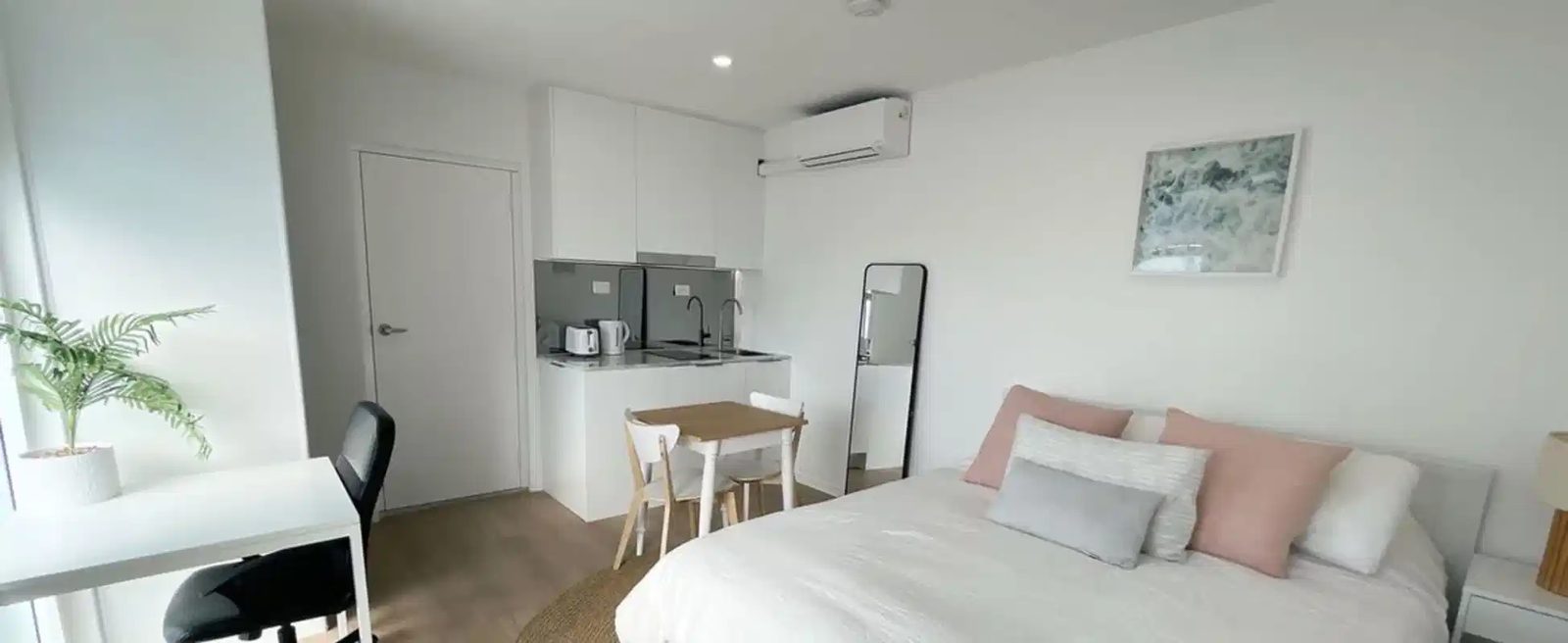
When choosing where to live near the University of Waterloo, follow a systematic shortlist approach. Because the source data does not include a specific list of nearby residences, the logic below applies to any housing search in the area. You can apply this framework when browsing available rental listings.
-
Check distance to your main faculty building. The university has multiple clusters: Math, Engineering, Science, Arts, Environment. If your classes are on the north side of campus (near the Math & Computer building), look north of University Avenue. If your lectures are near the south ring road, consider the area around King Street or Seagram Drive.
-
Determine your budget band (see above). If your maximum is CAD 700 per month, you will likely need shared housing or a room in a student residence. If you can spend CAD 1,000–1,200, you can consider a private room in a newer building or a small apartment.
-
Evaluate transportation preference. If you do not want to rely on buses, draw a 1 km radius from the campus centre. Within that circle, walkable options include streets like Albert Street, Hickory Street, and the buildings along University Ave West. If you are comfortable with a 15-minute bus ride, expand your search to the areas around Laurelwood Drive (northwest) or the Waterloo Town Square area (south).
-
Check lease terms and inclusions. Many student houses rent per room, so verify whether utilities, internet, and laundry are included. Purpose-built student residences (like UW Place or Veloce — note: brand names not from source) are often all-inclusive, but verify directly.
-
Read the lease carefully. Waterloo has a high student turnover, so some landlords use standard Ontario leases. Ensure the unit is not a sublet without permission, and check if you are responsible for snow removal or lawn care in a house.
-
Visit or get a video tour. Photos can be misleading, especially in older houses. If you are not in Canada, ask for a live video walkthrough. One review from Ferdinand Filardo praised the campus grounds, but that does not guarantee every off-campus unit is well maintained.
-
Factor in co-op terms. Waterloo is famous for its co-op program. If you are on a co-op schedule, you may need a lease that allows subletting or a short-term rental. Some landlords near campus are accustomed to this and may offer 4-month or 8-month leases. Check this explicitly.
FAQ
1. Is it cheaper to live off-campus or in a university residence? University residences (like the ones operated by the university itself) are convenient and include meal plans for first-year students, but they are not necessarily cheaper. Off-campus shared housing can be more affordable if you cook for yourself and are willing to share a bathroom. However, university-operated housing is not listed in the source data, so you must confirm prices directly. Generally, off-campus rooms in the student ghetto are competitive with residences, especially for upper-year students.
2. What is the best area for a student who does not have a car? The area within a 1.5 km radius of the campus (bounded by University Ave, King St, Hazel St, and Columbia St) is ideal. It offers walkable access to campus, grocery stores, and the Ion light rail. Streets like Sunview, Westmount, and Lincoln are popular with students. If you prefer transit, consider the neighbourhoods near the Ion stations at Waterloo Public Square or Northfield. These are a 5–10 minute train ride from campus and have newer apartments.
3. How can I avoid overpaying for housing near the University of Waterloo? Compare prices from multiple listings in the same area. Avoid renting in August when demand peaks; look for leases starting in May or June when student turnover is high. Also, consider units slightly farther from campus (e.g., 2 km away) but on a direct bus route—these often cost 20% less while still being convenient. Always check if the rent is “all-inclusive” or if you need to pay separate hydro and heating, which can add CAD 50–100 per month.
Data as of early 2027. Prices are indicative — confirm with the operator before signing any agreement.
See also: listing details · browse more