What Campus Reviews Reveal
University of Utah earns a 4.5 Google rating from 1,643 reviews, with students and visitors consistently highlighting the campus’s cleanliness, modern-updated infrastructure, and proximity to outdoor recreation. One reviewer, Kurt Kawczynski, gave five stars and wrote: “Amazing campus! Super clean and modern with some old school style. Admissions staff was super helpful. The engineering program is top notch and the faculty was very welcoming. Great proximity to SLC and ski areas.” This echoes a common theme: the university balances historic architecture with new facilities, and its location in Salt Lake City gives easy access to both downtown and mountain resorts.
Another five-star review, from Dan walker, mentions attending a Supercross event in May 2026: “Went to the supercross event on Saturday 5/9/26. GO Ken Rozen!!! The campus is awesome. Didn’t realize how big that place was until you have to walk across it. Super clean was a very cool place to see.” The size of the campus comes up again — it’s large enough that walking from one end to the other takes noticeable effort. This is relevant when choosing housing, because a residence far from your classroom building can mean a 20–30 minute walk or a shuttle ride.
M.J. Fields, a patient visiting the neuroscience department, gave five stars and noted: “The staff was all very kind and friendly. The center itself is absolutely beautiful. Lots of great art just like at all University buildings.” That comment points to a generally welcoming environment across campus, not just in academic departments. Arnold Ofoe Odonkor, who attended the 2026 graduation, praised the event planning and “information exposure” about university programs and the business school. So campus events are well-organized, which may appeal to students who value community.
None of the reviews mention off-campus housing directly, but the emphasis on “super clean” and “welcoming” suggests the university maintains high standards for its own facilities. Students looking for nearby housing can expect that the surrounding neighbourhoods, particularly those near the University of Utah and Research Park, also tend to be well-maintained and student-friendly.
Salt Lake City Context
The University of Utah sits at 201 Presidents’ Cir, Salt Lake City, UT 84112. Salt Lake City (often called SLC) is the state capital and a major hub for technology, healthcare, and outdoor tourism. The city’s population is around 200,000, with the metropolitan area exceeding 1.2 million. It offers a relatively low cost of living compared to other US college towns on the West Coast, though housing prices have risen in recent years.
The university is located in the eastern part of the city, adjacent to the Wasatch Mountains. That proximity means residents can reach world-class ski resorts (Alta, Snowbird, Brighton) within 30–45 minutes by car. Many students choose to live near campus to take advantage of both academic life and outdoor recreation. The city also has a light rail system (TRAX) that connects the university to downtown, the airport, and surrounding suburbs, making it feasible to live further out if you prioritise lower rent.
Salt Lake City is known for its grid street system, which is easy to navigate. The area around the university (known as the “University District”) includes a mix of older single-family homes converted into student rentals, purpose-built apartment complexes, and new high-rise developments. Grocery stores, restaurants, and shops are within walking distance of most campus entrances.
Budget Bands
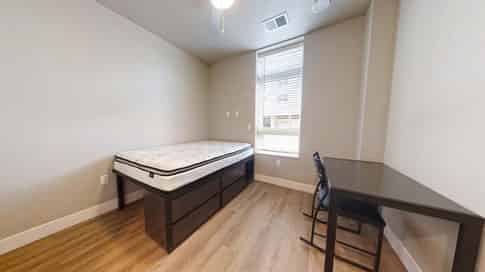
Because the provided data does not include specific rental listings, the following budget bands are general estimates for the Salt Lake City market near the University of Utah. All figures are indicative — confirm with the operator.
- Economy (shared housing): $500–$800 per month per person. Typically a room in a house or apartment shared with 2–4 other people. Utilities may or may not be included. This option usually requires a lease signed directly with a private landlord.
- Mid-range (studio or one-bedroom): $900–$1,400 per month. Many modern apartment complexes near campus offer studios or one-bedroom units with amenities like fitness centres, parking, and laundry. Some include utilities or offer flat-rate packages.
- Premium (luxury or concierge): $1,500+ per month. These are typically newer high-rises or recently renovated buildings with high-end finishes, rooftop terraces, and concierge services. Some include parking and utilities in the rent.
It is common for landlords in Salt Lake City to require a security deposit equal to one month’s rent, plus proof of income or a co-signer. International students without US credit history may need to pay a larger deposit or use a guarantor service. Always ask about utility costs, pet policies, and parking fees before signing.
Walk vs Transit Trade-off
The University of Utah campus is large, and many academic buildings are clustered near the central “Union” area. Living within a 15-minute walk of the centre gives you easy access to most classes, the library, and eateries. However, renting a studio within that radius can cost $200–$400 more per month than a similar unit a 20–30 minute walk away.
If you choose to live farther out, the TRAX Red Line runs directly through campus, with stops at the University Medical Center, Rice–Eccles Stadium, and the central campus station (Library). A monthly UTA transit pass for university students is typically included in tuition fees or available at a discount. Using the train can save you 10–20 minutes of walking, but you need to factor in wait times (every 10–20 minutes during peak hours).
Walking is often faster for short distances and avoids reliance on transit schedules. However, Salt Lake City experiences snowfall from November to March, and sidewalks can be icy. Students who prefer not to walk in winter often choose apartments along the TRAX line or within a few blocks of a shuttle stop. The university also operates a free campus shuttle (the “U Shuttle”) that loops around the main buildings and nearby parking lots.
Trade-off summary:
- Walk (0–1 mile from centre): Higher rent, but no transit cost or wait time. Best for students with early morning classes or heavy course loads.
- Transit (1–3 miles, along train or bus lines): Lower rent, but you must plan around schedules. Best for students who don’t mind a 15–25 minute commute and want a quieter or cheaper neighbourhood.
- Drive (3+ miles): Option for those with a car, but parking on campus costs $300–$600 per semester. Some apartments include parking; others charge extra.
Shortlist Logic Using Nearby Residences
Since the provided data does not include a specific list of nearby residences, the following logic can guide your search. When you find available properties, apply these criteria:
- Proximity to your main building. Check which college or department you belong to — engineering buildings are on the north side of campus, while business and neuroscience are near the centre. Look at a campus map and note the closest campus entrance.
- Transit access. If the apartment is more than 1 mile from campus, verify that a TRAX stop or a bus route (e.g., routes 2, 220, 223) is within a 5-minute walk. Google Maps or the UTA trip planner can show commute times.
- Lease type and reliability. Short-term rentals (month-to-month) are rare; most student housing leases run from August to July. Look for properties that have a dedicated management office or a landlord with positive reviews on platforms like Google Maps or Rent.com (but remember that site names are for reference only; do not include domain links in this article).
- Cost vs amenities. Compare the total monthly cost, including utilities, parking, and any fees. A low rent with high utility costs may equal a higher rent with included amenities. Ask if internet and electricity are separate.
- Safety and noise. Salt Lake City neighbourhoods east of campus are generally quieter and safer. Avoid areas directly west of I-15 unless you are certain about the block. Talk to current residents or check local crime maps.
If you are considering a specific apartment complex, read its Google reviews and look for patterns — residents often mention maintenance response times, noise levels, and management communication. The same rule applies as with university reviews: look for recent feedback from students.
Frequently Asked Questions
1. Is it better to live on campus or off campus near the University of Utah?
On-campus housing (residence halls) is available but limited; priority is usually given to first-year students. Off-campus housing offers more independence, often lower costs (especially if sharing), and the ability to choose your neighbourhood. Many students move off after year one.
2. How can I find a roommate for off-campus housing?
Use the university’s official housing portal (if available) or social media groups (e.g., Facebook groups for University of Utah students). You can also ask your department’s student services office for a list of roommate-seeking students. Always meet potential roommates in person or via video call before committing.
3. What is the average utility cost for a one-bedroom apartment near campus?
Indicatively, expect $100–$200 per month for electricity, water, trash, and internet if not included in rent. During winter months, heating bills can be higher; some older buildings use gas heating which may cost more. Confirm utility caps or averages with the landlord.
Data based on user reviews and general market observations as of early 2026.
See also: listing details · browse more