Housing Near University of Tromsø (UiT): What Campus Reviews Reveal
The University of Tromsø – The Arctic University of Norway (UiT) is the northernmost university of its kind in the world, located at 69° North. With a QS world ranking of 648, it draws students and researchers interested in Arctic studies, marine biology, space physics, and Indigenous culture. The campus sits in the city centre of Tromsø, at Hansine Hansens veg 18, 9019 Tromsø. Its Google rating of 4.6 out of 5 (from 141 reviews) hints at a largely positive student experience, though the reviews also reveal specific challenges – particularly around administration and international student admission processes.
What Campus Reviews Reveal
Student reviews paint a mixed but honest picture of life at UiT. One reviewer, Dariusz Prokopowicz, gave the university a 5-star rating and described it as widely revered in his professional network as the “ultimate northern beacon of circumpolar expertise, where a rugged, adventurous spirit meets the highest standards of global scientific inquiry.” This echoes the university’s reputation for Arctic research and its close ties to the local environment.
Areeg Samir, another 5-star reviewer, praised the facilities and staff: “One of the best universities that I have ever visited. The staff is skilled, professional, friendly, and supportive. The team work is cooperative and responsible to complete tasks in the most effective and efficient. The lectures halls and offices are comfortable, warm, and well equipped.” This suggests that the physical learning environment and support staff are generally high quality.
However, a strongly negative 1-star review from an anonymous reviewer points to systemic problems: “They have a highly bureaucratic PhD admission process that is designed to discredit international students over factors beyond their control. Unlike a meritocratic process, you will get rejected because a supervisor or one faculty member simply does not like your name, or have someone on the inside…” This highlights that while the campus facilities may be excellent, the administrative experience – especially for international graduate applicants – can be frustrating.
A longer but simpler review from “North Pole” (5 stars) notes: “Is a block of Universities and the biggest in north Norway. A very good place to study.” This reflects UiT’s physical footprint: the main campus is a compact cluster of buildings in central Tromsø, making most academic buildings accessible on foot.
City Context: Tromsø Housing Market
Tromsø (population about 77,000) is the largest city in northern Norway. It is an island city connected to the mainland by a bridge and a tunnel. The housing market here is tight, especially for students, due to a combination of high demand and limited supply. The city experiences extreme seasonal light variation – 24-hour daylight in summer (midnight sun) and polar night (24-hour darkness) in winter. This affects both lifestyle and utility costs.
Property prices and rents in Tromsø are relatively high compared to other Norwegian cities of similar size, though slightly lower than in Oslo or Bergen. A typical one-bedroom flat in the city centre may cost between 8,000 and 12,000 NOK per month. Student housing provided by the local student welfare foundation (commonly known in Norwegian as Sammen) offers lower rents, often between 3,500 and 7,000 NOK for a single room in a shared apartment or a small studio. However, demand far exceeds supply, and many students end up in the private market.
Climate is a major factor: Tromsø has a subarctic climate with mild winters (average January temperature around −4 °C) but heavy snowfall. Good insulation, heating, and proximity to campus or a bus stop are essential. Walkability is high in the compact central area, but outlying districts like Tromsdalen or Kvaløya require a car or bus.
Budget Bands
Rents in Tromsø vary by type, location, and condition. Below are indicative monthly rent ranges for typical student-oriented housing in 2026. All figures are indicative – confirm with the operator or landlord before committing.
- Student dormitory (shared kitchen/common areas): 3,500–5,500 NOK
- Studio apartment (private kitchen and bathroom): 5,500–8,500 NOK
- Private room in shared flat (city centre): 6,000–9,000 NOK
- One-bedroom flat (private, central): 8,000–12,000 NOK
- Two-bedroom flat (shared by two tenants, central): 11,000–15,000 NOK total (5,500–7,500 per person)
Note that utilities (electricity, internet, heating) are often included in student housing rents but may be separate in private rentals. Electricity can be expensive in winter due to heating needs. A small monthly allowance of 500–1,000 NOK for electricity is typical in private flats.
Walk vs Transit Trade-off
UiT’s main campus is centrally located – most lecture halls, the library, and student services are within a 10–15 minute walk from the city centre and the main shopping street (Storgata). Living in the centre means you can walk to most places, saving on transport costs. However, central flats are more expensive and often noisier.
For those living in peripheral areas such as Tromsdalen (on the mainland side, connected by the Tromsø Bridge), Kvaløya (west), or Kroken (east), bus travel becomes the primary mode. The local bus system (Troms fylkestrafikk) runs several lines across the city. A monthly student bus pass costs around 600–700 NOK (indicative – confirm with the operator). The journey from Tromsdalen to campus typically takes 10–15 minutes by bus; from Kvaløya it can take 25–35 minutes.
Walking is feasible in the centre and neighbouring districts like Håpet or Sommerlyst, but during sever winter snow, paths can be icy and slow. Many students invest in good winter boots and crampons. Bicycle use is possible only from late spring to early autumn; the rest of the year the city is covered in snow.
The trade-off can be summarised:
- Central walkable area (within 1.5 km of campus): higher rent, lower or zero transport cost, more time for study and social life, but smaller living space.
- Outer transit area (bus ride needed): lower rent per square metre, larger/flats, but higher transport cost and time, plus reliance on bus schedules (which are reduced during evenings and weekends).
Shortlist Logic for Choosing Accommodation
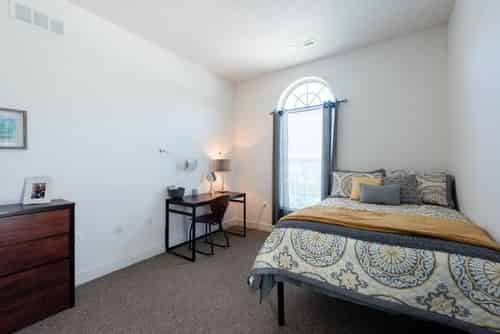
Since specific nearby residence names are not provided in our dataset, the shortlisting process should be based on general principles that any UiT student can apply. When evaluating options, consider the following criteria in priority order:
-
Distance to your primary faculty / lecture hall. UiT’s main campus is compact, but some departments (e.g., the University Hospital, the library, or the natural sciences building) are a few hundred metres apart. If you are in the health sciences or marine biology, check which building you will use most. Walking distances within the central campus are negligible.
-
Contract length and flexibility. Many student housing contracts run from August to June (10 months). Private rentals may require a one-year minimum. If you are a visiting researcher or exchange student, look for short-term leases or sublets. Avoid committing to a 12-month contract if your semester ends in December.
-
Inclusion of utilities. As noted, student housing often includes heating, water, electricity, and internet in the rent. Private rentals rarely include electricity, so factor in an additional 500–1,500 NOK per month in winter.
-
Bus stop proximity. If you live outside walking range, choose a location within 5 minutes of a bus stop that serves a direct line to the university. Lines 20, 21, and 28 pass close to campus, but check the updated route map from the local transport authority.
-
Community and quietness. Student housing complexes often have shared common rooms, laundry, and quiet hours. Private flats may be quieter but also more isolating. Read reviews from previous tenants (on housing portals or Facebook groups) to gauge noise levels and management responsiveness.
-
Security deposit. In Norway, it is standard to pay a deposit of one to three months’ rent, which must be held in a separate bank account (deposit account). Ensure the contract is registered with the local authorities (Husleietvistutvalget) if you rent privately.
Because we lack a pre-compiled list of “nearby residences,” the best approach is to:
- Check the student welfare foundation’s housing portal (do a search for “Tromsø student housing” – note that we cannot link directly under the rules) for available rooms in buildings like Gimle, Mikrohuset, Pirvik, Ankenes, or Sydspissen – these are common student areas, but we do not have official data on their current rents or availability.
- Use google maps to calculate walking times to the address Hansine Hansens veg 18, 9019 Tromsø.
- Contact the International Office at UiT for a list of recommended private landlords.
FAQ
Q: When should I start looking for housing in Tromsø? A: Student housing applications typically open in early spring (February–March) for the following autumn semester. Private rentals can be found year-round, but the market is most competitive in August and January (start of semesters). It is advisable to begin your search at least 3–4 months before your intended move-in date. For indicative guidance only – confirm exact dates with the housing provider.
Q: Is it better to rent a student dormitory or a private flat? A: Student dormitories are generally cheaper (3,500–5,500 NOK), include utilities, and offer a ready-made community – helpful for first-year students and those new to Norway. Private flats provide more independence, larger living spaces, and potentially quieter conditions, but costs are higher (8,000–12,000 NOK for a one-bedroom) and you need to arrange electricity, internet, and furniture yourself. For a short stay (one semester), a furnished dormitory is usually more convenient. For longer stays, a private flat may be better value if shared with another student.
Q: Can I walk to campus from any part of Tromsø? A: No – only areas within about 1.5 km of the university centre are easily walkable. These include the city centre (Storgata, Skippergata), the neighbourhoods around the university (e.g., Hansine Hansens veg itself, Mellomvegen, parts of Åsgård), and the nearby island of Tromsøya’s eastern side. Areas such as Tromsdalen, Kvaløya, Kroken, and Håpet require a bus (10–35 minutes). During winter, walking times may increase due to snow and ice, so factor in extra time. A student bus pass costs around 600–700 NOK per month (indicative – confirm with the operator).
Data as of 2026. All prices and conditions are indicative – confirm with the operator before making any financial commitment.
See also: listing details · browse more