University of Southern Denmark campus and what student reviews reveal
The University of Southern Denmark (SDU) is located at Campusvej 55, 5230 Odense, Denmark. Its main campus sits along the Odense River, a few kilometres south of the city centre. With an academic rank of 303 (QS World University Rankings) and an average Google rating of 4.6 from 359 reviews, the university generally leaves a positive impression on visitors and many students. However, as with any institution, experiences vary.
Several reviewers praise the campus architecture and facilities. Dariusz Prokopowicz writes: “SDU in Odense is frequently highlighted in my circles as a ‘pioneering hub of interdisciplinary synergy,’ where the ambitious architecture of the campus reflects a bold, forward-thinking approach to higher education.” Cláudia Pereira adds: “SDU University has an impressive building and ambiance. Went there as a visitor, almost as tourist. You can see through the photos how modern it is, with the view to the river, the library, the places to talk and study. Really huge room for concerts and events.” Chris Nis notes: “Very modern huge university with a lot of different fields of studies. Nice campus with high tech study rooms and lots of amenities for the students.”
These quotes highlight the modernist design, open study spaces, and the integration of the river view. The campus is often described as spacious, well-equipped, and conducive to collaboration.
At the same time, one negative review points to challenges international students can face. Aurora B. wrote: “As an international student from EU, my experience here was terrible. After 3 months I had to go back home and start antidepressants. I don’t recommend.” While this is a single review, it underscores that cultural adjustment, academic pressure, or social isolation can be real issues. Students considering SDU should prepare for the Danish winter, the initial difficulty of making friends, and the higher cost of living. Finding suitable housing is a key factor in easing that transition.
Odense as a student city: context and living costs
Odense is Denmark’s third-largest city, with a population around 180,000. It is known for its strong cycling culture, green spaces, and a compact centre that makes most areas accessible by bike within 15–20 minutes. The city has a growing tech and research scene, partly driven by SDU and the nearby Odense University Hospital.
Living costs in Odense are generally lower than in Copenhagen, but still high by European standards. As of 2026, a typical student budget for rent, food, transport, and incidentals is around 8,000–10,000 DKK per month (€1,070–€1,340). Rent alone for a room in a shared flat or a small studio can range from 3,500 to 7,000 DKK per month. All prices mentioned are indicative — confirm with the operator.
International students should note that proof of sufficient funds (around 7,500 DKK per month) is required for a residence permit. The university’s International Office can provide guidance, but housing is ultimately the student’s responsibility.
Budget bands for student housing near SDU (2026–2027)
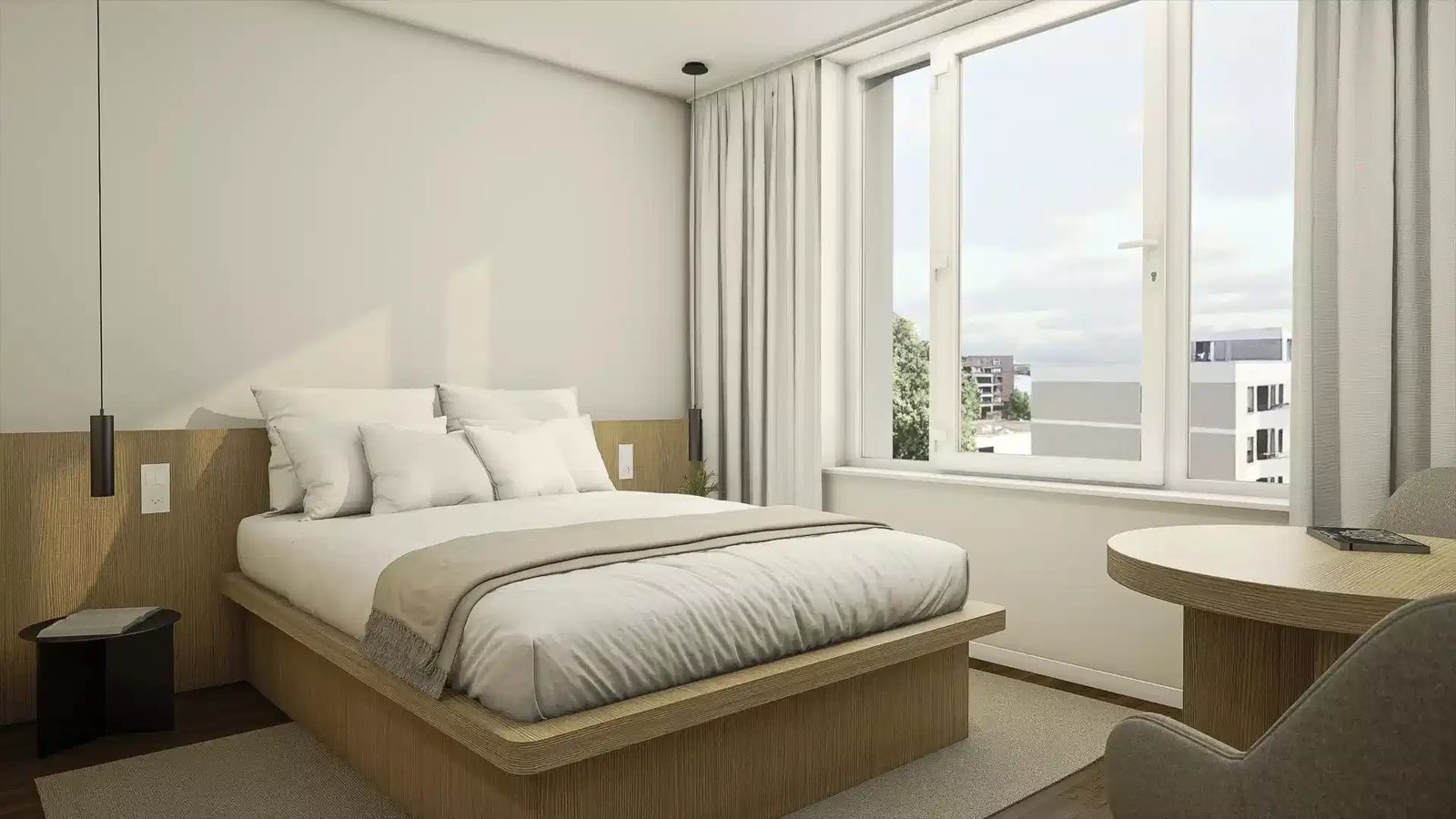
When searching for accommodation, it helps to know typical price ranges for different types of housing within cycling distance of campus. Prices are indicative — confirm with the operator.
- Dormitory room (kollegium) with shared kitchen and bathroom: 3,500–5,000 DKK per month. These are often the cheapest option and come with a contract that includes utilities. Waiting lists can be long, so apply early (6–12 months in advance).
- Private room in a shared apartment or house: 4,000–6,000 DKK per month. More flexibility in location and move-in date. Common on sites like BoligPortal or through Facebook groups, but beware of scams.
- Studio or 1-bedroom apartment: 6,000–8,000 DKK per month. Greater privacy, but a higher share of your budget goes to rent. Usually requires a deposit of 3 months’ rent.
- Short-term or temporary housing (e.g., through SDU’s housing office): 5,000–7,000 DKK per month for a room in a pre-arranged building. Convenient for the first semester, but may be more expensive and less flexible.
Most students end up in shared housing or kollegiums. The closer you are to campus, the higher the rent tends to be. Some popular student housing areas include Bolbro, Skibhuskvarteret, and the streets near the university (e.g., Nørregade, Vesterbro). You can also consider villages like Bellinge or aged 5 km away, but a bicycle or bus is then necessary.
Walk vs transit: choosing your location
SDU’s campus is located at the southern edge of Odense, roughly 2 km from the city centre. Most of the city’s student housing is concentrated in the central districts or in purpose-built student villages near the university. The trade-off is simple:
Walk to campus (within a 15-minute walk): Areas such as Klostermarkskvarteret, the university’s immediate surroundings, and some parts of Bolbro. Rent here is typically 10–20% higher than further out. You save a monthly bus pass (around 600 DKK) and have the convenience of rolling out of bed 10 minutes before a lecture.
Cycle to campus (10–20 minutes by bike): Most of central Odense, including the city centre, Skibhuskvarteret, and villakvarter. A good bicycle costs around 1,000–2,000 DKK second-hand. Bike parking is abundant on campus. This is the most common commuting method for students.
**Bus or train to campus:**Some students live in outlying districts like Stige, Seden, or even towns like Langeskov (15 km away). A monthly public transport pass costs about 600 DKK for students (with a youth discount). Travel time can be 20–40 minutes one way. Rent is lower, but you lose flexibility and pay for transit.
Your choice should balance rent, commute time, and lifestyle. If you plan to spend long days on campus, living close can save energy. If you prefer a quiet neighbourhood, a longer bike ride might be worth it.
Shortlisting nearby residences: a practical logic
Since no specific residence names are given, this section outlines a general logic for shortlisting accommodation near SDU. When you browse listings on student housing platforms (not named here), apply the following filters:
- Distance to campus: Set a maximum bike time of 15–20 minutes, or a bus time of 25 minutes (including waiting). Use Google Maps or a cycling app to check.
- Rent within budget: Exclude anything above your upper limit (e.g., 6,500 DKK for a room). Remember utilities are often separate; ask the landlord.
- Contract length: Some dorms require you to stay for a full academic year; private rooms may offer shorter terms. If you arrive in February (spring semester), look for subleases or temporary contracts.
- Deposit and rules: A typical deposit is 2–3 months’ rent. Check if pets, visitors, or overnight guests are allowed. Some kollegiums have quiet hours.
- Shared amenities: Laundry, kitchen quality, storage space. Read reviews from previous tenants if possible.
Once you have a shortlist of 5–10 options, visit the area if you can, or ask a local contact. Pay attention to supermarket proximity, bus stops, and bike lanes. A 15-minute bike ride in the rain is manageable; a 40-minute bike ride against Danish wind is not.
Frequently Asked Questions
When should I start looking for SDU housing?
Start looking 3–6 months before your programme begins. Many kollegiums have application deadlines in March–May for August/September move-in. International students admitted in July still have options, but the selection becomes smaller. If you are starting in February (spring semester), apply by October. For temporary housing, contact SDU’s housing office as soon as you accept your offer. Waiting lists are common, so applying early is critical.
Is a bicycle necessary for living near SDU?
Not strictly necessary, but highly practical. Odense is flat, has extensive cycle lanes, and most students cycle. Even a short walk from a bus stop to campus can be pleasant, but buses run less frequently in the evenings and weekends. Owning a bike gives you independence and saves money on public transport. If you cannot cycle due to health reasons, consider living within a 10-minute walk of campus or on a major bus line (e.g., buses 21, 31, 61 that stop directly at SDU).
How can I avoid the negative experience mentioned in the review?
The negative review by Aurora B. highlights that mental health struggles can happen. To reduce the risk, take practical steps before arrival:
- Secure stable housing early; moving repeatedly adds stress.
- Connect with other international students via social media groups before arrival.
- Visit SDU’s student counselling service if needed.
- Embrace the Danish concept of “hygge” – invite classmates for coffee or join a student club.
- If you feel overwhelmed, seek help promptly. SDU offers free mental health support for students.
No housing guide can guarantee a smooth transition, but a comfortable, affordable place to live lays a solid foundation.
Last updated: October 2026.
See also: listing details · browse more