University of South Carolina: What Campus Reviews Reveal
The University of South Carolina (USC) in Columbia holds a Google rating of 4.5 from 722 reviews. Visitor and student feedback consistently highlight the campus atmosphere, safety, and the quality of instruction.
Chloe Joniec wrote after a tour: “For a school in the city center, it felt safe and cozy. The landscaping and vegetation is beautiful and rounds out the historic buildings. With a wide range of majors and student activities, USC should be on any s” (truncated in source data). This observation points to a compact, walkable campus where greenery and historic architecture create a pleasant environment.
Jacob Jordan King gave a full five stars: “The University of South Carolina truly lives up to its reputation as a phenomenal institution. The campus is absolutely beautiful – well-maintained grounds, impressive architecture, and a welcoming atmosphere that makes it easy to feel at home. Beyond the scenery, the university offers strong academ…” (source text cuts off). The emphasis on a “welcoming atmosphere” matters for students choosing where to live off campus—proximity to that atmosphere is a key factor.
A. K. (Jeff) offered a more measured perspective with four stars, noting: “Quiet and good place to focus on your school away from other busy cities. There are great teachers who are willing to help you if you ask. A lot services are provided by the school to help students with their school and social work. It get boring sometimes because it is a small city but overall ther…” (text truncated). This suggests Columbia itself is not a fast-paced metropolis, which some students prefer for focused study while others may find it quiet.
These reviews collectively paint a picture of a safe, beautiful campus in a smaller city, with strong academic support. For housing decisions, the takeaway is that living within walking or short commuting distance to campus allows you to fully access those attributes.
Columbia City Context for Students
Columbia is the state capital of South Carolina and a mid-sized city. The university sits near downtown, so many off-campus housing options are within a reasonable distance of campus, restaurants, and local venues. The city’s cost of living is generally lower than in major U.S. metros, which is reflected in rental prices for student housing.
From the given data, the starting price for student housing in Columbia is USD 499 per month (indicative — confirm with the operator). That number typically covers a room in a shared apartment or a small studio in a basic complex. Higher-end units with more amenities (private bathrooms, in-unit laundry, fitness centers) generally range higher.
Columbia’s public transit system, The Comet, operates bus routes that serve the university area. Many students also rely on bicycles or walking, especially if they live in neighborhoods like Five Points or near the Horseshoe (the historic heart of campus). The city has a mild climate, though summers are hot and humid—air conditioning is essential. Winters are mild, with occasional cold snaps.
For those concerned about the “boring” aspect mentioned in one review, Columbia does have a developing arts scene, riverfront trails along the Congaree River, and the nearby Lake Murray for outdoor recreation. The presence of the state capitol and various museums adds cultural depth.
Budget Bands for Off-Campus Housing (2026-2027)
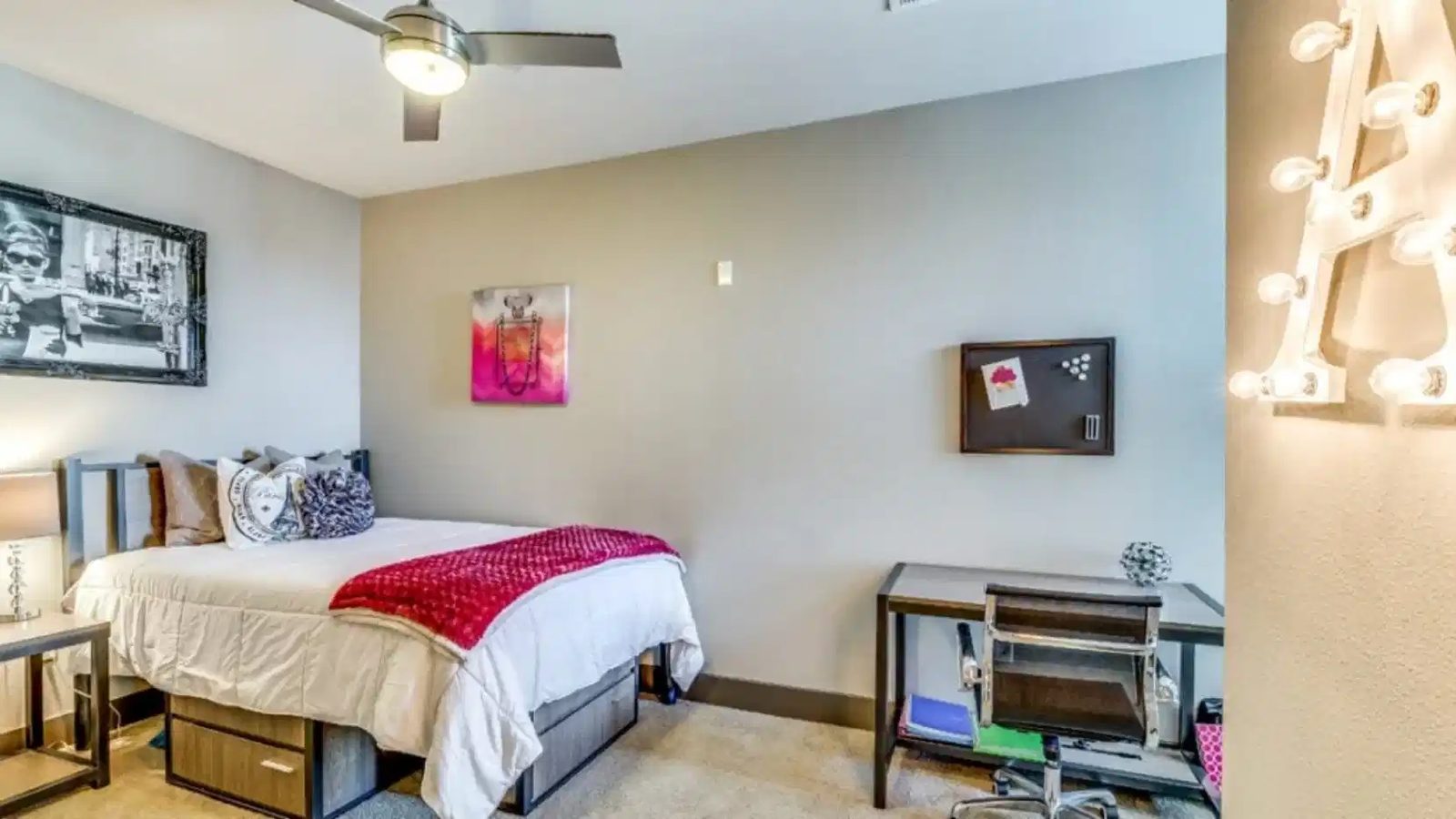
All prices listed below are indicative and subject to change — confirm with the operator for current rates and availability.
The data shows at least 11 housing options near USC, with a starting price of USD 499. Based on typical student housing in Columbia, you can expect the following general bands:
-
Budget share / room rental: Approximately USD 450–650 per month per person. This usually covers a bedroom in a multi-bedroom apartment or house, with shared kitchen and living space. Utilities may or may not be included.
-
Mid-range studio / one-bedroom: USD 700–1,100 per month. These units offer more privacy and often include basic appliances, but may still require you to pay for electricity and internet separately.
-
Premium / luxury student housing: USD 1,200–1,600+ per month. These are newer or fully amenitized complexes with features like private bathrooms, fitness centers, swimming pools, study lounges, and sometimes all-inclusive utility packages. Examples from the given list (The Domain At Columbia, The Roost, The Radley, Station At Five Points, The Grayson at Columbia) may fall into mid-range to premium tiers.
Because Columbia has a moderate cost of living, you can often get a decent apartment within walking distance of campus for under USD 1,000. Keep in mind that lease terms are usually 12 months, and some complexes offer shorter-term options for exchange or summer students.
Walk vs Transit: How to Choose
The decision between walking and relying on transit largely depends on your budget tolerance, your class schedule, and your personal preference for physical activity.
Walking is the most convenient option if you live within about a 15- to 20-minute walk of the main academic buildings. The campus is described as safe and cozy, with historic buildings and landscaping. Walking eliminates waiting for buses, parking costs, and fuel expenses. However, units closest to campus tend to command higher rents. If you have early morning classes or evening exams, walking means no concern about bus schedules. Columbia’s summer heat can make walking uncomfortable, but it is manageable with proper hydration and air conditioning waiting at home.
Transit (The Comet buses) can expand your search radius to neighborhoods further from campus, potentially lowering your rent. Several bus routes serve the university, including those along Assembly Street, Gervais Street, and Main Street. The university-affiliated “Gamecock Transit” (a free shuttle system) operates within and around campus, though its coverage area is limited. Relying on buses requires you to check schedules, allow for delays, and possibly walk to a bus stop. This option works well if you live in apartments near a major bus line, such as those on Two Notch Road or in the Forest Acres area.
Bicycles offer a middle ground: you can live 2–3 miles from campus for a lower rent than the immediate vicinity, and bike to class in 10–15 minutes. Columbia has some bike lanes, though not a comprehensive network. Many student complexes provide bike storage.
Trade-off summary:
- Walk: Higher rent, lower time cost, no vehicle expenses.
- Transit: Lower rent possible, but time spent waiting and riding, schedule dependency.
- Bike: Moderate rent, moderate time, requires good weather and storage.
Given that the campus feels safe and cozy, as reviewers note, many students choose walking neighborhoods such as Five Points, the Olympia area, or Shandon. Those who want a quieter environment may prefer a short bus ride.
Shortlisting Nearby Residences
Based on the provided sample of housing options near USC, here is a shortlist logic to help you evaluate them. None of these listings is endorsed; you should contact each property directly for current availability, exact pricing, lease terms, and amenities.
The Domain At Columbia – Likely a newer or mid-range complex with a mix of floor plans. Its proximity to campus (within the “Domain” vicinity near Blossom Street) makes it a popular choice for students who want to walk to classes. Check if utilities are bundled.
The Roost – The name suggests a higher-end or amenity-rich building, possibly in the Five Points area or near the university’s athletics district. It may feature a rooftop or pool. Verify the distance to your specific academic building; the Roost could be on the edge of a walkable zone.
The Radley – This appears to be an apartment community targeted at students, likely with modern interiors and communal study spaces. It may be located slightly further from central campus (e.g., on Harden Street or north of campus). Bus access may be important here.
Station At Five Points – Situated in the lively Five Points neighborhood, known for restaurants, bars, and shops. This location is walkable to parts of campus and offers a social atmosphere. Rent is likely mid- to high-range. Units may fill quickly.
The Grayson at Columbia – Another purpose-built student housing community, often featuring individual leases and roommate matching. Its location might be on the outskirts of downtown, requiring a bus or bike. The Grayson could offer competitive pricing for the amenities provided.
Shortlist logic: Start by defining your maximum acceptable walking time. If “cozy and safe” is your priority, choose among The Domain At Columbia and Station At Five Points for walkability. If you prefer modern amenities and are willing to commute, The Roost and The Grayson may offer better value. The Radley strikes a middle ground. Always request a current price sheet and tour the property, especially to assess noise levels, maintenance responsiveness, and security.
Frequently Asked Questions
1. What is the typical rent range for off-campus housing near USC in 2026-2027?
Based on available data, starting prices are around USD 499 per month for shared rooms (indicative). For a private studio or one-bedroom, expect USD 700–1,200, and for premium student communities, USD 1,200–1,600. Always confirm with the operator, as rates change by season and unit type. Some complexes include utilities; others charge separately.
2. How far are the listed residences from the University of South Carolina campus?
The five properties named (The Domain At Columbia, The Roost, The Radley, Station At Five Points, The Grayson at Columbia) are all located within a 1- to 3-mile radius of campus, based on typical student housing clusters. The Domain and Station At Five Points are generally less than a mile from Main Campus; The Radley and The Roost are within 1–1.5 miles; The Grayson may be 2+ miles. You should map each address to your specific class buildings before signing.
3. Are utilities included in the rent?
That differs by property. Some student housing offers all-inclusive rent (water, electricity, internet), while others charge a flat utility fee or require you to set up accounts with local providers. When comparing options, ask for a “total monthly cost” estimate. The starting price of USD 499 likely does not include utilities in most cases. Confirm the policy in writing.
Data date: January 2026. All prices and reviews are indicative and may change. Always verify with the housing operator.
See also: listing details · browse more