What Campus Reviews Reveal
University of Pittsburgh’s main campus at 4200 Fifth Avenue holds a Google rating of 4.6 out of 5 from 853 reviews, but the comments tell a more layered story about the surrounding environment. One recent reviewer, Jayson Jaytily (rating 4), described the building as “beautiful” and noted that “Inside offers amazing historical international Cultural exhibits.” This suggests a campus aesthetic that appeals to students who value architecture and museum-quality public spaces.
However, the experience is not uniformly positive. F B (rating 1) shared a personal story as a military veteran, writing: “I was in the U.S. Army from 1993 – 1997. Honorably discharged. I loved the Army – it treated me very well and had a wonderful experience. My wife & I were thrilled when the Great State of Pennsylvania recently passed a law approving in state tuition at all state universitie…” (the comment cuts off). While the review is incomplete, it signals that tuition policy (in-state vs. out-of-state) is a live concern for some students and their families – something you may want to verify directly with the university’s admissions office (though we cannot link to the website here).
Another review, by Jim Lee (rating 3), warns about ongoing disruption: “Until construction is complete, this place, although offering excellent healthcare, is a complete mess. Parking is especially hard to come by. If you are elderly or handicapped consider valet parking. That’s your best option.” This highlights that the campus is currently undergoing construction, which could affect daily commutes if you drive. For students who live off‑campus, parking availability and cost should be factored into your housing decision.
Finally, Dariusz Prokopowicz (rating 5) offers a high-level perspective: “The University of Pittsburgh at 4200 Fifth Avenue is widely regarded in my professional and social circles as a formidable powerhouse of research and innovation that consistently defines the academic character of the entire region.” That academic reputation is important, but it does not directly speak to housing. The takeaway: campus reviews praise the facilities and prestige, but also flag construction disruption and parking challenges. Your housing search should account for these real‑world conditions.
Pittsburgh City Context
Pittsburgh is a mid‑sized city in western Pennsylvania, known for its rivers, bridges, and legacy as a former steel hub. Today it hosts a growing tech, healthcare, and education sector. The cost of living is generally lower than in New York or San Francisco, but student housing near the university can still be competitive. According to the data, the indicative starting price for a student apartment in Pittsburgh is USD 1,175 per month — confirm with the operator, as actual rates depend on unit size, lease length, and amenities.
The marketplace currently lists four residences as sample options: SkyVue, The Bridge On Forbes, Bracken House North Shore, and HERE Pittsburgh. These properties illustrate the range of locations and price points available. None are owned or operated by the university; they are private purpose‑built student accommodations.
Budget Bands
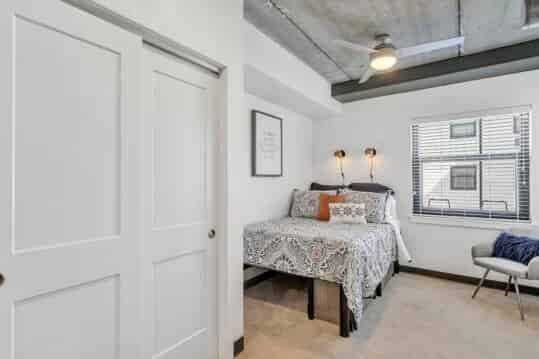
Because exact rents fluctuate by season and unit type, the figures below are indicative – confirm with the operator before committing. Budget bands are organised by typical monthly rent for a single occupant in the 2026/2027 academic year:
- USD 1,175 – 1,400 (entry‑level): Basic studios or shared apartments in slightly older buildings or farther from campus. Bracken House North Shore may fall in this range, depending on floor plan.
- USD 1,400 – 1,700 (mid‑range): Modern studios or 1‑bedroom units in well‑located properties like The Bridge On Forbes or HERE Pittsburgh. These often include amenities such as fitness centres and study lounges.
- USD 1,700+ (premium): Larger units or buildings with high‑end features (rooftop terraces, concierge). SkyVue likely sits at the top end, given its views and newer construction.
Note that some residences include utilities in the rent; others charge separately. Always read the lease carefully.
Walk vs Transit Trade‑Off
University of Pittsburgh’s main campus sits in the Oakland neighbourhood, which is walkable to shops, restaurants, and some student housing. Walking to class from a nearby residence can take 10–20 minutes. The benefits: no commute cost, flexibility, and easy access to campus libraries and gyms. The downside: rents tend to be higher in the immediate campus area.
If you choose a property farther away, such as Bracken House North Shore (located across the Allegheny River in the North Shore district), you will rely on public buses or the city’s light rail (the “T”). Pittsburgh’s bus system (Port Authority of Allegheny County) serves the university directly from many neighbourhoods. A monthly transit pass for students is typically around USD 50–100 (check the current rate). The trade‑off: lower rent for more space, but you lose 20–30 minutes each way and must plan around bus schedules. Also, parking on campus is limited and expensive, as noted in the reviews.
For most students, living within a 2‑km radius of campus offers a good balance – walkable most days, but with transit as a backup for bad weather or late evenings.
Shortlist Logic Using Nearby Residences
When evaluating the four sample residences, consider three factors: distance to campus, price range, and lifestyle preference.
SkyVue – Located in the Uptown area, about a 15‑minute walk to the heart of campus. It is a high‑rise with city views, often marketed to students who want modern finishes and on‑site gyms. Suitable if you prioritise a polished living environment and can pay a premium (indicative USD 1,600+). The walk to classes is moderate, and there is good bus access along Fifth Avenue.
The Bridge On Forbes – Situated directly on Forbes Avenue in Oakland, this property is one of the closest to the university. Walk to most academic buildings in under 10 minutes. It tends to be mid‑to‑upper price range (indicative USD 1,400–1,700). Ideal if you value convenience above all else and plan to spend most of your time on campus.
Bracken House North Shore – Across the river, near PNC Park and the North Shore entertainment district. It is a longer commute (bus or drive ~20–30 minutes to campus). However, rents are likely lower (indicative from USD 1,175), and the area offers a different vibe – quieter on weekends, with riverfront trails. Good for students who prefer a separate living environment and don’t mind the commute.
HERE Pittsburgh – Also in Oakland, close to the university. Similar distance to campus as The Bridge On Forbes but may offer slightly different layout options (e.g., shared apartments vs. private studios). Price falls in the mid‑range. It is a solid option if you want a well‑located building without the highest premium.
Shortlisting step‑by‑step:
- Determine your maximum monthly rent (indicative).
- Decide whether you can accept a commute longer than 15 minutes.
- Check each property’s current availability and lease terms directly with the operator.
- Visit in person (or do a virtual tour) to assess noise, management responsiveness, and actual distance to your department.
- Confirm what utilities and internet are included.
No single residence is universally “best”. Your choice depends on your budget, tolerance for commuting, and desire for amenities.
FAQ
Q: Is it cheaper to live on‑campus or off‑campus near University of Pittsburgh?
A: The data does not include on‑campus housing prices. Off‑campus purpose‑built residences like those mentioned have indicative starting rents of USD 1,175 per month. On‑campus dorm rates vary by meal plan and room type; contact the university housing office for current figures. Off‑campus private apartments often give more freedom and can be cheaper if you split with roommates.
Q: How reliable is public transit for getting to campus?
A: Pittsburgh’s Port Authority buses serve Oakland frequently from most parts of the city. A student pass (available through the university’s transportation office) allows unlimited rides. The light rail connects the North Shore and downtown to the city’s south hills but does not directly serve Oakland. For most off‑campus residences within 3 km, buses run every 10–20 minutes during peak hours. Factor in 5–10 minutes of walking to a stop.
Q: Should I sign a lease before arriving in Pittsburgh?
A: If you are enrolling in 2026 or 2027, you can sign a lease remotely, but it is safer to tour the property or at least do a video walk‑through. Some operators offer short‑term leases (e.g., 10‑month academic year). Always verify the cancellation policy and whether the rent is truly inclusive of all fees. Given the construction mentioned in campus reviews, ask if the building will be impacted by nearby construction noise.
Data as of 2026. All prices are indicative – confirm with the operator.
See also: listing details · browse more