What Campus Reviews Reveal About Life at This University
The University of Macau’s campus, located at 81 Av. Xian Xing Hai, occupies only the fourth and fifth floors of a larger building. A review from one student, using the handle “請在黃線以外候車”, notes: “只有四层和五层是城市大学校区,其中图书馆和培训中心办公室位于四层。学院办公室位于五层。教室不多而且都比较小。整个楼层也不大。洗手间更是可以用迷你来形容。比起主校区更像一个培训班。但整体环境较为干净整洁,冷气也比较给力。附近的公共交通接驳比较一般,可能最好的交通方式是利用金沙发财巴。” Another reviewer, “笨女孩”, writes: “The campus is excellent, but I had to wait an hour for the elevator.”
These reviews tell you a few practical things. First, the campus is compact — more like a training centre than a sprawling university. That means housing very close by is important if you want to walk in a few minutes, because the building itself offers limited space for study or relaxation outside the library. Second, elevator wait times can be a real problem, especially during peak hours. If you live on a high floor in the same building or in an adjacent tower, you might face similar delays. Third, public transport connections are described as “average”, with the best bet being the free shuttle buses provided by the nearby Sands casino. This hints that any accommodation within a 10-minute walk is far more practical than relying on buses.
Quoting another detail: “附近公共交通接驳比较一般” — the reviewer says public transport links are mediocre. So if you are looking for housing, walking distance becomes the single most important factor. The campus is in the NAPE district of Macao Peninsula, close to the Macao Cultural Centre and the waterfront. That area has many high-rise residential buildings, but they vary in age and condition. The negative comment about elevator wait time also tells you to check the number of lifts and their speed when viewing a potential apartment, especially if it is on a high floor.
City Context: Macao SAR, China
Macao is a small Special Administrative Region of China, known for its casinos, Portuguese colonial heritage, and dense urban layout. The university is located on the Macao Peninsula, not on Taipa or Cotai. This Peninsula is the older part of the city, with narrow streets, mixed-use buildings, and a high population density. The area around 81 Av. Xian Xing Hai is considered a prime business and residential zone, with a mix of luxury hotels, government offices, and apartment towers. Rentals here tend to be higher than in older residential districts further north, because of proximity to the waterfront and commercial amenities.
Because Macao’s land area is only about 33 square kilometres, housing is almost entirely in high-rise buildings. There are very few detached houses or low-rise blocks. Most students end up renting a room or a studio in a private apartment building. A small number of purpose-built student housing exists, but supply is limited and often tied to specific institutions. The city’s transport system includes buses, taxis, and free hotel shuttles (often called “发财巴”). The nearest bus stop to the campus is “Av. Xian Xing Hai / M302”, served by several routes, but as the review points out, connectivity is not excellent.
Macao’s rental market is cyclical: prices usually rise during the academic year (September to June) and drop slightly in the summer. The presence of many casinos also means there is strong demand for short-term rentals from workers and visitors, which pushes up prices for long-term tenants. As a student, you need to factor in not just rent, but also utility deposits (often two months’ rent), agency fees (if you use a realtor), and potentially a furnishing surcharge for furnished units.
Budget Bands for 2026–2027
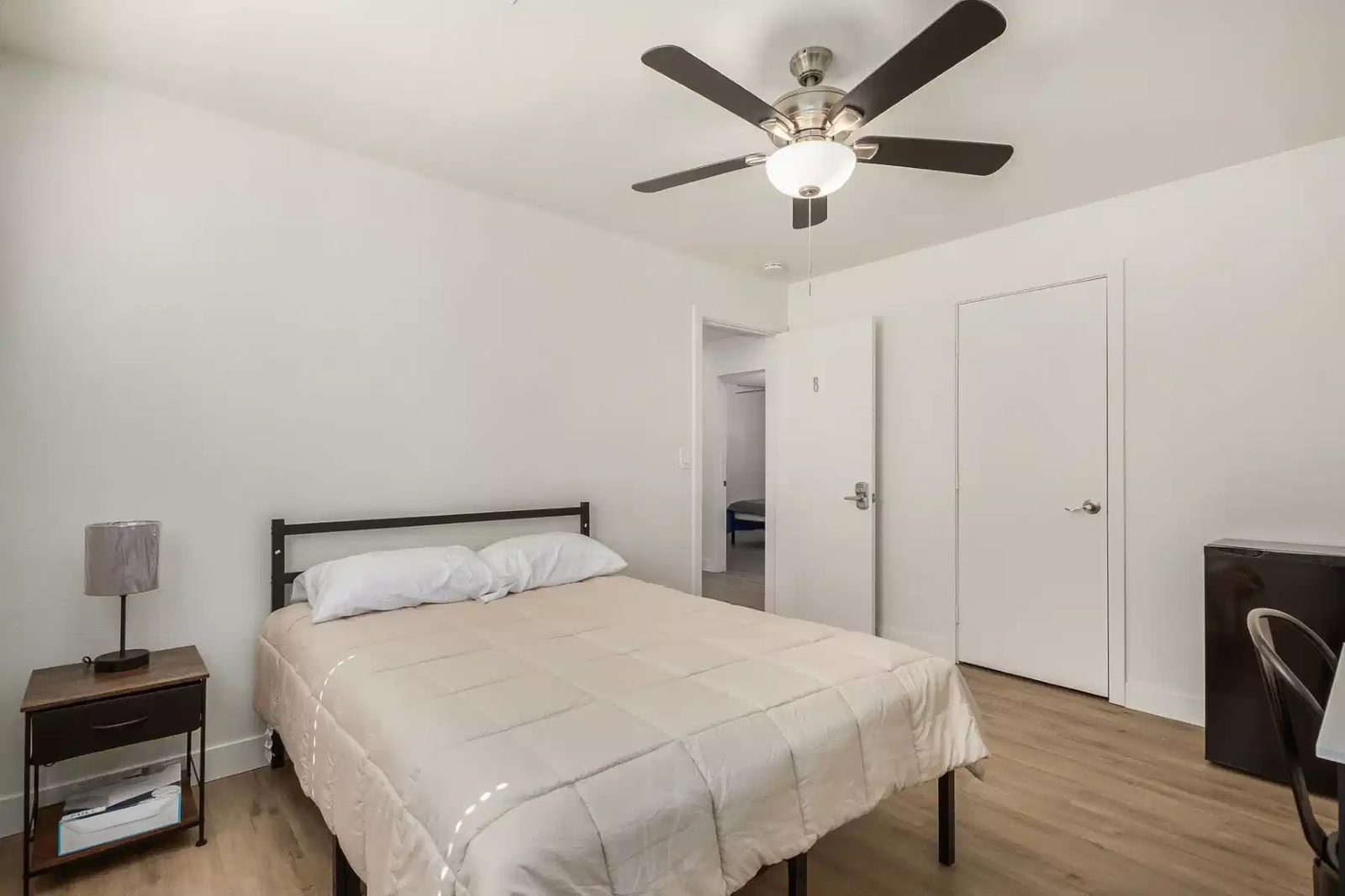
All prices given here are indicative — confirm with the operator at the time of booking. Exchange rates fluctuate, but we use MOP (Macanese Pataca) as the local currency. 1 USD is approximately 8 MOP.
Tier 1 – Budget (under 3,500 MOP/month)
For this price you can typically find a shared room or a bed in a subdivided flat. The room will be small, often in older residential buildings (30–50 years old) north of the campus, such as near Areia Preta or the northern district. You will share a bathroom and kitchen. Walk to campus: 20–30 minutes. This tier has the highest risk of poor building maintenance, elevator issues, and noise.
Tier 2 – Mid-range (3,500–6,000 MOP/month)
This band covers a private room in a newer apartment (built after 2000) or a small studio (around 250 sq ft). Many options are within a 10–15 minute walk of 81 Av. Xian Xing Hai, especially in buildings along Avenida da Amizade or near the Macao Cultural Centre. Expect a lift, air conditioning (often split units), and basic furniture. The January 2026 market data from local rental portals shows median asking prices for a 350 sq ft studio in this zone at about 4,500 MOP. Always check elevator condition — the review’s one-hour wait is a real risk in older towers.
Tier 3 – Premium (6,000–10,000 MOP/month)
A one-bedroom apartment (400–500 sq ft) in a modern high-rise with good management, gym, and security. You can walk to campus in under 5 minutes. Some buildings directly face the Av. Xian Xing Hai, such as the luxury residential towers near the Sands Macao. These come with high-quality finishes, but monthly fees (management and utilities) can add 500–1,000 MOP. At this level you can also consider serviced apartments (e.g., the ones offered by Wynn or MGM, though rates are higher). The 2027 projected rent for such units in the NAPE area is between 7,500 and 9,000 MOP per month.
Tier 4 – Luxury (above 10,000 MOP/month)
This is for a large one- or two-bedroom unit with sea views, concierge, and possibly a pool. Only choose this if your budget is flexible and you value space and soundproofing. The campus building itself has limited facilities, so a luxurious home can compensate. Keep in mind that the elevator problem may still exist in the building you choose — verify wait times during peak hours before signing.
Walk vs Transit Trade-Off
Because the campus occupies only two floors in a single building, and the surrounding area is dense, walking is the most reliable mode. Let’s compare:
-
Walking (under 10 minutes): The buildings directly on Av. Xian Xing Hai or on nearby Rua de Pequim, Avenida da Amizade, and Avenida do Conselheiro Ferreira de Almeida. You can be at the campus door in 2–8 minutes. No waiting for buses or lifts (except the building’s own elevator). This is strongly recommended, as the review mentions that public transport is mediocre. The downside is higher rent.
-
Walking (10–20 minutes): This covers areas like ZAPE (Zona de Aterro do Porto Exterior) or the northern parts of NAPE. Rent may be 10–20% lower than the core walking zone. However, you will need to cross several busy roads. The Macao summer heat and humidity (often 30°C+ with 90% humidity) can make a 15-minute walk uncomfortable. Also, the campus has limited air-conditioned seating outside the library, so arriving sweaty is a common complaint.
-
Transit (bus or free casino shuttle): The reviewer specifically recommends using the “金沙发财巴” (Sands’ free shuttle). The nearest Sands property is the Sands Macao on Avenida da Amizade, about a 5-minute walk from the campus. Other casino shuttles (e.g., Wynn, MGM) also stop nearby. They are free but may have limited hours (usually 9 am–midnight) and can be crowded. Public buses cost 6 MOP per ride and run frequently, but the review calls the connections average. If you live in Taipa or Cotai, you would need to take a bus or taxi across the bridge (15–30 minutes). For 2026/2027, a monthly bus pass for students is 150 MOP, but the time lost is considerable. For a student with a tight schedule, walking trumps transit.
Shortlist Logic for Housing Near This University
Given the campus reality (small, with elevator delays, mediocre transit, and a compact footprint), your shortlist should follow three criteria:
-
Distance to the campus building entrance. Prioritise buildings where you can walk in under 8 minutes without crossing major roads. Check Google Maps walking time from the building lobby to 81 Av. Xian Xing Hai. The entrance is at ground level on Av. Xian Xing Hai itself.
-
Elevator configuration in the residential building. Ask how many lifts serve the floor your unit is on. A building with two or three lifts per tower is better than one with a single lift. Inquire about average wait times during morning and evening peak (8–9 am and 7–8 pm). If possible, test it by visiting at those times.
-
Condition of the unit and building management. The campus is clean and well air-conditioned. Your home should offer at least the same. Check for split AC units, mould in bathroom corners, and the age of the electrical wiring. A building with a 24-hour concierge is a plus for receiving packages and security.
-
For budget-conscious students, look at buildings north of Rua de Pequim (e.g., around Rua do Campo, slightly older but with more affordable subdivided flats). Use a real estate app like “Macau Property” or “macaubusiness.com” (do not link) and filter for “NAPE” or “ZAPE”. Verify the walking time on a weekend.
-
For mid-range seekers, concentrate on buildings facing the waterfront along Avenida da Amizade, such as the towers near the Sands Macao. Many are less than 15 years old and have two lifts. Studios or one-bedrooms in this zone are 3,500–6,000 MOP. Always ask the landlord or agent for the number of lifts.
-
For premium renters, consider the “The Residencia” or “One Central” (generic names, not brand endorsements) — but only if you check elevator performance. The reviewer’s one-hour elevator wait at the campus may indicate that neighbouring residential towers could have similar issues. Ask specifically: “How many elevators are operational? What is the typical wait time during weekday mornings?”
Do not choose a unit that requires a bus ride to reach the campus. The review’s comment on mediocre public transport is a red flag. If you cannot find a walkable option, either expand your budget or accept a longer walk (up to 15 minutes) and plan to use a bicycle or e-scooter (note: e-scooters are allowed on Macao pavements but speeds are limited). A bicycle can cut a 15-minute walk to 5 minutes.
Finally, consider the academic year. For 2026/2027, start your search in April or May to secure a lease for August move-in. Prices are indicative — confirm with the operator before paying any deposit.
FAQ: Housing Near University of Macau
Q1: Is it safe to live in high-rise buildings near 81 Av. Xian Xing Hai?
Yes, Macao has a low crime rate, and the NAPE area is well policed. However, always check fire safety: look for a fire escape signage, a working smoke alarm, and a fire extinguisher in the common corridor. Older buildings may have outdated electrical wiring; ask the landlord when the last inspection was. The campus itself is clean and well maintained, so you can expect a similar standard in newer towers.
Q2: How high are utility costs in addition to rent?
Electricity is the main cost, especially from June to September when air conditioning runs constantly. A studio tenant might pay 300–500 MOP per month in summer. Water and gas are usually included in management fees in many apartment buildings, but confirm this in your contract. For a mid-range unit, total utilities (electricity + water + management fee) can range from 400 to 800 MOP per month. Prices are indicative — confirm with the operator.
Q3: Can I find short-term leases (semester-based) in this neighbourhood?
Short-term leases (6 months or less) are uncommon in the regular rental market. Most landlords require a one-year contract. However, some serviced apartments (like those in the Sands or Wynn buildings) offer monthly rates. These cost 8,000–12,000 MOP per month for a studio, which is premium tier. Alternatively, you can sublet from a departing student. Check notice boards at the campus library (4th floor) or student groups on social media. Always sign a written agreement and verify the identity of the sublessor.
— Data as of March 2026 —
See also: listing details · browse more