What Campus Reviews Reveal About Student Housing
The University of Johannesburg (UJ) holds a QS World University Ranking of 308 and sits at the intersection of Kingsway and University Road in Rossmore, Johannesburg. Its campus has a Google rating of 4.2 from 164 reviews, but student opinions about on-campus residences paint a sharply divided picture. A review by Thokozani Ndlovu (5 stars) notes: “Great scenery across all campuses, and its an even more lovely school. There’s a lot of walking up and down the hills both in and out of the buildings so bring comfortable shoes.” This highlights the physical layout — the campus is hilly, so accommodation that minimises daily uphill walking can make a real difference.
In contrast, Zoe (1 star) gives a stark warning about on-campus residences: “The on campus residences are truly the lowest of it all. No water, no maintenance, no working stoves, no working laundry machines. It’s a new inconvenience everyday, would not recommend for anyone.” This feedback is critical for any prospective student weighing whether to live in UJ’s own halls. It suggests that basic amenities (water, appliances, maintenance) are unreliable, and the experience can be frustrating. For the 2027 academic year, students should treat on-campus residences with caution and, if considering them, must confirm current conditions directly with the operator — as Zoe’s experience was reported four months ago, issues may persist.
Another review by Etienne Theron (5 stars) praises the jazz theatre: “Jazz at the theatre was excellent. Very good facility.” This indicates that academic and arts facilities are strong, but it does not directly inform housing. Adam Hill (1 star) reports a negative experience at the UJ theatre involving disrespectful staff, which, while not housing-related, underscores variability in service across different parts of the university.
The key takeaway for housing: on-campus residences appear to have significant service gaps, while the campus itself is scenic but requires comfortable footwear for hill-walking. Any housing decision should prioritise reliability of utilities and maintenance.
Johannesburg City Context
Johannesburg is South Africa’s largest economic hub, with a diverse population and a range of neighbourhoods around the university. The UJ Auckland Park Kingsway campus (the main one) is located in Rossmore, a suburb west of the city centre. The area is relatively central but not uniformly safe; students should familiarise themselves with local safety patterns, especially after dark. Public transport includes the Rea Vaya bus rapid transit system, metered taxis, and ride-hailing services. Many students also drive or use private shuttles.
The cost of living in Johannesburg is moderate compared to other global cities, but specifics vary by suburb. Nearby residential areas include Auckland Park (directly adjacent), Melville (a popular student node with restaurants and nightlife), and Westdene. Each has its own character, price level, and commuting profile. For 2027, students should research current safety reports and transport connections.
Budget Bands
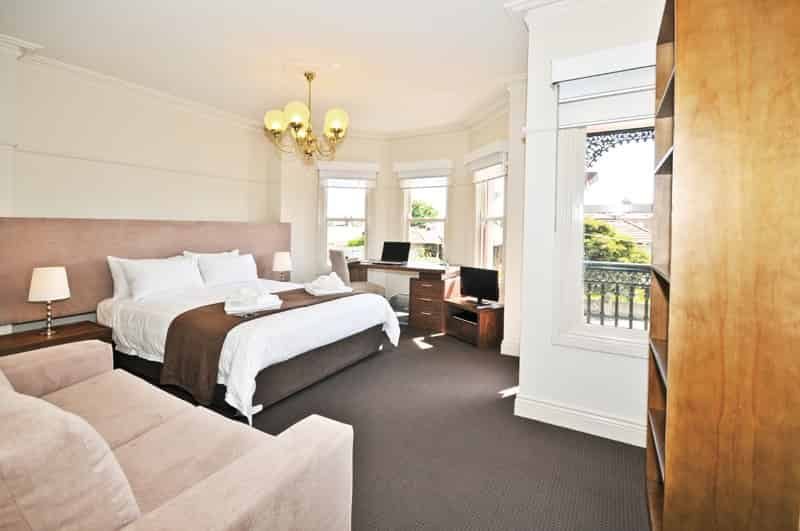
Accommodation costs near UJ vary widely depending on location, size, and amenities. Indicative monthly rent ranges (for 2027) are as follows — note these are indicative only; confirm with the operator before committing:
- Shared room in a house or flat: typical band ZAR 2,500–4,000 per person.
- Private room in a shared flat/house: ZAR 3,500–6,000.
- Studio or one-bedroom apartment: ZAR 5,500–9,000.
- On-campus residence (if available): ZAR 2,000–4,500 (but reliability issues, as per reviews).
All prices are indicative — confirm with the operator. Utility costs (electricity, water, internet) may be extra; some rentals include them. Lease terms are usually 12 months, though shorter leases may be negotiable near the start of the academic year.
Walk vs Transit Trade-Off
UJ’s Kingsway campus is set on a hillside. Walking from nearby accommodation can involve steep inclines, as Thokozani Ndlovu’s review notes. Students living within a 10–15 minute walk (e.g., in Auckland Park directly west of campus) enjoy convenience but should expect a workout. Those in Melville (a 20–30 minute walk or short drive) have more restaurant and social options but need to budget for transport or commit to the uphill walk.
For transit, the Rea Vaya bus stop at the University of Johannesburg station (on Kingsway) serves the campus, with routes connecting to the CBD, Braamfontein, and Soweto. A monthly bus pass costs around ZAR 600–900 indicative — confirm with the operator. Ride-hailing (Uber, Bolt) to and from campus typically costs ZAR 40–80 per trip within the nearby suburbs. Students who drive must factor in parking fees (often ZAR 500–1,200 per semester on campus, indicative).
The trade-off: walking saves money and time but requires physical stamina and carries safety considerations after dark. Transit adds cost but offers flexibility and access to a wider housing pool. Most students choose to walk if they live within 1.5 km, otherwise use a combination of bus and ride-hailing.
Shortlist Logic: Choosing Your Housing Near UJ
Given the on-campus residence issues raised in reviews, most students will look off-campus. Here is a logical framework for shortlisting options, using the known campus location and the city context:
- Prioritise maintenance and utilities. Zoe’s review warns of no water, no working stoves, no laundry machines. Any potential landlord or operator must provide recent proof of functional water supply, appliance servicing, and a clear maintenance policy. Ask for a written commitment.
- Consider walking gradient. The hilly terrain means that a flat that seems “close” might be at the top of a steep hill. Use satellite maps or visit in person to gauge the walk. Comfortable shoes are essential, as Thokozani Ndlovu advises.
- Balance distance with safety. Auckland Park (immediately west) is convenient but has variable block-by-block safety. Melville (northwest) is popular and safer, but a longer walk. Westdene (south) is quieter and more affordable but requires a bus or car.
- Check transport options. If you plan to walk, verify the route has street lighting and footpaths. If using transit, ensure a bus stop is within 10 minutes’ walk. For car owners, confirm parking availability on or near campus.
- Factor in lease flexibility. Most student housing leases run from January to December. If you arrive mid-year, look for sublets or shorter-term options. Avoid committing to a 12-month lease if you are uncertain about the area.
- Read recent tenant reviews online. Unlike on-campus residences, private landlords often have Google or Facebook reviews. Look for patterns of complaints about water cuts, security, or maintenance — if they mirror Zoe’s experience, move on.
- Budget realistically. Add transport and utility costs to the rent. For example, a room in Melville at ZAR 5,000 plus ZAR 1,000 for transport and utilities totals ZAR 6,000 per month. Compare this to a closer but more expensive option in Auckland Park.
No single residence is “best” for everyone. The shortlist should be tailored to your budget, tolerance for walking, and need for reliable facilities.
Frequently Asked Questions
1. Is it better to live on campus or off campus near UJ?
Based on recent student reviews, on-campus residences have significant problems with water, maintenance, and appliances. Off-campus accommodation – especially in Auckland Park, Melville, or Westdene – often provides more reliable utilities and better management. However, you must confirm conditions with each operator before signing a lease, as quality varies widely among private landlords.
2. What is the typical monthly rent for a private room near UJ in 2027?
Indicative monthly rent for a private room in a shared house or flat ranges from ZAR 3,500 to ZAR 6,000, depending on location and amenities. A studio or one-bedroom apartment costs ZAR 5,500–9,000. All figures are indicative – confirm with the operator. On-campus residence fees are lower (ZAR 2,000–4,500) but come with the risks noted in reviews.
3. Can I walk to campus from nearby neighbourhoods?
Yes, but the campus is hilly. Auckland Park (directly adjacent) is a 10–15 minute walk, though some streets are steep. Melville is a 20–30 minute walk with a hill at the end. Most students who walk regularly report needing comfortable shoes. If you choose a neighbourhood further away (e.g., Westdene), you will likely need a bus, car, or ride-hailing service.
Data as of April 2027. Google rating and reviews sourced from the university’s page; prices are indicative and must be confirmed with the operator.
See also: listing details · browse more