University of Guelph Campus Reviews: What Students Say About Life and Location
Student reviews of the University of Guelph consistently highlight a welcoming atmosphere, a beautiful campus, and strong community feel. With a Google rating of 4.5 from 770 reviews, the university earns praise for its inclusive environment and attentive staff.
Ollie McKbee, a current student, described the campus as “such a beautiful and inviting campus,” though noted that “there are so many people always on campus so it can get a bit overwhelming at times if you’re introverted but people here are mostly friendly.” Raminder Dhaliwal praised the food as “the best! Lots of variety and accommodations available eg vegetarian or gluten free. You can tell they care about the students’.” Reza Sadeghi called his experience “nothing short of amazing,” citing “outstanding faculty” and a “supportive and engaging learning environment.” Ric Carter summed it up as a “great university and awesome staff. Huge campus (almost like its own little town).”
These comments suggest that while the campus is lively and well-resourced, students who prefer quieter living may want housing slightly off the main thoroughfares. The “little town” feel also means that many daily needs can be met within the university precinct, but off-campus housing options in Guelph offer different trade-offs.
Guelph City Context: A Mid-Sized University City with Growing Demand
Guelph is a city in southwestern Ontario, roughly 100 km west of Toronto. It has a population of about 135,000, making it smaller than nearby Kitchener-Waterloo but still large enough to support a variety of services. The University of Guelph is one of the city’s major employers, and the student population (approximately 28,000) influences the local rental market.
The city is known for its historic downtown, parks, and a reputation for being one of Canada’s most livable communities. Public transit is operated by Guelph Transit, and the city is connected to the GO Transit rail network for travel to the Greater Toronto Area. For students, the primary transport routes are bus and bicycle, with many residences clustered within a few kilometres of campus.
Guelph’s rental market has tightened in recent years, especially near the university. Purpose-built student housing, apartments, and shared houses are the main options. Because the university is not in a huge metropolitan area, prices are generally lower than in Toronto or Vancouver, but still reflect local demand.
Budget Bands: What You Can Expect to Pay (Indicative Only)
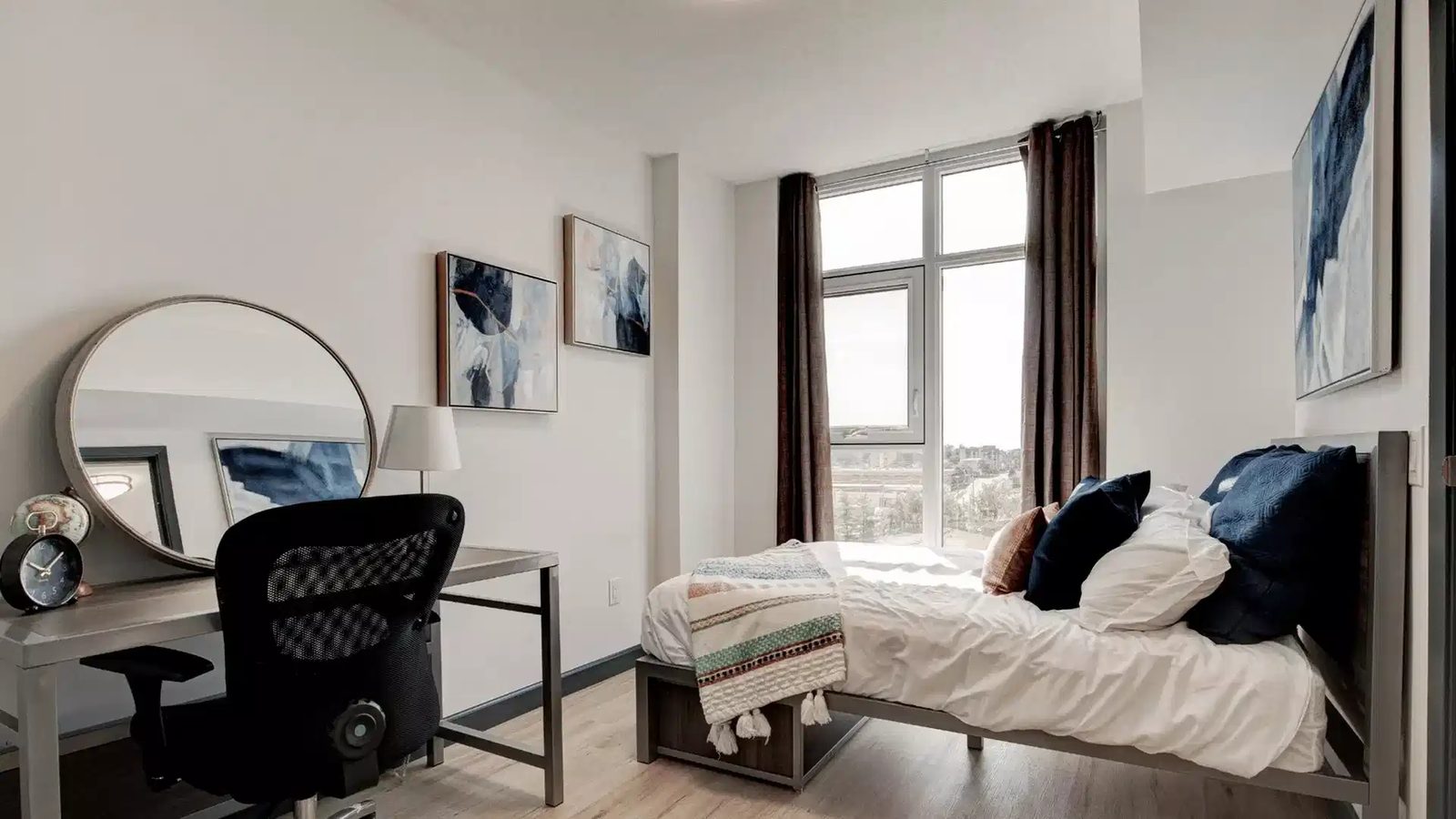
All prices below are indicative and should be confirmed directly with the operator. Currency is Canadian dollars (CAD). Based on market data from early 2026, the typical monthly rent for a single bedroom in a shared unit or a studio near the University of Guelph falls between 750 and 1,300 CAD.
- Budget (750–900 CAD): This range usually covers a room in a shared house or apartment, often with utilities included. Examples include units in older buildings or slightly farther from campus (e.g., 15–25 minutes by bus).
- Mid-range (900–1,100 CAD): A private bedroom in a newer purpose-built student residence or a well-maintained apartment building. Some all-inclusive options may fall here. Locations are often within a 10–20 minute walk or a short bus ride.
- Premium (1,100–1,300+ CAD): Studio or one-bedroom apartments, or large ensuites in luxury student housing. These are typically within a 5–10 minute walk of campus or in the downtown core, and may include amenities such as gyms, study rooms, and social spaces.
Remember that prices fluctuate based on lease term, room size, utilities included, and the building’s age. Always verify the total monthly cost with the property manager.
Walk vs Transit Trade-Off: Proximity and Convenience
The University of Guelph’s main campus is located at 50 Stone Rd E, just north of the downtown area. The campus is relatively compact, so once inside, walking is easy. However, off-campus housing varies in walking distance.
Walking Distance (0–2 km)
Housing within a 15-minute walk is the most convenient. Students can roll out of bed and be in class quickly, and they save on transit costs. But rents tend to be higher, and availability is limited. Most of the purpose-built student residences like King Street Towers and 308 King fall into this zone.
Short Bus Ride (2–4 km)
Areas like the neighbourhoods around Edinburgh Road or Speedvale Avenue are 5–10 minutes by bus, with frequent service to campus. Rents are often lower, and units may be larger. The trade-off is the cost of a bus pass (approximately 90–110 CAD per month for a student U-Pass) and a few extra minutes each way.
Bicycle and Car
Guelph is bike-friendly, with dedicated lanes and paths. Cyclists can cover 3–5 km in about 15 minutes. Students who drive should consider parking costs on campus (around 500–700 CAD per semester) and limited spaces. Many newer student residences offer bike storage.
Which one should you choose?
If you value time and convenience and have a higher budget, walkable housing is ideal. If you are cost-conscious and don’t mind a short commute, the bus-accessible areas offer better value. For those who enjoy exercise, biking expands your options significantly.
Shortlist Logic: How to Choose from the Nearby Residences
Using the sample of five residences available near the University of Guelph (Bridgeport House, Collegeview Commons, King Street Towers, Preston House, 308 King), we can outline a logical approach to shortlisting.
First, identify your priorities: budget, room type, amenities, and distance. Then compare each property against those criteria. Here is how each example stacks up in a neutral analysis.
Bridgeport House – Located in the downtown area, about a 15-minute walk to campus. Typically offers shared apartments with private bedrooms. Mid-range pricing. Good for students who want to be close to shops and restaurants, but not necessarily the closest to lecture halls.
Collegeview Commons – Purpose-built student residence just off College Avenue, approximately a 10-minute walk to the university core. Often includes all-inclusive rent with utilities and internet. Premium pricing. Suited for students who prioritise proximity and a managed living experience.
King Street Towers – High-rise apartments near the intersection of King Street and Stone Road, a 5-minute walk to campus. Upper end of the budget. Popular for its convenience and views. Expect a more social environment with shared common areas.
Preston House – Located on Preston Street, about a 10-minute bus ride from campus. Mid- to low-range pricing. Often older buildings with larger rooms. Good for budget-conscious students who do not mind using transit.
308 King – Another downtown location on King Street, similar walking distance to Bridgeport House (12–15 minutes). Mid-range pricing. May offer studios or one-bedroom units, suitable for students wanting privacy.
Shortlist logic step by step:
- Define your non-negotiables – Is a private bathroom essential? Do you need a gym? Must the rent be under 900 CAD? Write down your top three requirements.
- Filter by distance – If walking is critical, look at King Street Towers and Collegeview Commons first. If transit is fine, Preston House and Bridgeport House become viable.
- Compare included costs – Some residences include utilities, internet, and even a meal plan (though that is less common in off-campus housing). Ask the operator what is covered. All-inclusive can make a mid-range price feel like a better deal.
- Read lease terms carefully – Some student residences require a 12-month lease only, while others offer 8-month options. Check cancellation policies.
- Visit or virtual tour – Photos can be misleading. If possible, arrange a tour or at least a video walk-through to assess real conditions and noise levels.
No single property is universally “best.” The right choice depends on your personal trade-offs between cost, space, and commute time.
Frequently Asked Questions
Is it cheaper to live on campus or off campus?
On-campus residence at the University of Guelph is typically more expensive than off-campus shared housing, but it includes meals, utilities, and a built-in social network. Off-campus housing offers more independence and potentially lower rent, especially if you share a house. However, you must budget for utilities, groceries, and transit. As of 2026, a typical off-campus room can be 500–800 CAD per month cheaper than on-campus, but you sacrifice some convenience. Confirm current rates with the university housing office and compare total costs.
How far is downtown Guelph from the university?
Downtown Guelph is about 1.5 km south of the main campus. Walking takes roughly 15 minutes. Many student residences are located in the downtown area, making it easy to access restaurants, grocery stores, and nightlife. The city’s bus system also connects downtown and campus with frequent service.
When should I start looking for housing for the 2026–2027 academic year?
The Guelph rental market moves quickly. For September 2026 move-in, serious searching should begin in February or March 2026. Many buildings offer lease signings between March and May. Waiting until summer may limit your choices, especially for popular residences like King Street Towers. Start with online listings, request viewings early, and prepare to make a deposit once you find a suitable unit. Always read the lease thoroughly and confirm all terms with the operator.
Data updated: January 2026
See also: listing details · browse more