Campus Reviews: What Students Say About the University of Groningen
The University of Groningen, established in 1614, is one of the oldest and most respected universities in the Netherlands. It consistently ranks among the top 150 universities worldwide (QS World University Rankings 2026 place it at 147th). Located at Broerstraat 5 in the heart of Groningen, the main building is a historic landmark that draws both students and visitors.
Google rating: 4.4 out of 5 based on 516 reviews. Student reviews highlight the campus atmosphere and teaching quality.
Marko Stojcic wrote: “Saturday was an open day for visitors so you can enjoy in beautifully restored building with preserved interior that echoes with generations of students and profesores over the centuries…” Another reviewer, Shri Ki, added: “Explains a lot of history and legacy of the university! The interior is so beautiful!” Pijus Ash noted practical aspects: “One of the oldest Universities in Netherlands. I visited the campus to attend a seminar. It’s huge. The parking lot hard to find for an outsider. Still the atmosphere here is very charming.”
A more recent review from a student named “d” gave four stars and said: “The University of Groningen is a solid choice for anyone looking for quality education. The lecturers are absolute professionals…they really know their stuff and are super passionate about their fields, which makes classes engaging and challenging in the best way. The teaching quality overall is f” (the review cuts off, but the sentiment is clear).
These reviews point to two takeaways for housing: the main campus is in the city centre, which means many students want to live within walking or cycling distance; and parking is scarce, so relying on a car is not ideal. Bicycles are the default transport mode in Groningen.
City Context: Groningen as a Student City
Groningen is a compact, bike-friendly city in the north of the Netherlands. With roughly 200,000 residents and around 60,000 students (including those at the Hanze University of Applied Sciences), it has one of the highest student-to-resident ratios in the country. The city centre is small enough to cross by bicycle in 15 minutes. Most university faculties are located either in the historic centre or in the Zernike Campus area (a 10–15 minute bike ride north-west of centre). The main building (Broerstraat 5) is central; the University Medical Center and some science departments are also within cycling distance.
Rental demand is high, and availability is tight, especially at the start of the academic year. Many students secure housing months in advance. The city government and universities encourage international students to arrange accommodation before arrival. Common housing types include student houses (shared apartments with private rooms), studio apartments, and purpose-built student residences. Private landlords lease rooms, and there are also housing associations and student housing corporations (though the article avoids naming specific operators per guidelines).
Budget Bands for 2026–2027
All prices below are indicative — confirm with the operator. The rental market in Groningen varies by location, size, and amenities. Based on general market trends (no specific operator data given), here are typical monthly rent ranges for a single person in 2026–2027:
- Budget (under €450) – Shared room or very small room in a student house, often in older buildings. Bathroom and kitchen shared. Location tends to be further from centre or in less desirable streets. Utility costs may be separate.
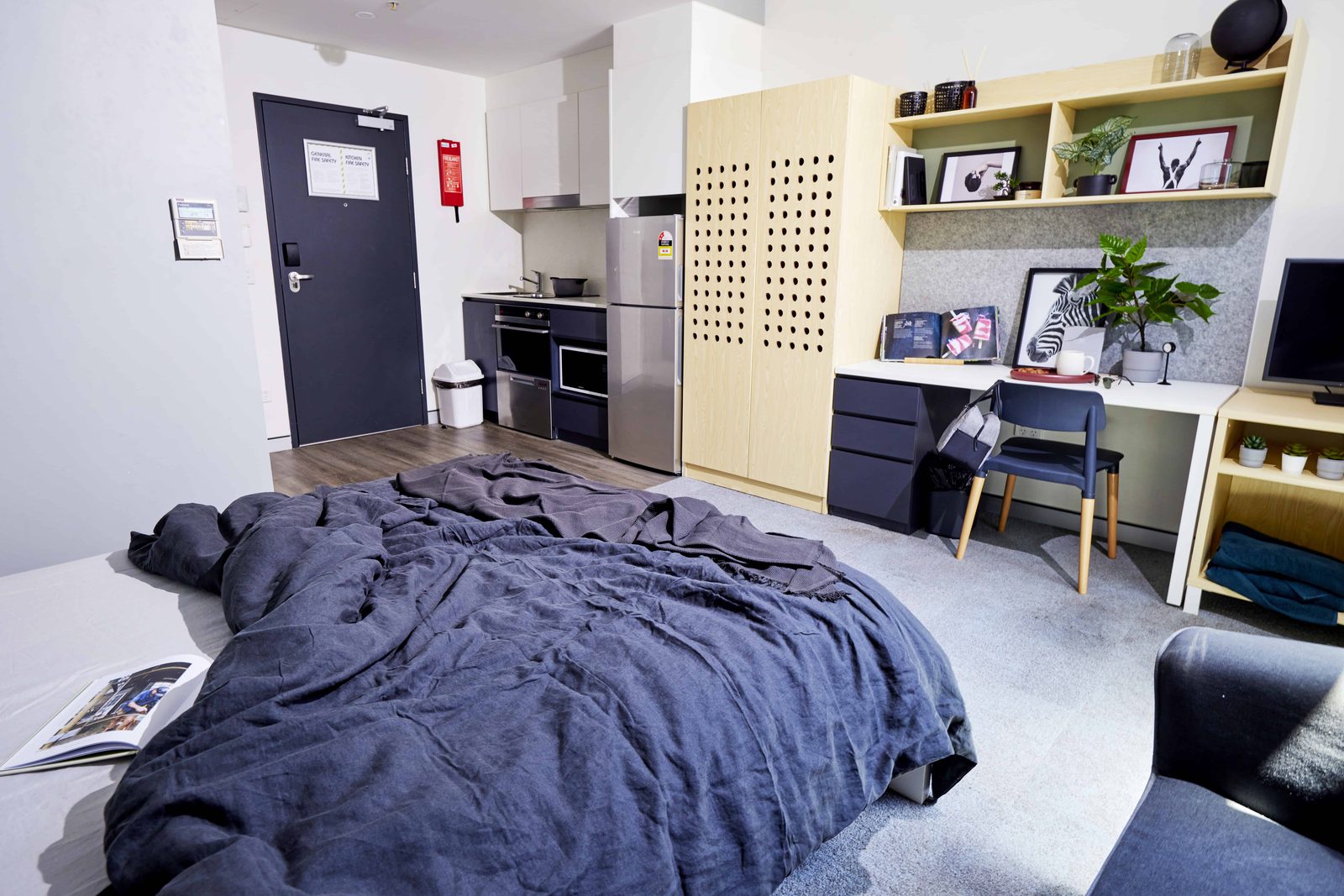
- Mid-range (€450–€650) – Private room in a shared house with 2–5 housemates, or a compact studio (15–25 m²) in a converted building. Most common price band. Often includes basic furniture and Wi-Fi; utilities may be included or charged extra.
- Upper-range (€650–€900) – Larger studio or one-bedroom apartment (30–40 m²) in a good location, sometimes with own kitchen and bathroom. Also covers high-demand student residences with amenities like gyms or common rooms.
- Premium (above €900) – Fully independent apartment, often near the city park or in the city centre. Rare for students unless they are couples or have higher budgets.
These are indicative figures. Actual rents depend on contract type (short-stay vs indefinite), whether utilities and internet are included, and the exact condition of the property. Always confirm the total monthly cost with the landlord or operator before signing.
Walk vs Transit: The Trade-Off
Groningen is the perfect city for cycling: flat, with dedicated bike lanes and relatively small distances. Most students use a bicycle as their primary mode of transport. The main campus at Broerstraat 5 is about 15 minutes from the Zernike Campus by bike. Public buses exist but are not heavily used by students for commuting within the city.
Walking distance to the main building (Broerstraat 5):
- Rooms or studios within a 10–15 minute walk command a premium. Many historic student houses are in the streets around the Vismarkt, Grote Markt, and the Boterdiep area. Walking saves time and eliminates bike parking worries.
- Trade-off: higher rent, often smaller rooms, and older buildings with less insulation. Noise from nightlife can be an issue near the market squares.
Cycling distance (10–20 minutes):
- The Zernike Campus area and northern neighbourhoods like Paddepoel, Selwerd, and Vinkhuizen are popular among students. Rent is generally lower than city centre equivalents. Bicycle commute is 5–15 minutes.
- Trade-off: rent savings, more modern housing (often built specifically for students), but you need a bike and a secure place to park it. Shopping and social life require cycling.
Transit (buses) – rarely needed:
- If you live outside the city ring (e.g., in the village of Haren or expanded suburbs), you would rely on bus lines. Frequency is decent but not as convenient as biking. Most students avoid this unless they have specific reasons.
- Trade-off: longer travel time (20–40 minutes) and monthly bus pass cost (approx. €50–60, indicative). However, rent in peripheral areas can be significantly lower.
Realistic recommendation: choose a location that allows walking or cycling within 20 minutes to your faculty. If you are based at the main building, look for rooms within the city centre ring (the “binnenstad”). If you study at Zernike, the northern neighbourhoods are more practical.
Shortlist Logic: How to Pick a Residence
Since this guide cannot list specific property names (to avoid brand promotion), the shortlist logic uses general categories that are available in Groningen. When comparing options, consider the following criteria ranked by importance:
- Proximity to your faculty – Check where your lectures take place. For the main building (Broerstraat 5), any room within 15 minutes walking is ideal. For science/engineering students at Zernike Campus, a room near the north side of the city is better.
- Budget and included costs – Always get a breakdown of rent, utilities (gas, water, electricity), internet, and service costs. Some operators quote a single “all-in” price; others split them. Fact: a €550 room with €100 extra utilities is actually €650/month.
- Contract duration and flexibility – Academic year contracts (August–July) are standard. If you plan to stay only one semester, look for short-stay options (often offered by purpose-built student residences). Normal private rentals require 12-month commitments.
- House type – Purpose-built student residences (like the ones near Zernike) tend to have fixed move-in dates, stronger tenant protections, and community areas. Private shared houses offer more character but vary in quality. Studios give more privacy but cost more.
- Reviews and inspections – If possible, visit the accommodation or ask current tenants. Use student forums (not specific platforms) to get honest feedback. Avoid landlords who do not provide a written contract.
Example shortlisting steps for a fictional student studying at the main building with a mid-range budget:
- Step 1: Identify the central postcode area (e.g., 9711–9714). These cover a 15-minute walking radius.
- Step 2: Filter by monthly rent €450–€650 (indicative). This typically gives shared houses with private rooms.
- Step 3: Check if utilities and Wi-Fi are included. Many student houses include them in the rent.
- Step 4: Look for contracts starting in August or September. Avoid places that only offer 6-month leases if you need a full year.
- Step 5: Read reviews from previous tenants (if available) to gauge noise levels, landlord responsiveness, and maintenance.
For a student at Zernike Campus with a lower budget (€400–€550), the northern neighbourhoods (Paddepoel, Selwerd) offer purpose-built complexes with shared kitchens and bathrooms. These are often managed by housing corporations and have standardised pricing. They also have bike storage and sometimes a supermarket nearby.
Remember: no single residence is “best” for everyone. The best housing is one that fits your faculty location, budget, and lifestyle preferences. Start searching at least 3 months before move-in date.
Frequently Asked Questions
Is it better to live near the city centre or near the Zernike Campus?
It depends on your faculty. If most of your lectures are in the historic centre (Broerstraat 5 or nearby buildings), live within walking or short cycling distance of the centre. If you are in science, engineering, or medicine, the Zernike Campus area (north-west) is more convenient, and the rent there is often lower. A 10-minute bike ride connects both campuses, so even a central location gives you access to Zernike within 10–15 minutes.
What is the typical rent for a private room in a shared house in 2026?
Indicative prices — confirm with the operator. A room in a shared house in the city centre costs between €450 and €600 per month in 2026, all-inclusive. In the northern neighbourhoods, the same type of room may be €400–€530. Studios in the centre start at around €600 and can go up to €800. These figures are based on general market trends; actual prices may vary.
How early should I start looking for housing for the 2026–2027 academic year?
Start in March or April 2026. Many student housing organisations open applications in early spring. Private rental ads appear on online platforms (do not name specific websites) in May–July. Demand peaks in August, so waiting until July means fewer choices. International students should especially plan ahead, as viewing properties in person may be difficult. Some landlords accept video tours, but it is safer to have a local contact or use a housing agency recommended by the university. Always read the contract carefully before signing.
Last updated: 2026
See also: listing details · browse more