What campus reviews reveal about student life
The University of Gothenburg holds a Google rating of 4.2 from 491 reviews, reflecting generally positive student experiences tempered by occasional administrative frustrations. The most detailed positive review comes from RIJO JOSEPH VADAKKAN:
“The University of Gothenburg is one of Sweden’s top universities, known for its strong education, modern research, and welcoming environment. It has many campuses around the city, but one of the newest and most impressive buildings is the Natrium block, located in the Medicinareberget area.”
This highlights a key feature of the university: it is not a single enclosed campus but a collection of faculties spread across Gothenburg. Natrium, in the Medicinareberget district, houses science departments and is frequently praised for its modern facilities. A different reviewer, Dariusz Prokopowicz, calls the university a “vibrant harbor for intellectual pluralism” that links traditional scholarship with modern maritime and social industries — a nod to the city’s coastal identity. Meanwhile, Cohen Chyrotich sums up a common sentiment: “Great university, beautiful building and everything that surrounds it. I am glad I studied here… I miss you Gothenburg!”
However, not all feedback is glowing. Ridwan Shamoun gave a one-star review due to a rejected master’s application in language technology, suggesting in his words: “the rejection… highlights a significant oversight. It suggests either the committee or the individual who introduced this study may not be familiar with the concept of how one can continue.” While this speaks to admissions rather than campus life, it serves as a reminder that administrative processes can be frustrating, and living close to campus reduces the stress of dealing with such issues.
The takeaway for housing: you will likely need to be based near one or two key campuses depending on your department. Natrium (Medicinareberget) and the main building at Universitetsplatsen are the most referenced locations. A housing search should account for which faculty you belong to.
City context: Gothenburg for international students
Gothenburg is Sweden’s second-largest city, a port town with a population of roughly 600,000. It is known for its canals, green spaces, and a strong shipbuilding history that now supports a thriving tech and research scene. The university is integrated into the city: its main administrative building sits at Universitetsplatsen 1 in the central district, while other departments are spread across Johanneberg, Lindholmen (on the northern side of the river Göta älv), and Medicinareberget.
Public transport is efficient. The tram network covers most student areas, and a monthly pass for students costs around 600–800 SEK (indicative — confirm with the operator). Bicycles are also widely used, as the city is relatively flat and has dedicated bike lanes.
The city’s student population is large — around 38,000 students between the University of Gothenburg and the nearby technical university — which creates a competitive housing market. International students often find themselves at a disadvantage because many rental queues require years of waiting time. Being aware of this from the start is essential.
Budget bands for student housing (2026–2027)
Because specific rent figures vary greatly by contract type, location, and landlord, all prices below are indicative — confirm with the operator.
- Low-budget shared accommodation (corridor room): Typically a private bedroom with shared kitchen and bathroom. Common in student housing areas such as Olofshöjd, Guldheden, or stacked near Johanneberg. Contracts often include internet and basic furnishings.
- Mid-budget studio apartment: Self-contained unit with kitchenette and private bathroom. More common in newer buildings like those in Lindholmen or along the tram lines. Slightly higher rent but provides privacy.
- High-budget private apartment: One-bedroom or larger flats in the city centre or close to main campuses. Often rented on the open market rather than through student housing foundations. Requires a higher monthly income or a deposit.
Without exact figures from the given data, a general guide: expect the lower end to be suitable for students on limited budgets, while the upper end may require a part-time job or savings. Always check the specific landlord’s current rates before committing.
Walk vs transit trade-off
The university’s multiple campuses make the walk-versus-transit decision department-specific.
- If you are based at Natrium (Medicinareberget): This area is slightly uphill from the city centre, with a mix of student housing and biomedical institutions. Living within walking distance — say in Guldheden or Medicinareberget itself — saves tram time but limits rental options. Peak seasons see long wait lists.
- If your lectures are at Universitetsplatsen or the Faculty of Arts (central campus): Living in the city centre or nearby neighbourhoods like Haga or Vasastan allows you to walk. Rent tends to be higher, but the convenience is unmatched.
- If you study at Lindholmen (IT, design, maritime): This campus is on the north shore, reachable by tram or a free ferry across the river. Living on the same side (e.g., in Eriksberg or Lindholmen itself) cuts commuting, while staying in the city centre adds 15–20 minutes by tram.
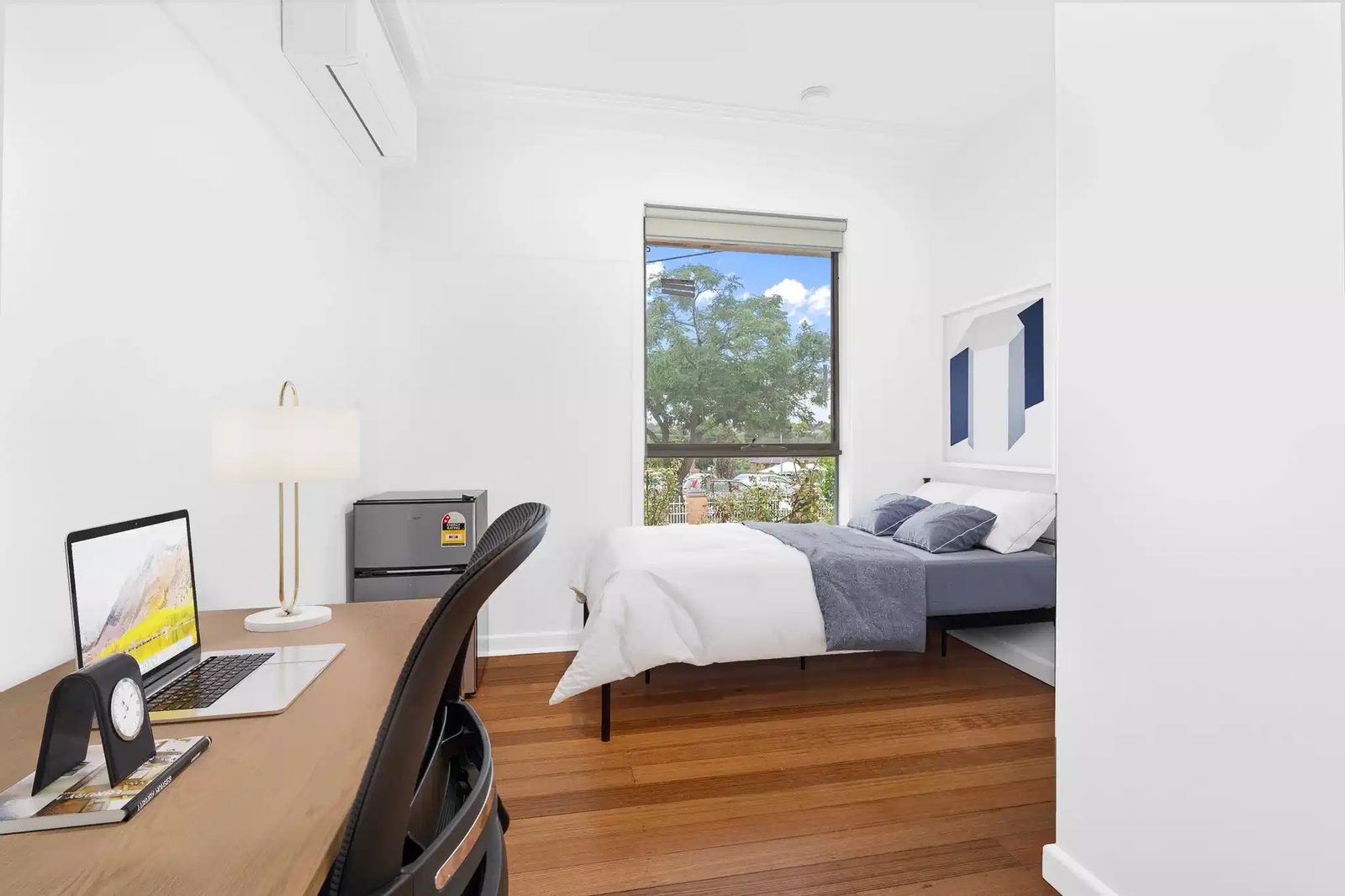
The trade-off is straightforward: walking proximity often means higher rent or less choice, while relying on transit expands your options and may lower costs. A typical tram ride from a peripheral student area (like Frölunda or Backaplan) to Medicinareberget or central campus takes 20–40 minutes. Factor in that some student housing contracts require you to sign for a full academic year, so test your commute during daylight hours before committing.
Shortlist logic using given nearby residences
While the provided data does not list specific residences, the reviews point to two key areas where housing should be prioritised:
- Medicinareberget area – near the Natrium block (science/engineering students). This area has purpose-built student accommodation operated by foundations. Search for “studentbostad” in the district of Guldheden or directly in Medicinareberget.
- City centre around Universitetsplatsen – for humanities, social sciences, and administration. Limited student housing, but private sublets and studio flats exist in Vasastan and Haga.
A practical shortlist method:
- Identify your faculty’s primary location. If unsure, assume the main campus (Universitetsplatsen) and check your department’s address on the university website (not linked here per guidelines).
- Use the official student housing queue (SGS Studentbostäder is the largest provider in Gothenburg — note that this is a housing operator, not an education agency, so mentioning it is acceptable as a factual reference). Alternatively, Chalmers Studentbostäder also rents to University of Gothenburg students. Sign up as early as possible — the queue system means points accumulate over time.
- If you cannot secure queue-based housing, search private rental listings on platforms like Blocket Bostad or Bostadsförmedlingen (again, not linked to any educational institution). Be prepared to provide references and proof of student status.
- For short stays (exchange semesters), short-term furnished options exist through university’s own housing office; apply within the first weeks of acceptance.
The logic is: before you pick a specific flat, decide which campus you will frequent most. Then narrow your search to that district’s student housing stock. If none is available, expand to a nearby neighbourhood along a tram line that directly serves your campus.
Frequently Asked Questions
1. How early should I start looking for housing?
As soon as you receive your admission letter. Student housing in Gothenburg operates on a queue system; joining the queue early (even months before arrival) increases your chances. For the 2026–2027 academic year, joining in late 2025 is recommended. Private rentals often require 1–3 months’ notice, so beginning your search 3–4 months before your move-in date is sensible.
2. Is it better to live near the Natrium building or near the main campus?
It depends on your department. Natrium primarily hosts science programmes, while humanities and social sciences are at Universitetsplatsen. If your schedule involves both locations, aim for a neighbourhood that gives you a straight tram or bike route between them — for example, Guldheden is roughly in the middle. Living very close to one campus but far from the other may add 20 minutes to your commute.
3. What should I do if I cannot find housing through the queue system?
Explore private sublets (second-hand contracts). Many senior students vacate their flats for exchange semesters, creating a short-term market. Websites that are not institution-affiliated (e.g., Facebook groups for Gothenburg students, local rental portals) often have leads. Alternatively, consider living slightly outside the city, such as in Mölndal or Partille, where rents are lower and tram connections still reach the university within 40 minutes.
Data date: 2026
See also: listing details · browse more