What Campus Reviews Reveal
Before searching for accommodation, it pays to understand what current and former students say about the University of Geneva (UNIGE). The institution earned a 4.3 out of 5 on Google (from 380 reviews), reflecting solid overall satisfaction but with some recurring practical concerns.
One reviewer, Dr. Erkut Sögüt, commented six years ago:
“Beautiful university in Geneva. The architecture is fantastic. Although it might need a restoration. The library options are very limited. Not much to find for research especially in management or law.”
This highlights two things: the campus is visually striking (gothic buildings, modern extensions, lakeside setting), but study facilities can be sparse depending on your faculty. For someone looking for housing, being near a good library or having a quiet room at home may matter more if you are in management or law.
Another review, by azzeddine daouadji (two months ago), emphasises UNIGE’s prestige and research focus. The positive reputation is consistent—the university is ranked 155th globally in QS and is part of the European League of Research Universities. That means the student body is international (over 40% of students come from abroad), so you will find English-friendly services and a cosmopolitan atmosphere.
For housing planning, these reviews suggest that the immediate neighbourhood around the main Uni Bastions building is desirable for its beauty and centrality, but you may want to check library access if you rely on campus study spaces. The city itself is compact, so a short tram ride can significantly widen your affordable options.
City Context: Geneva as a Student Hub
Geneva is Switzerland’s second-largest city and the seat of many international organisations (UN, WHO, ICRC). This gives it a small but diverse population—about 200,000 residents, with another 100,000 cross-border workers. English is widely spoken, but French is the local language. The city is expensive: the cost of living is among the highest in Europe. Rent, food, and transport will take up the largest parts of your budget.
UNIGE’s main campus is spread across several sites: the historic centre (Uni Bastions), the sciences district (Sciences II, III near the lake), and the medical area (CMU near Geneva’s university hospital). Most humanities and social science courses take place at Bastions, which is steps from the old town and the Cornavin train station. Science buildings are a 10–15 minute walk or a short tram ride from the station.
The public transport system (trams, buses, trains) is efficient and covered by a student semester pass. As of 2026, the UNIGE student card includes a travel pass for the whole canton of Geneva and the surrounding French areas up to 30 km, making commuting from neighbouring towns possible. However, many students prefer to walk or cycle, as the city is relatively small and flat.
Budget Bands (Indicative – Confirm with the Operator)
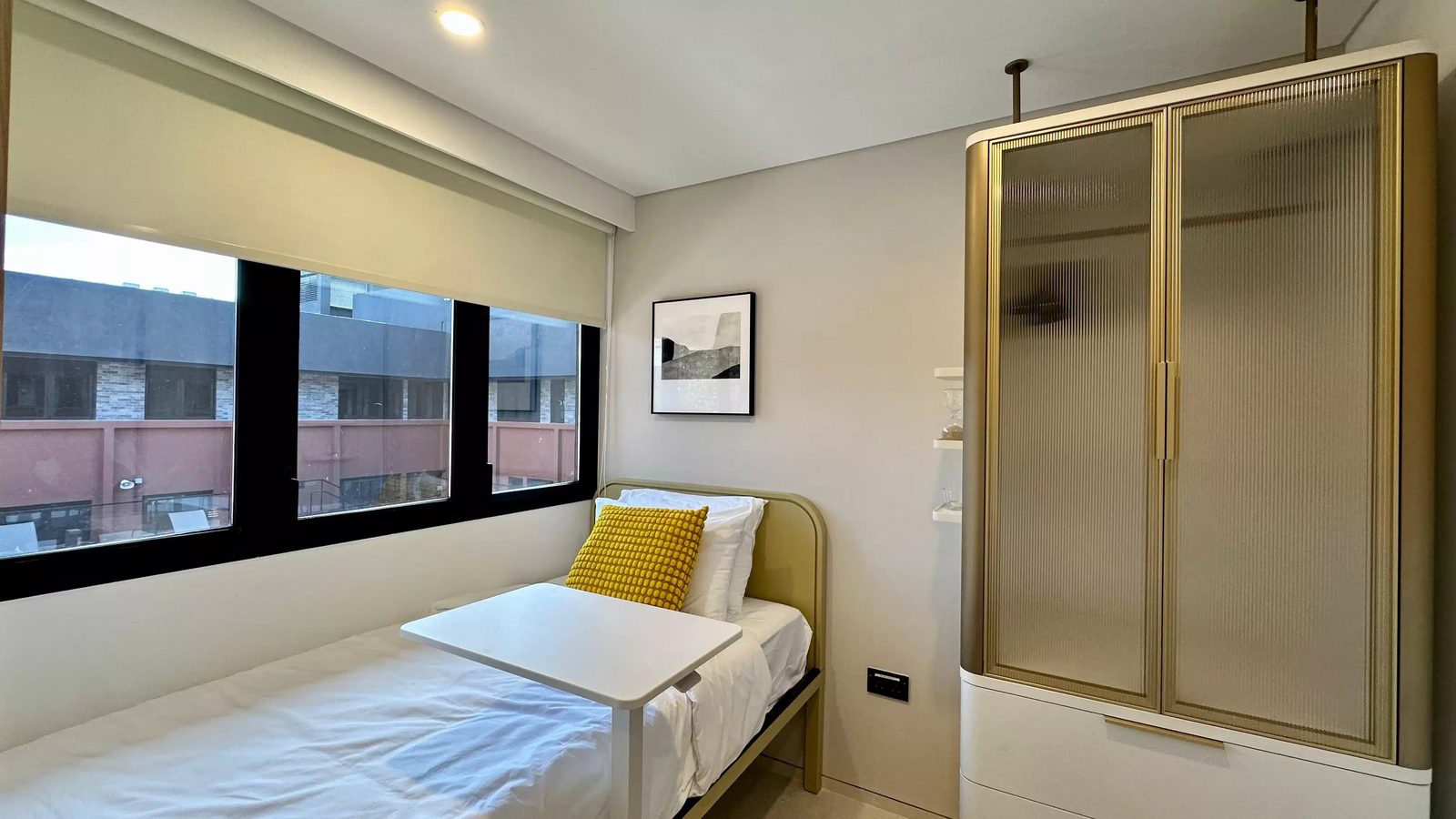
Rents in Geneva vary sharply by location and room type. All prices below are indicative for the 2026–2027 academic year; always confirm directly with the landlord or residence operator.
-
Low budget (CHF 550 – 800 per month)
Typically a room in a shared flat (colocation) in less central districts such as Carouge, Lancy, or Meyrin. These areas are 15–25 minutes by tram from the main campus. You may also find university-managed studios in Cité Universitaire or Fondation Zilger, but waiting lists are long. Shared flats require organising bills and internet yourself. Expect a room of 8–12 m² with shared kitchen and bathroom. -
Mid budget (CHF 800 – 1,200 per month)
A private studio (20–30 m²) in a dedicated student residence or a well-located shared flat. Many commercial residences (e.g., Hohm, NEST, or private operators) offer this price range. Studios usually include a kitchenette and private bathroom. Locations are often within 20 minutes of campus by public transport. This band also covers rooms in co-living spaces with all bills included. -
High budget (CHF 1,200 – 1,800+ per month)
A larger studio or one-bedroom apartment near the city centre (e.g., Plainpalais, Eaux-Vives, or Paquis). You get more space, a better neighbourhood, and the ability to walk to campus in under 10 minutes. This band is common for PhD students or couples. Some older buildings offer charming but slightly worn apartments; newer ones have higher rents.
Note: Rent is typically quoted with charges (utilities, water, heating) included. Some landlords ask for a deposit equal to 1–3 months’ rent. Budget an additional CHF 100–200 per month for health insurance, phone, and miscellaneous.
Walk vs. Transit Trade-Off
The main UNIGE campus at Uni Bastions sits at the intersection of Rue de Candolle and Place de la Fin. It is a 5-minute walk from the Cornavin train station and 10 minutes from the lake. The student quarter Plainpalais, with its bookshops, cafés, and second-hand stores, is right next door.
-
Walking from home to class is ideal if you live in the Old Town, Plainpalais, Champel, or the south end of Eaux-Vives. The trade-off is higher rent and limited availability. Parking for cars is difficult and expensive; a bicycle is a smarter investment.
-
Public transport opens up affordable options in Carouge (tram 12), Meyrin (tram 14), Lancy (bus 23), and even into France (Annemasse, Ferney-Voltaire). A student travel pass (included in semester fees) covers unlimited travel within the canton. Commute times are typically 15–30 minutes one way. The pass also covers trains to the Swiss-French border, so living in France and crossing to the campus every day is common for budget-conscious students.
-
Challenges: The Geneva tram network is reliable but can be crowded during peak hours (8:00–9:00, 17:00–18:00). If you live in France, you must pay Swiss health insurance (even if you have French coverage) and respect customs checks (rare but possible). Also, some bus lines run less frequently after 21:00.
The shortlist logic: if your budget is under CHF 800 per month, expect to rely on public transport and aim for a commute under 30 minutes. If you can afford CHF 1,000–1,200, balance a 15-minute walk with a slightly larger room. Always check the exact address and test the journey using Google Maps or the TPG app before signing.
Shortlist Logic (No Specific Residences Listed)
Since the provided data does not include specific nearby residences, the following general approach helps you build your own shortlist:
- Define your maximum rent (including utilities) and your preferred arrival date.
- Map your classes – note which campus site you will attend most often. Most first-year courses are at Bastions. If you study medicine, the CMU campus is near the hospital in Champel. If you study sciences, the Sciences II campus is near the lake.
- Draw a 30-minute commuting radius using the TPG website (tpg.ch) or the Unirespo campus map. Include both walking and tram options.
- Filter by housing type: shared flat (colocation), student residence, or private studio.
- Check reviews on platforms like Google Maps or student forums (avoid naming specific sites). Look for red flags: noise, dampness, difficult landlords.
- Visit or video-call the room. Ask about heating (some old buildings have inefficient radiators), internet speed, and the contract length (usually 1 year, renewable).
- Consider the deposit – Swiss landlords often require a blocked account or bank guarantee. Prepare CHF 1,500–3,000 for this.
In Geneva, the busiest moving periods are February (spring semester) and September (autumn semester). Start your search at least two months before arrival. The best deals often go to early applicants.
FAQ
1. What is the average rent for a student room near UNIGE in 2026–2027?
Indicative prices for a room in a shared flat range from CHF 550 to 850 per month, while private studios cost between CHF 750 and 1,300. A one-bedroom apartment near campus is CHF 1,200–1,800. Always confirm the exact amount with the operator.
2. Should I live in France to save money, and what are the downsides?
Living in Annemasse or Ferney-Voltaire can cut rent by 30–40%, and the student travel pass covers the Swiss part of the journey. However, you must buy Swiss health insurance (around CHF 100–130 monthly) even if you have French insurance. You also lose time at border crossings (though rarely delayed) and miss out on spontaneous campus activities. It works well if you are disciplined and plan ahead.
3. Are there university-owned housing options, and how competitive are they?
UNIGE manages a limited number of studios and rooms through the Service du Logement. Applications open in spring and autumn, but demand far exceeds supply. Priority is given to first-year international students and those with financial need. Many students rely on private rentals. Start looking on online platforms (generic listing sites) early. The university does not operate its own dormitory system; instead, it partners with a few foundations (e.g., Cité Universitaire, Fondation Zilger) which have separate waiting lists.
Data date: March 2026. All prices are indicative and subject to change. Confirm directly with the landlord or operator before committing.
See also: listing details · browse more