What the Campus Reviews Reveal
Current and former students consistently highlight three qualities of the Université Claude Bernard Lyon 1 campus: its green environment, the study‑friendly library, and the social spaces. A review by Jabran khalil (rating 5) states: “It seems like home to me . I study M2 DISS and the department is great the best thing about university is that it’s very clam and green and the library is open from 9-10 even in weekend so to study in library always helps to concentrate. Moreover the astree building is best for detoxification there.” This suggests that a quiet, nature‑focused campus is a major asset for students who value concentration and relaxation on site.
Muhammad Ansar Chaudhary (rating 5) adds: “It’s providing quality education alongside extra curricular activities.” Students appreciate not only academic quality but also the chance to participate in activities outside the classroom.
Anthony Saliba (rating 4) offers a practical observation: “It is a great campus with a lot of green spaces and areas that are to the advantage of social interaction between students. It is well equipped and accessible for people with special needs. However, it lack a rainproof connection system between the different buildings given that it is situated in an” (the review cuts off). The mention of accessibility for people with special needs is worth noting for anyone who requires barrier‑free facilities.
A longer‑term review by K (rating 4) sums up the academic atmosphere: “If you ever want to earn a degree, this university is as good a choice as it gets. But if you’re not into getting a degree, I guess you can still chill here and there on campus.”
These reviews reveal that the campus is both academically solid and physically pleasant – a combination that influences housing preferences. Students who like to stay late in the library or spend time in green spaces may prioritise proximity to campus over city‑centre nightlife.
City Context: Lyon and Villeurbanne
Université Claude Bernard Lyon 1 is located at 43 Bd du 11 Novembre 1918, 69100 Villeurbanne – a commune that is part of the Lyon metropolitan area. Lyon is France’s third‑largest city, with a strong student population, extensive public transport (metro, tram, bus), and a relatively affordable cost of living compared to Paris.
Villeurbanne itself is a busy suburban area directly adjacent to eastern Lyon. The campus is well connected: metro line A stops at Laurent Bonnevay – Astroballe and Gratte‑Ciel, both within walking distance. Tram line T1 also serves the university area. Many students choose to live in Villeurbanne to be close to the campus, while others prefer central Lyon (Part‑Dieu, Bellecour) for a more urban lifestyle, accepting a longer commute.
Rents in Villeurbanne are generally lower than in central Lyon. A typical studio in Villeurbanne might cost less than a comparable room near Lyon’s Presqu’île. However, prices vary significantly depending on location, condition, and whether the accommodation is furnished.
Budget Bands
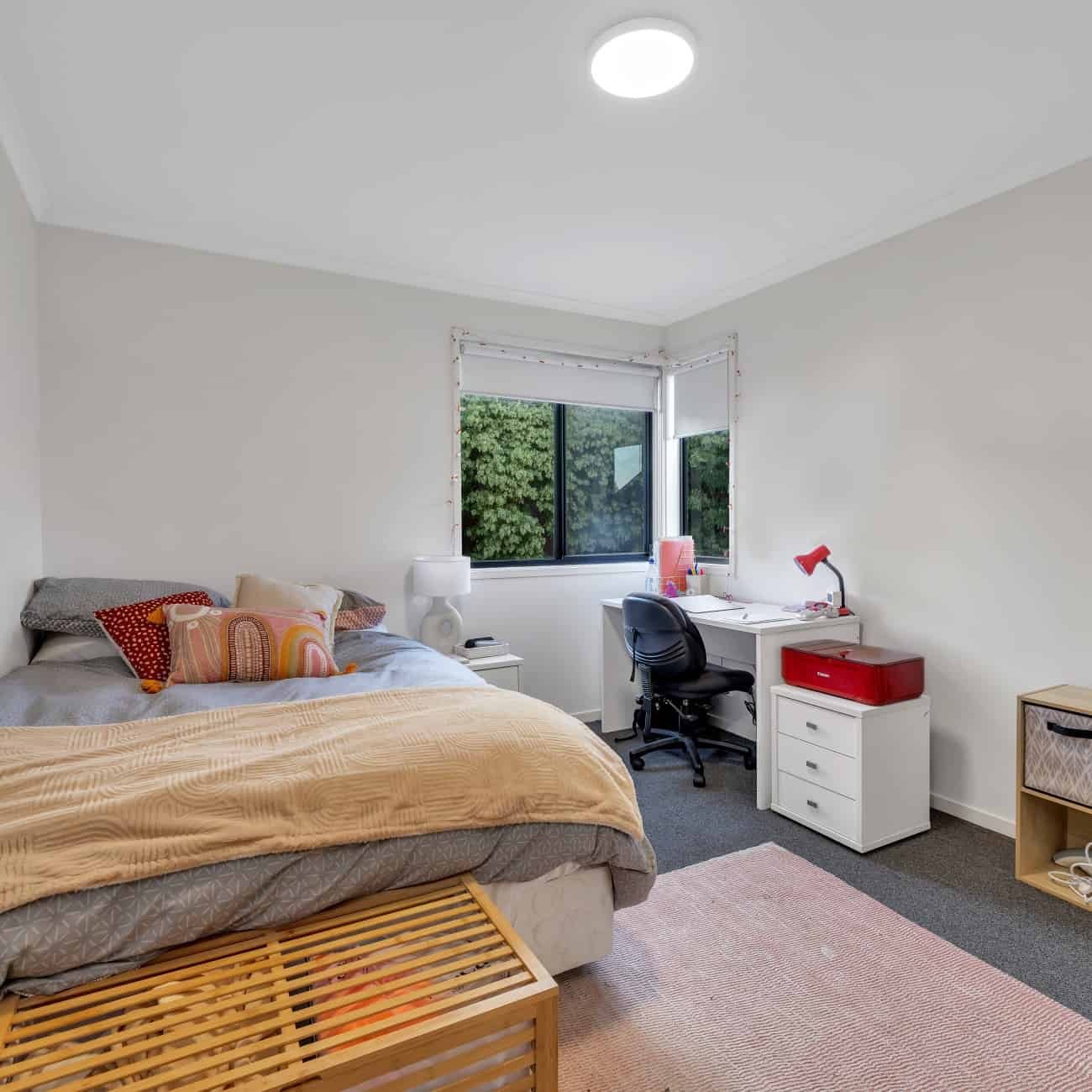
When planning your housing budget for the 2026/2027 academic year, note that rents are indicative – confirm with the operator before signing a contract. Below is a general framework based on common student housing types in the area.
- Low budget (shared rooms or basic studios): Often found in older buildings or student residences managed by CROUS (local student welfare service). These may have shared kitchens or bathrooms. Typical monthly rents range from €350 to €500 (indicative – confirm with the operator).
- Mid budget (private studios or small one‑bedroom flats): Usually self‑contained, with a kitchenette and private bathroom. Located in purpose‑built student residences or private apartment blocks. Expect €500 to €700 per month (indicative – confirm with the operator).
- High budget (larger flats or premium residences): Newer buildings with amenities such as gym, laundry, or concierge. Rents may exceed €700 per month. Some include utilities or internet (indicative – confirm with the operator).
Because the university campus is in Villeurbanne, you may find lower rents by looking slightly further east (e.g., towards Vaulx‑en‑Velin), though you will need to factor in transport costs.
Walk vs Transit Trade‑Off
Choosing between walking distance and a longer commute depends on your priorities.
- Walking distance (within 15 minutes of the campus): Ideal if you plan to use the library late, attend early classes, or avoid public transport costs. The immediate neighbourhood around the university (around the Gratte‑Ciel area) has a mix of small grocery stores, cafés, and bakeries. Rent may be slightly higher, but you save on transport passes (approx. €35 per month for students under 26 with a TCL card).
- Transit commute (20–40 minutes): Living in central Lyon (e.g., part‑dieu, Guillotière, or Bellecour) gives you access to a wider range of shops, restaurants, cultural venues, and nightlife. A student monthly pass covers metro, tram, and bus. The commute to campus is straightforward via metro A or tram T1. You may find more housing choices and potentially lower rent per square metre, especially if you share a flat.
Consider your study habits and social life. If you need silence and green space to concentrate, living near campus may help. If you prefer a vibrant city environment and are comfortable with a 20–30 minute commute, central Lyon could be a better fit.
Shortlist Logic for Nearby Residences
Since specific residence names are not provided in the source data, here is a logical method to build a shortlist of potential housing options near Université Claude Bernard Lyon 1.
- Use map‑based search. Set the university address (43 Bd du 11 Novembre 1918, 69100 Villeurbanne) as the centre. Filter by walking distance (e.g., 1 km radius) or metro/tram access within 15 minutes.
- Identify residence types. Look for:
- CROUS residences (often cheaper, limited availability, early application required)
- Private student residences (many are managed by companies that have websites – but remember to verify directly with the operator; do not rely on third‑party domain names)
- Private flats or shared apartments (via local rental platforms – but do not use specific website domains; general terms like “local rental site” are acceptable)
- Check transport connections. Prioritise properties near metro A (stations: Gratte‑Ciel, Laurent Bonnevay, République – but keep general) or tram T1.
- Inspect the lease terms. Confirm whether rent includes utilities (water, electricity, heating, internet). Many student residences include them; private flats often do not.
- Visit or request a video tour. Photos can be misleading. Ask about noise levels, building security, and waste disposal.
For the 2026/2027 academic year, start your search early – ideally from March to May for CROUS, and from April to June for private residences. Prices and availability change quickly.
Frequently Asked Questions
1. When should I start looking for accommodation for the 2026/2027 academic year?
For CROUS accommodation, applications typically open in early spring (February–March) and have a deadline in May. Private residences and private flats are often listed a few months before the September intake. Starting your search in April gives you a good window. If you arrive in September, expect some options to remain, but the best choices may be taken. Always confirm availability and pricing with the operator – indicative data may differ from actual offers.
2. What is the typical commute time from central Lyon to the campus?
From Lyon Part‑Dieu (the main train station and business district), take metro A towards Vaulx‑en‑Velin – La Soie and alight at Gratte‑Ciel. Total journey time is around 15–20 minutes. From Bellecour (central Lyon), the same line takes about 20–25 minutes. Adding walking time from your accommodation to the metro station, expect 30–45 minutes door to door.
3. Are there any student‑specific housing options?
Yes. The most common are:
- CROUS residences (Résidences Universitaires) – subsidised, often with single rooms or studios. Applications are handled through the government platform (no specific domain name to share; search “CROUS Lyon”).
- Private student residences (e.g., Studéa, Nexity, Les Estudines – but avoid naming brands; just say “private student residence operators”). These offer furnished studios with shared amenities.
- Colocations (shared flats) – very common among older students; you can find flatmates through general classified sites.
Always treat prices as indicative and confirm directly with the operator before committing.
Data as of 2026. University rating and reviews sourced from Google Maps (4.1 / 5, based on 296 reviews).
See also: listing details · browse more