Universität Stuttgart: What Campus Reviews Reveal
The University of Stuttgart, a public research university founded in 1829, holds a global ranking of 310 and maintains a campus at Keplerstraße 7, 70174 Stuttgart, Germany. With a Google rating of 4 out of 5 from 302 reviews, the university enjoys a generally positive reputation, though perspectives vary widely. Understanding what current and former students say about the campus experience can help you decide how to balance your housing priorities.
One reviewer, Ajin Joy, gave a 5‑star rating and described the campus as “really cool and calm campus.” He noted the university’s long history and evolution since 1829. Another 5‑star review from Tim highlighted it as a “Good engineering school with very active student life! Notable is the formula student racing team.” This suggests a vibrant social and extracurricular scene that often extends beyond lecture halls into nearby residential areas and student hangouts.
A mixed perspective comes from Asmat Ullah, who also awarded 5 stars, calling the University of Stuttgart “one of Germany’s top technical universities, known for its excellence in engineering, architecture, and computer science.” He emphasised the university’s strong research focus and close ties to industrial giants like Bosch and Daimler, which can provide students with internship and career opportunities. However, a critical 1‑star review from Josephine Jørgensen paints a different picture: “This is a terrible place, they are doing everything to cover up the truth, rather than fixing their wrongs.” While such negative reviews are in the minority, they serve as a reminder that no institution is free from complaints.
When searching for housing near the university, it helps to know that the main campus at Keplerstraße is located in the heart of Stuttgart, close to the city centre. Many students walk or cycle to lectures, while others rely on Stuttgart’s efficient public transport network (S‑Bahn, U‑Bahn, buses). The campus atmosphere mentioned in reviews — calm yet active — suggests that living within a 15‑minute walk can offer a convenient blend of study and social life.
City Context: Stuttgart as a Student City
Stuttgart is the capital of Baden‑Württemberg and a major industrial hub in Germany. It hosts a significant student population, mainly due to the university and other higher education institutions. The city combines urban amenities with green spaces, such as the Schlossgarten and the surrounding hills. As an automotive and engineering centre, it attracts many students in technical fields, and the presence of companies like Bosch, Daimler, and Porsche influences both career prospects and the rental market.
Living costs in Stuttgart are moderate by German standards, but the city centre and popular districts (e.g., Stuttgart‑Mitte, Stuttgart‑West, Stuttgart‑Süd) tend to be pricier. Students often look for accommodation in outer districts such as Feuerbach, Vaihingen, or Möhringen, where rents are lower but commute times are longer. The student services organisation (Studierendenwerk) offers a limited number of subsidised apartments and dormitories, but demand far exceeds supply. Many students turn to private rentals, shared flats (WG), or temporary sublets.
Public transport in Stuttgart is well‑linked, with a monthly student ticket (semester ticket) covering the entire VVS network. This makes it feasible to live farther from campus without a car. However, the hilly topography and occasional strikes can affect schedules. For those who prefer walking or cycling, living within a 2‑km radius of Keplerstraße is ideal, though such flats are more competitive.
Budget Bands for Student Housing (Indicative — Confirm with the Operator)
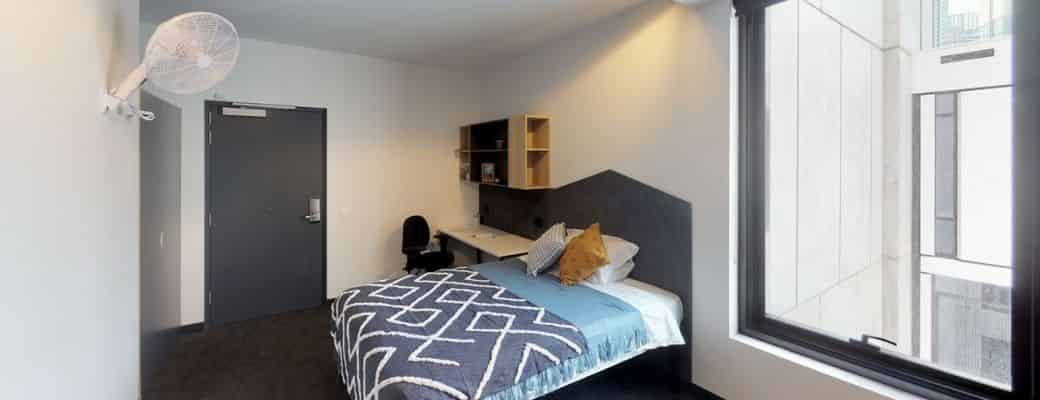
Student housing costs in Stuttgart vary by type, location, and condition. Because no official university‑provided rental data is included in this guide, all figures below are indicative ranges based on typical market conditions in 2026‑2027. You must confirm exact prices with the operator or landlord.
-
Budget‑conscious (€350 – €500 per month, all‑inclusive)
This band typically covers a room in a shared flat (WG) in outer districts such as Vaihingen, Möhringen, or parts of Bad Cannstatt. Rent may include utilities, internet, and sometimes basic furniture. Commuting time to Keplerstraße by public transport is usually 25–40 minutes. Student dormitories run by Studierendenwerk also fall into this range if you are lucky enough to secure a place, but waiting lists are long. -
Mid‑range (€500 – €700 per month)
A more comfortable room in a WG or a small studio in districts a bit closer to the centre, such as Stuttgart‑West or Feuerbach. Commute reduces to 15–25 minutes by bike or tram. These units often come with better amenities like private kitchenettes or larger common areas. Prices are indicative — check the latest offers on local rental platforms or with private landlords. -
Premium (€700 – €1,000+ per month)
A private apartment or a high‑end studio in Stuttgart‑Mitte or near the campus. Walking distance (under 10 minutes) is possible, and you may have modern facilities, balcony, or included services like cleaning. This band suits students who value proximity and privacy above budget, but it is not typical for most undergraduates given the price.
Remember: rental contracts in Germany often require a deposit (Kaution) of up to three months’ cold rent, and you may need proof of income or a guarantor. Utility costs (Nebenkosten) are usually separate; always ask for a breakdown.
Walk vs Transit Trade‑Off
Choosing between walking and using public transport hinges on your budget, schedule, and tolerance for travel time.
-
Walking (0–15 minutes to Keplerstraße)
Living within a 1‑km radius of the main campus places you directly in Stuttgart‑Mitte or the northern edge of Stuttgart‑West. This eliminates transit costs and time lost to waiting, making it easy to attend early lectures, use the library late, or join spontaneous student events. However, rents here are at the premium end, and the number of available flats is limited. You may also face noise from the city centre. -
Cycling (15–30 minutes)
Stuttgart is hilly, so electric bikes are popular. A radius of 2–4 km covers districts like Stuttgart‑West, Stuttgart‑Süd, or parts of Feuerbach. Cycling saves money (no transit ticket), but you need a secure bike storage and a reasonable fitness level. Bicycle theft is not uncommon. -
Public Transport (20–45 minutes)
Outer districts such as Vaihingen, Möhringen, or Bad Cannstatt offer lower rents but require a commute by S‑Bahn or U‑Bahn. With a semester ticket, the marginal cost is zero, but travel time adds up. If you have back‑to‑back lectures, the commute can become tiring. Some students combine a bike with suburban train for the last mile. The advantage is a quieter neighbourhood and larger living space for the same budget.
The trade‑off is clear: the closer you live to Keplerstraße, the higher the rent, but the more time and flexibility you gain. For students with heavy schedules or night‑time commitments, paying extra for walking distance may be worthwhile. For those on a tight budget, the outer districts are a pragmatic choice.
Shortlist Logic for Housing Options
When building a shortlist, consider the following criteria based on your personal priorities (no specific residences are provided in this dataset; the logic applies generally).
-
Proximity to campus
If your reviews indicate a “really cool and calm campus” that you wish to enjoy frequently, target a walking distance of 10–15 minutes. This maximises spontaneous campus visits, use of facilities, and participation in the “very active student life” mentioned by Tim. -
Budget alignment
Identify your maximum monthly rent. Use the indicative bands above as a starting point. Contact multiple landlords or student housing operators to get concrete numbers. Always confirm with the operator before committing. -
Transport connections
If you choose an outer district, verify that there is a direct S‑Bahn or U‑Bahn line to Stuttgart Hauptbahnhof (main station) or to the stop “Stadtmitte” (near Keplerstraße). Check frequencies — some lines run every 10 minutes during peak, others every 30 minutes. -
Neighbourhood character
Reviews mention “calm campus” but also “active student life.” Look for districts that have a few cafes, supermarkets, and green spaces. Stuttgart‑West and the area near Feuersee are popular with students. Avoid areas known for nightlife noise if you prefer quiet. -
Contract flexibility
Many students start with a short‑term sublet (Zwischenmiete) for a few months while they search for a permanent room. This can be arranged through online platforms or university notice boards. Always read the contract carefully.
Because no specific residence names are provided here, your next step is to search independently (without using institutional brand names) for that shortlist. Cross‑reference with the latest reviews on Google Maps for each building.
Frequently Asked Questions
1. Is on‑campus accommodation automatically available to international students?
No. The university does not guarantee housing. The Studierendenwerk operates a limited number of dormitories, and you must apply separately. Waiting times can be several months. Most international students find private accommodation before or after arrival. It is wise to start looking at least 3–4 months before your semester begins in April or October.
2. How much should I budget for utilities on top of rent in Stuttgart in 2026–2027?
Utility costs (electricity, heating, water, waste) are usually included in the rent as part of “warm” rent (warmmiete). If not, expect an additional €80–150 per month. Internet is typically separate (€25–40). Always ask the landlord whether utilities are included or charged separately. The figures above are indicative — confirm with the operator.
3. What is the best way to find a shared flat (WG) near Universität Stuttgart?
The most common method is using online WG‑platforms (such as WG‑Gesucht or immobilienscout24). University notice boards and Facebook groups for Stuttgart students are also effective. Be cautious of scams — never send money before viewing the room in person or via video call. When you find a place, ask for a contract and a detailed cost breakdown. The student services office can also provide a list of trusted private landlords.
Data‑date: 2026‑04‑02
See also: listing details · browse more