Housing Near Universität Bayreuth: What Campus Reviews Reveal
Universität Bayreuth, ranked 448th globally by QS, sits at Universitätsstraße 30 in the city of Bayreuth, Germany. The campus has earned a Google rating of 4.5 from 364 reviews, with students consistently praising its research environment, interdisciplinary programmes, and friendly atmosphere. One reviewer, Arash Payandeh, notes it’s a “great place for research on batteries capable of making multilayer pouch cells.” Another, Toprak Dikici, comments: “Campus is amazing, food is really good. City has great infrastructure compared to its size and population, you can enjoy the nature here.” These firsthand accounts paint a picture of a well-supported, compact university city where finding suitable housing is a key part of the experience.
City Context: Bayreuth as a Student City
Bayreuth (population ~75,000) is a medium-sized city in northern Bavaria, known for its baroque architecture, the Richard Wagner Festival, and a strong student presence. The university itself is located on the southern edge of the city centre, within walking distance of the main train station (Bayreuth Hauptbahnhof) and the city’s central square, Maximilianstraße. Public transport is provided by Bayreuth’s bus network, but many students find that walking or cycling covers most daily trips. The city’s small size means housing options are limited relative to larger German student cities (Munich, Berlin, Frankfurt), so demand for affordable rooms is consistently high.
Rents in Bayreuth are moderate by German standards. For the academic year 2026/2027, expect the following indicative ranges (confirm with operator):
- Student dormitory (single room): €280–€380 per month (utilities included)
- Private WG (shared flat, individual room): €320–€450 per month (plus utilities)
- Studio or 1-bedroom apartment: €450–€650 per month (cold rent, plus utilities)
These prices are based on current market data and should be verified directly with each housing provider. Rent increases of 2–5% are common each semester.
Walk vs. Transit Trade-Off
Because Universität Bayreuth is within a 20-minute walk from the city centre, the majority of students live in three main neighbourhoods:
- Altstadt (Old Town): Within a 10-minute walk to campus. High concentration of private WGs and apartments. Rent is higher but saves time. Many cafes, shops, and the main train station are nearby.
- Süd (South): A residential area between the city centre and the university. Walking time to campus is 5–15 minutes. More dormitories are located here, including Studentenwerk-operated halls. Quieter at night.
- Innenstadt (City Centre): North of the Altstadt, a bit further (15–25 min walk to campus). More nightlife and restaurants. Buses run frequently along major corridors like Richard-Wagner-Straße and Ludwigstraße.
Transit is mostly by bus. The city bus network (Bayreuth Stadtwerke) has frequent services connecting the university to outer districts (e.g., St. Georgen, Herzoghöhe). A semester ticket (included in student fees) covers unlimited bus travel within the city and region. Most students living beyond a 20-minute walk rely on buses, but car ownership is low.
Trade-off summary: If budget allows, living in Altstadt or Süd minimises commute time (0–10 minutes walking). If rent is a bigger concern, moving to the outskirts (St. Georgen, Eremitage area) can save €50–€100 per month, but expect a 15–25 minute bus ride each way.
What Campus Reviews Reveal About Housing Needs
Several Google reviews hint at what students value in their accommodation:
- Toprak Dikici (5 stars, one year ago) highlights: “I feel very lucky to be here.” The combination of great campus, good food, and brilliant friends suggests that having a sociable living environment (shared flat or dormitory) enhances the experience.
- Arash Payandeh (5 stars, one month ago) focuses on research facilities for battery technology. For PhD students or researchers, proximity to labs (e.g., in the engineering or natural sciences buildings) might matter more than nightlife. South or campus-adjacent housing would be ideal.
- Adam Baluchh (5 stars, one year ago) mentions pursuing a Master’s in microbiology with an interdisciplinary focus. A quiet, dedicated study space at home is likely important – a single room in a WG or a studio apartment could be preferable.
- Sadia Afrin (5 stars, one year ago) dreams of attending Bayreuth for a Master’s and mentions wanting to choose a science subject. For international applicants, affordability and ease of securing housing (e.g., through Studentenwerk) are top priorities.
These reviews confirm that most Bayreuth students value community, quiet study spaces, and proximity to campus, often balancing them against budget constraints.
Shortlist Logic: Choosing Housing for 2026/2027
When evaluating housing options, consider this checklist. Confirm all details (availability, contract terms, deposit, utilities) directly with the operator.
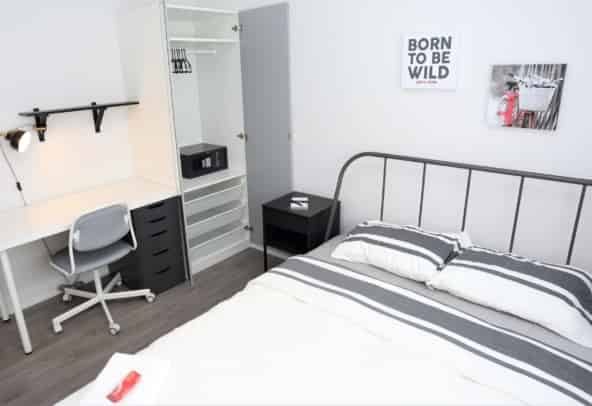
- Studentenwerk Oberfranken Dormitories
- Locations: Multiple halls in the Süd district (e.g., Am Universitätsgelände, Carl-Müller-Straße).
- Typical rent: €280–€380/month (all-in).
- Advantages: Low cost, easy access to campus (5–15 min walk), includes internet, furnished, social events.
- Disadvantages: High demand – apply early (6–12 months before move-in). Waiting lists can be long.
- Best for: Budget-conscious students, first-year undergraduates, international students seeking a smooth transition.
-
Private Wohngemeinschaft (WG)
- Locations: Concentrated in Altstadt, Innenstadt, Süd.
- Typical rent: €320–€450/month (cold rent; add €50–€80 for utilities).
- Advantages: More independence, chance to live with local German students (language practice), often larger rooms, sometimes balcony or garden access.
- Disadvantages: Anmeldung (registration) can be tricky if the landlord is non-cooperative; furnished rooms vary.
- Best for: Students who want more privacy, those with German language skills, or those who prefer a homelier atmosphere.
-
Studio or 1-Room Apartment
- Locations: Scattered across the city, but most are in Altstadt and Innenstadt.
- Typical rent: €450–€650/month (cold rent; utilities €80–€120).
- Advantages: Complete privacy, own kitchen and bathroom, ideal for couples or PhD students requiring quiet.
- Disadvantages: Higher cost, often requires a deposit of 2–3 months’ cold rent, less social interaction.
- Best for: Advanced students, researchers, or those with a larger budget who value solitude.
-
Furnished short-term apartments (for exchange/Semester abroad)
- Locations: Often near the city centre or university.
- Typical rent: €500–€800/month (all-in, including utilities and furniture).
- Advantages: Move-in ready, flexible contracts (3–6 months), sometimes includes cleaning service.
- Disadvantages: Highest cost per month, limited availability.
- Best for: Exchange students, those staying one or two semesters, or those who missed the deadlines for Studentenwerk.
Decision framework (use narrative, not table):
- If your monthly budget is under €400: student dormitory is your best match – apply immediately.
- If €400–€550: you can consider a WG room in Süd or Altstadt. Start searching on local platforms (e.g., WG-Gesucht, Facebook groups) 3–4 months before your course starts.
- If above €550: you have the option of a studio apartment; focus on Altstadt for walking access or quieter districts like Herzoghöhe for larger flats.
- If you are an incoming researcher or PhD candidate: prioritise proximity to your faculty. The university’s main campus hosts natural sciences, engineering, and economics buildings. Living in the Süd district minimises your walk to labs.
Important: All prices mentioned are indicative – confirm with the operator. Rent levels for 2026/2027 may vary, and it is wise to plan for a small increase (5–10%) due to inflation and market shifts.
FAQ: Housing Near Universität Bayreuth
1. When should I start looking for accommodation for the 2026/2027 academic year?
For student dormitories, apply as early as October 2025 for the winter semester 2026/2027 (starting October 2026). Many halls fill up by June. For private WGs and apartments, begin your search in April–May 2026 for October 2026 move-in. The summer semester (starting April 2026) has slightly lower demand, but still plan 3–5 months ahead.
2. Can I find housing without speaking German?
Yes, but it will be easier if you know basic phrases. Many Studentenwerk offices have English-speaking staff. Private landlords may prefer German, but online platforms like WG-Gesucht often have English listings. International student groups on Facebook (e.g., “Bayreuth International Students”) are also a good resource. Be prepared to attend viewings in person or via video call.
3. What documents do I need to rent in Bayreuth?
Typically: a valid passport/ID, proof of enrolment (or letter of admission for future students), a SCHUFA report (credit check – can be obtained online for a few euros), proof of income (e.g., blocked account statement for international students, scholarship letter, or parent’s guarantee), and a completed rental application form. For dormitories, only an enrolment certificate and passport are usually required.
Data date: October 2025. All figures are indicative and should be confirmed directly with housing operators before committing to any contract.
See also: listing details · browse more