Housing near Universitas Indonesia: a guide for 2026–2027
Universitas Indonesia (UI) sits on a large green campus in Depok, about 20 km south of central Jakarta. With a QS World University ranking of 189 and a Google rating of 4.7 based on over 7,500 reviews, the university draws students from across Indonesia and abroad. Finding suitable housing near UI involves understanding the local rental market, the trade-off between walking distance and public transport, and how to shortlist options using campus reviews as a starting point. This guide outlines what you should know for the 2026–2027 academic year.
What campus reviews reveal about the student experience
Reviews from the UI community highlight two recurring themes: the beauty and spaciousness of the campus, and the importance of its facilities. One recent reviewer, Rahmi Lisdeni, gave a 5-star rating and wrote: “The best of everything such as academic culture, alumnus cooperation, shopisticated scenery, the beautiful memory with the family in here.” Another reviewer, Katsummi Mara, also rated 5 stars but added a practical note: “I mean, this is the best university in Indonesia. Of course the place is so wonderful. Especially their library and full of green space. But i think they have to improved the library, full of dusk and please turn on the lamp. Its quite dark inside 😫”
A third review, from Cyrila Bertania Sari, mentions the campus stadium: “Stadion Universitas Indonesia is a multifunction outdoor stadium located within the green campus area of Universitas Indonesia in Depok. It is commonly used for football, athletics, student sports events, concerts, and community activities, offering a spacious and vibrant environment surrounded by t” — the review text was cut off, but it suggests that the campus offers ample space for recreation. A fourth review by Maya MSD says: “Prestigious University and one of the best universities in Indonesia 🫶🏻🫰🏻 The location is very beautiful, lots of trees and cool. On weekends, we can visit there while doing sports activities.”
These reviews point to a campus that is large, green, and well-regarded, but also spread out. Access to the library, lecture halls, and sports facilities depends on where you live. Living close to campus reduces travel time inside the university, while living further away may require using the free shuttle bus or private transport.
City context: Depok and the Jakarta connection
Depok is a city in West Java that has grown rapidly as a residential and educational hub. UI’s main campus occupies a large area in the Beji and Pondok Cina subdistricts. The surrounding neighbourhoods — such as Pondok Cina, Beji, Kukusan, and Margonda Raya — are home to many student housing options. Depok is connected to Jakarta via the commuter train (KRL) that stops at UI Station (also called Stasiun UI or Stasiun Pondok Cina) and at Depok Station. The journey to central Jakarta (e.g., Sudirman, Gambir) takes about 30–50 minutes by train, depending on the time of day.
For students, the choice between living in Depok or in Jakarta often depends on whether they need to commute to other parts of the city for internships or work. Many UI students choose to live near campus to attend classes and use campus facilities, while those who need to be in Jakarta may prefer a place closer to a train station with direct access to UI. Depok itself offers lower rental prices compared to Jakarta, but the variety of housing types is smaller.
Budget bands for student housing (2026–2027)
Rent prices near UI vary based on distance from campus, room type, and amenities. All figures below are indicative — confirm with the operator before signing any lease.
Low budget (IDR 500,000 – IDR 1,500,000 per month)
This range covers basic boarding houses (kost) where you rent a single room with shared bathroom and kitchen. Typically located 1–3 km from the campus gates (e.g., in Kampung Makassar, behind the Faculty of Engineering, or in the alleys around Margonda). Rooms are small (often 3×3 metres) with minimal furniture. Electricity and water may be included or charged separately. For a fresh student on a tight budget, this is the most common option.
Mid budget (IDR 1,500,000 – IDR 3,000,000 per month)
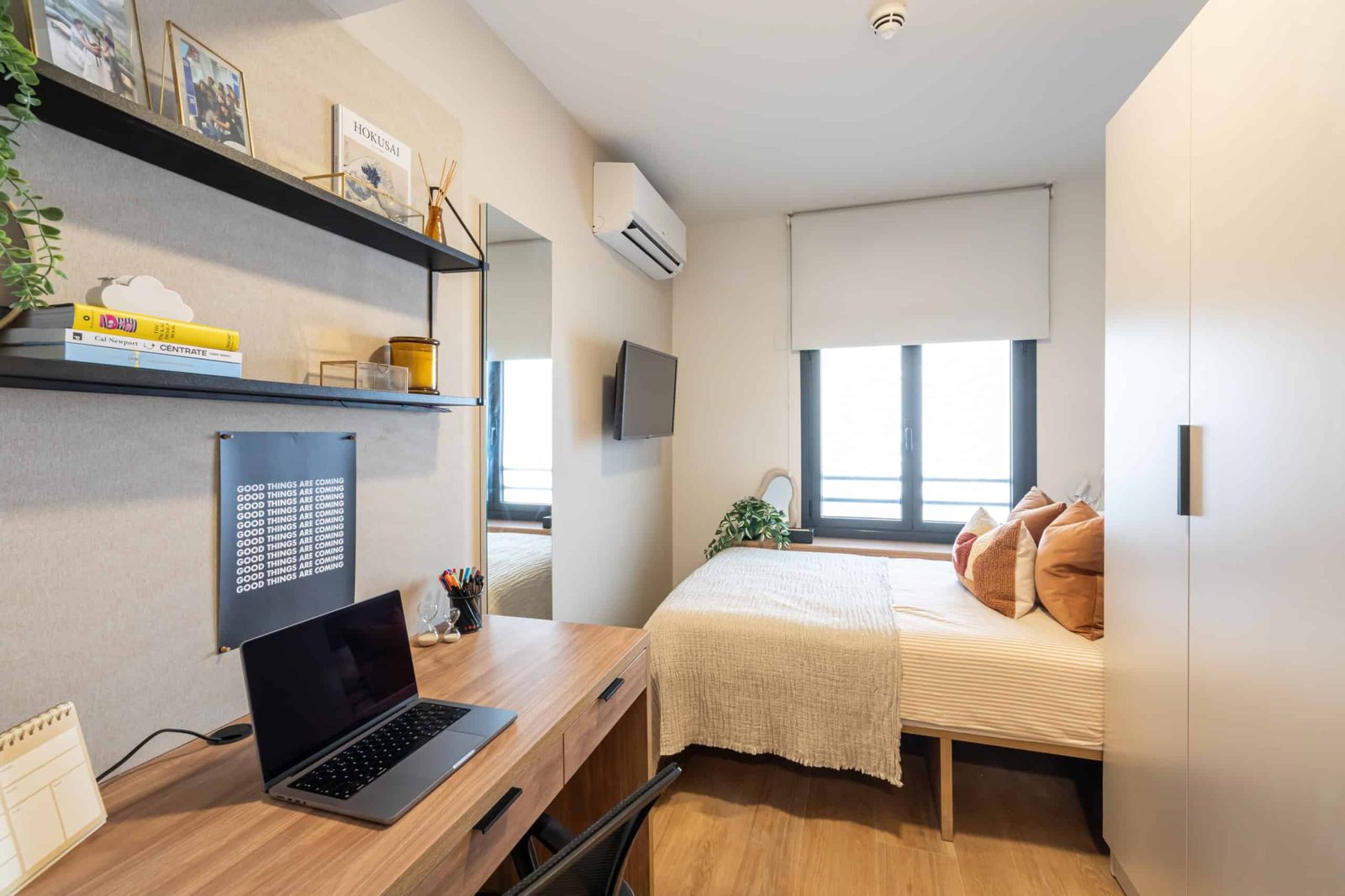
This gets you a better-quality kost or a private studio/apartment in a newer building. Rooms are larger, often with air conditioning (AC), private bathroom, and sometimes a small kitchenette. Many of these options are located in Pondok Cina, along Jalan Beji Raya, or in the Buncit area. Some are within a 10–15 minute walk to the campus perimeter. We recommend this band for students who value comfort and privacy without paying Jakarta-level rent.
High budget (IDR 3,000,000 – IDR 6,000,000 per month)
For this amount, you can rent a fully furnished apartment in a complex like Margonda Residence or similar (names vary; check current listings on local platforms). These typically include a bedroom, living area, kitchen, bathroom, and access to facilities such as a pool, gym, and 24‑hour security. They are located along the main Margonda Raya corridor, a 5–10 minute drive or 15–20 minute walk to campus. This option suits upper‑year students or those who want to live with a flatmate.
Walk vs transit trade-off
UI campus is large — about 320 hectares. The main entrance on Jalan Lingkar is used by many students. The central library, the rectorate building, and most faculties are spread across the campus, so even living right next to the main gate may still require walking 10–20 minutes to reach your faculty. The university operates a free shuttle bus (the “yellow bus”) that loops around campus, but during peak hours it can be crowded.
Walking distance (under 15 minutes to the campus perimeter)
Areas like Pondok Cina, the housing complex behind the Faculty of Engineering (Griya UI), and the side streets near the UI Hospital are ideal for walking. You need no public transport for daily commute, but you might still use a bicycle or motorcycle to reach your faculty quickly. The trade-off is that these areas are quieter and more residential, with fewer shops, though basic food stalls (warung) and minimarkets are common.
Transit‑dependent (15–45 minutes using public transport)
If you live further away—for example, in the Margonda Raya corridor or in the new developments around ITC Depok—you will need a motorcycle taxi (ojek), a ride‑hailing app, a bus, or the KRL train to reach campus. The KRL station at Pondok Cina (also called UI Station) is a 10–15 minute walk from the main entrance inside the campus. Living near this station gives you a direct train to Jakarta, but the walk to the campus centre is still 15–20 minutes. For students with classes in the early morning or late evening, relying on public transport can be less convenient and adds to monthly costs (roughly IDR 200,000–500,000 per month for ojeks/ride‑hailing).
Our recommendation: For first‑year students or those with many on‑campus commitments, prioritize housing within a 15‑minute walk of the campus perimeter (especially the side near the library and Faculty of Engineering). This reduces time and cost while keeping you close to campus green spaces and sports facilities mentioned in the reviews.
Shortlist logic using nearby residences
When searching for housing near UI, use the following criteria to create a shortlist. The examples refer to typical housing types, not specific branded properties.
1. Distance to campus
Use Google Maps to measure walking distance from the property to the nearest campus pedestrian gate. Enter “Universitas Indonesia” as the destination and check the route marked with campus roads. Properties within 1 km (12–15 minutes walk) should be your top priority if you plan to attend classes daily. Properties within 1–2 km may still be acceptable if there is a shuttle bus stop or a cheap ojek route.
2. Safety and security
Check if the neighbourhood has a neighbourhood security post (siskamling) or if the kost/apartment has a security guard. Many student boarding houses operate with a “ibu kost” (landlady) who lives on‑site. Look for well‑lit streets and a low traffic volume. Areas like Pondok Cina and Griya UI are generally considered safer; avoid dark alleys far from the main road.
3. Utilities and costs
Ask whether rent includes water, electricity, and internet. In many low‑budget kosts, electricity is charged separately based on a meter. Mid‑ and high‑budget options often include a fixed utility fee. Always ask for a breakdown before signing. Also, confirm the lease term — some kosts require a minimum 6‑month contract, while others allow monthly renewals.
4. Amenities reflecting campus life
Given the reviews highlighting greenery, sports, and library, you may want living spaces that allow you to study quietly. If the property has a study room or common area, that is a plus. Also consider proximity to food stalls — many students rely on warung near campus because UI’s cafeteria can be far from some faculties.
5. Public transport access
If you do not own a vehicle, check the availability of angkot (public minibuses), ojek, or the KRL station. The main transport node is UI Station (Pondok Cina). Properties along Jalan Margonda Raya have good access to angkot and TransJakarta buses. Note that traffic congestion on Margonda can be heavy during morning and evening rush hours.
Example shortlist (indicative areas — confirm exact units with local listings)
- Pondok Cina (close to campus east gate): walk‑stable, many kosts, mid‑range prices.
- Griya UI complex (within campus boundaries): reserved for faculty and some students; limited availability.
- Kukusan (north of campus): low‑cost kosts, close to the Faculty of Engineering, but alleyways can be narrow.
- Margonda Raya (west of campus): apartments and kosts with high‑end options, 10–15 minute ojek ride.
- Beji (south of campus): quieter, slightly more affordable, 15–20 minute walk to the main entrance.
Remember: Always visit the property in person before paying any deposit, and take note of the landlord’s willingness to accommodate student schedules (e.g., late‑night study).
FAQ
1. What is the typical rental contract length for student housing near UI?
Many boarding houses (kost) accept monthly or semester‑long contracts (usually 6 months). Apartments often require a minimum of 6 or 12 months. Always read the contract carefully; some landlords require a 1‑month deposit plus 1 month advance rent. All amounts are indicative — confirm with the operator.
2. Is it safe to walk around the campus area at night?
UI’s campus itself is generally safe, with security patrols and well‑lit main roads. However, the surrounding neighbourhoods can have darker alleyways. It is wise to choose housing on a main road or a street with adequate lighting. The reviews do not mention safety concerns, but I recommend sticking to populated areas after dark.
3. How do I find affordable housing without using an agency?
Most students find housing through word‑of‑mouth, Facebook groups (e.g., “Kost UI Depok”), or by walking around the desired neighbourhood and looking for “KOS” signs. You can also ask the UI Student Affairs office for a list of registered boarding houses. Avoid paying any deposit until you have seen the room in person. Do not send money through third‑party platforms without a verified listing.
Data date: This guide uses information available as of early 2026. Rent levels and availability may change; always verify directly with landlords or operators before making any commitments.
See also: listing details · browse more