Housing near Universidade de Santiago de Compostela: a practical guide for 2026–2027
Founded in 1495, the Universidade de Santiago de Compostela (USC) is one of Spain’s oldest universities, with a global QS rank of 628 and a Google rating of 4.2 from 353 reviews. Its main address is Praza do Obradoiro, 0, 15705 Santiago de Compostela, A Coruña, Spain. The city itself is the historic endpoint of the Camino de Santiago, a compact student town with a population around 97,000, where the academic year typically runs from September to June. Finding suitable housing as an international student requires understanding the local rental market, transport options, and which type of accommodation matches your budget.
What campus reviews reveal about location and atmosphere
Student and visitor reviews consistently highlight the aesthetic and historical value of USC’s campuses. One reviewer, Luciano Carvalho, wrote: “Visiting the University of Santiago de Compostela was a remarkable experience. Founded in 1495, it’s one of the oldest and most prestigious universities in Spain. Walking through its historic campuses, I was struck by the blend of old and new architecture, with impressive stone buildings and modern”. Another reviewer, Lex Emyouesti, noted: “The whole building is impressive, considering it’s a university. The garden is fantastic. The atmosphere was so relaxing.” These comments point to an environment that values heritage and green spaces, which can influence where students choose to live.
Living near the historic centre (where the main buildings are located) means immediate access to these beautiful surroundings, but rents tend to be higher. The relaxed atmosphere mentioned by Lex suggests that quieter residential neighbourhoods just outside the centre may be equally appealing.
City context: a walkable, student-oriented city
Santiago de Compostela is a mid-sized city where the university is spread across several campuses: the historic centre (Ciudad Vieja), the South Campus (Campus Sur, home to science and engineering faculties), and the North Campus (Campus Norte, near the health sciences). Most faculties are within a 20–30 minute walk of each other, and the city centre is compact.
The local population includes a large student body (roughly 25,000), which means the city has many services catering to students: affordable supermarkets, bookshops, bars, and co-working spaces. The public bus network (five main lines) covers most neighbourhoods, operating from 7:00 to 23:00 on weekdays, with reduced hours on weekends. Bicycle lanes exist on major roads, and walking is the most common mode of transport for students living within 1–2 km of their faculty.
Budget bands for student housing (indicative — confirm with the operator)
Rental prices in Santiago de Compostela are moderate compared to other Spanish university cities like Madrid or Barcelona. Figures below are indicative for the 2026–2027 academic year and should be confirmed directly with landlords or operators.
€250 – €400 per month (budget)
- Shared room in a private apartment (3–4 bedrooms).
- Typical in neighbourhoods like Conxo, Fontiñas, or Ensanche.
- Often includes bills, but check separately.
- Limited availability; early booking (January–March for September move-in) recommended.
€400 – €600 per month (mid-range)
- Private studio or one-bedroom apartment.
- Single room in a shared apartment with 2–3 housemates, closer to the historic centre or South Campus.
- Common areas (kitchen, living room) shared; private bathroom possible.
- Most student residencias (private-run dormitories) fall into this range.
€600 – €900 per month (higher range)
- Furnished one- or two-bedroom apartment with modern amenities.
- Often in the historic centre or newly renovated buildings near Cathedral.
- May include utilities, wifi, and cleaning service.
- Less common for shorter stays; more typical for couples or postgraduates.
All prices are per month for a standard 12-month contract. Short-term rentals (semester or month) may cost 20–30% more. Always confirm total cost, deposit (usually 1–2 months), and whether bills are included.
Walk vs transit trade-off: where to live based on your faculty
If you study at the historic centre (e.g., Faculty of Philology, Faculty of Law, Faculty of Geography and History)
- Walking distance: up to 1 km from the core. Neighbourhoods: Ciudad Vieja, Área Central, Algalia de Arriba.
- Walking is sufficient; no daily need for public transport.
- Trade-off: historic buildings may lack lifts, soundproofing can be poor, and some apartments have no central heating (use electric radiators).
If you study at the South Campus (e.g., Faculty of Science, Faculty of Engineering)
- Walking distance: 2–3 km from the centre. Neighbourhoods: Conxo, A Sionlla, and the area around Avenida de Lugo.
- Buses (lines 15, 6, 2) run every 10–15 minutes. Walking time about 25–35 minutes.
- Trade-off: rents are 10–15% lower than the centre, but more time spent commuting. Bicycles are a good alternative (cycling takes about 15 minutes from the centre).
If you study at the North Campus (e.g., Faculty of Medicine, Faculty of Health Sciences)
- Located near the Hospital Clínico and Avenida de Barcelona. Neighbourhoods: A Choupana, San Caetano, and the northern part of Ensanche.
- Bus lines 5, 12, and C5 connect to the centre (15–20 minutes). Walking from the centre takes about 30 minutes.
- Trade-off: quieter residential area, more green space, but fewer shops and nightlife. Rents similar to the South Campus.
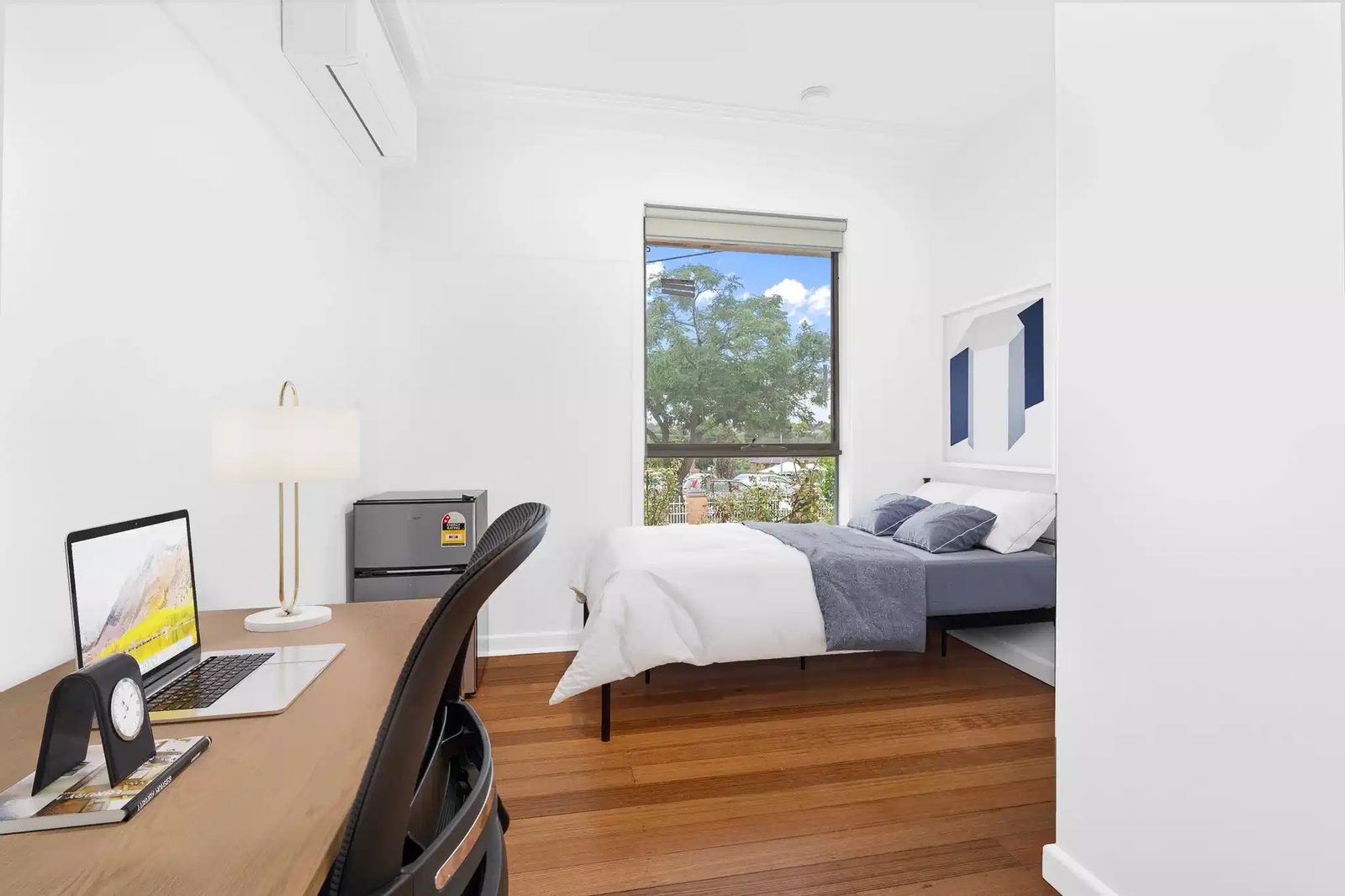
General rule: if your faculty is in the historic centre, prioritise walking distance. For South or North campuses, a 1–1.5 km buffer that keeps the bus or bike option viable will balance cost and convenience.
Shortlist logic: how to choose a residence
When shortlisting accommodation, follow this step-by-step approach using the available options in Santiago. (Since no specific residence names were provided in the given data, the logic below applies to any residence or private rental you consider.)
-
Determine your campus and walking tolerance.
- Historic centre: look for properties within 1 km of the Cathedral or Praza do Obradoiro.
- South/North campus: choose a neighbourhood where bus frequency is at least every 20 minutes during peak hours.
-
Set your net budget.
- Subtract estimated monthly utilities (€50–€80 for a single room, €80–€120 for a studio) and round up for deposits.
- Only consider listings within your comfort zone.
-
Check contract terms.
- Minimum stay, notice period (usually 30 days), and whether you can sublet.
- If you arrive for a single semester (Sept–Dec or Jan–May), look for residencias that offer six-month contracts.
-
Inspect the property (or video call).
- Confirm heating type (gas/electric/central), wifi availability, and noise insulation – especially in the historic centre where stone walls amplify sound.
-
Read reviews from previous tenants.
- Look for consistent complaints about landlords, maintenance, or security.
- Use platforms like Google Maps (the university itself has 353 reviews; residence-specific reviews are also valuable).
Using this logic, you can narrow down from dozens of listings to 3–5 serious options in your price range and preferred location. Always book accommodation after receiving your university acceptance so you know your exact faculty address.
FAQ: three common questions about housing near USC
Q1: Is it cheaper to live in a shared apartment or a university-managed residence?
Shared private apartments are generally the most cost‑effective option, with rents from €250 to €400 per month for a shared room. University‑managed residences (on‑campus halls) typically cost between €500 and €700 per month and include meals, cleaning, and utilities. Private student residences (run by external operators) fall in a similar range. If you prefer independence and are prepared to manage bills, shared apartments save money. If you want all‑inclusive convenience and a built‑in social network, a residence may be worth the extra cost. All figures are indicative — confirm with the operator.
Q2: How early should I start looking for housing for the 2026–2027 academic year?
For a September move‑in, begin your search in February–March. Many private apartments are advertised from April–June, and the most popular places (especially near the historic centre) are taken by July. If you arrive in September without a contract, you may have to book temporary accommodation (hostel or Airbnb) for the first two weeks while you visit properties. University‑ or private‑run residences often open waiting lists from January. For a January‑start (second semester), start looking in October.
Q3: What are the safest neighbourhoods for international students?
The historic centre (Ciudad Vieja) is very safe, with a strong police presence and many pedestrians at all hours. Ensanche (the modern commercial area) is also safe and has better‑lit streets. Conxo and A Sionlla (near South Campus) are quiet residential areas with low crime rates. As in any small city, avoid poorly lit alleys late at night, but overall Santiago is considered a very safe city for students. Always secure your rental through a recognised agency or verified landlord, and check that main doors have electronic locks.
Data date: 2027. All rental prices and availability are indicative and subject to change; always confirm directly with the housing operator before signing a contract.
See also: listing details · browse more