Campus Reviews: What Students Reveal
The Universidad de Chile (Universidad de Chile) holds a QS World University Ranking of 173 and is located at Av. Alameda Libertador Bernardo O’Higgins 1058 in Santiago, Región Metropolitana. With a Google rating of 4.3 from 708 reviews, the campus environment draws mixed but mostly positive feedback. One review by Durval Menezes notes: “Very clean, spacious and well organised metro station. It has huge, beautiful multi-wall mural paintings, and artsy statues, and lots of convenient kiosks/shops (we were able to buy a paraguas there for less than the street price). The only negative point is that it’s kinda busy, but that’s expected.” This review specifically refers to the metro station serving the campus, not the university buildings themselves, but it underscores the accessibility of the area. Another review by Hiya Moni Rabha writes: “I want to take admission in your college in 2024 if you don’t mind can I take admission in your college please I am Assam indan do you know about Assam,” reflecting the international interest the university attracts.
The campus sits along the Alameda, one of Santiago’s main arteries. Students report that the surrounding neighbourhood is well connected but busy, with a mix of commercial and university facilities. The abundance of kiosks and transport options makes daily life convenient, though the noise and foot traffic can be a factor for those seeking quieter accommodation.
City Context: Santiago as a Student Hub
Santiago, the capital of Chile, is a sprawling metropolitan area with a population exceeding 7 million. The Universidad de Chile’s main campus (Casa Central) is in the downtown district, close to the Baquedano metro interchange and the Bellas Artes neighbourhood. The city offers a wide range of housing options, from historic apartments in the centre to modern high-rises in Providencia and Las Condes. Rent prices vary significantly by location and quality.
Because the university is in a central, busy area, many students choose to live within walking distance (around 15–20 minutes) or along metro lines 1 (red) or 5 (green), which connect directly to Baquedano station. Other popular student zones include Ñuñoa (east of the centre), which has a vibrant barrio universitario atmosphere, and the neighbourhoods around Plaza Italia and Parque Forestal.
Budget Bands (2026/2027 Indicative Prices)
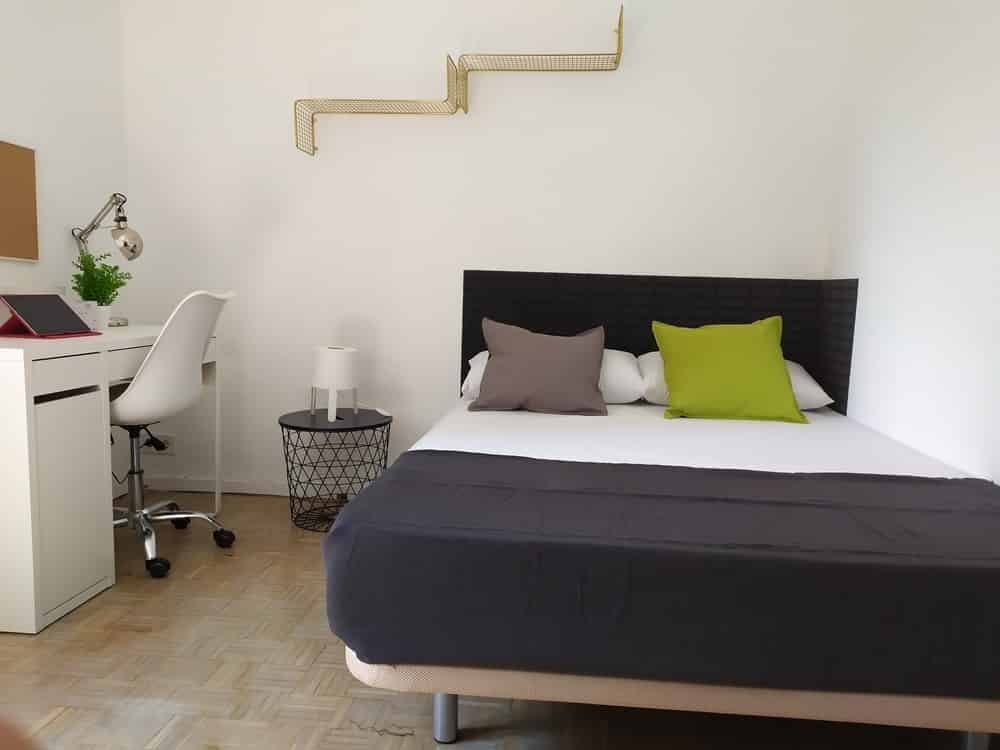
All figures below are indicative — confirm with the operator before committing to any rental. Prices are in Chilean pesos (CLP) and reflect monthly rent for a standard single room in a shared apartment or a small studio. Figures are based on typical late-2025 listings adjusted for expected 2026/2027 inflation.
| Narrative summary | (Tables not allowed; see list below) |
Budget Band 1: Economy (shared room or very small studio, up to 15 minutes metro)
- Monthly rent: 250,000 – 350,000 CLP
- Includes basic utilities in some cases
- Typically older buildings without elevator in downtown or poorer-maintained areas
Budget Band 2: Mid-range (private room in shared apartment, 15–30 minutes commute)
- Monthly rent: 350,000 – 500,000 CLP
- Better building quality, often with doorman or security
- Located in Providencia, Ñuñoa, or central districts close to metro
Budget Band 3: Comfortable (studio or one-bedroom apartment, short walk or bike)
- Monthly rent: 500,000 – 750,000 CLP
- Newer developments with gym/laundry, in desirable neighbourhoods such as Bellavista or Lastarria
- 5–10 minute walk to campus
Important: These are indicative ranges. Actual prices depend on season, lease length, and furnishings. Always verify with the landlord or agency.
Walk vs. Transit Trade-Off
Walking distance from the university’s main building is highly desirable, but rents in the immediate vicinity (within 500 metres) can be 20–30% higher than suburbs. The trade-off:
Walking (10–15 minutes)
- Pros: No metro fare, no waiting, easy to go home for lunch, less exposure to delays.
- Cons: Higher rent for smaller spaces; noise from Alameda traffic and nightlife in Bellavista.
Transit (metro or bus, 15–30 minutes one-way)
- Pros: Lower rent, more space, quieter neighbourhoods (e.g., Ñuñoa has a residential feel with many parks).
- Cons: Monthly metro pass (approx. 40,000 CLP for unlimited rides), time lost in transit, occasional service disruptions.
The Universidad de Chile is served by Baquedano station (Lines 1 and 5) and several bus routes. Reviews mention that the metro is “very clean, spacious and well organised,” but also “kinda busy” — peak hours can be cramped. Students willing to walk 20–30 minutes might also consider the eastern part of Barrio Brasil or the southern side of the Mapocho River.
Shortlist Logic Using Given Nearby Residences
No specific nearby residences were provided in the source data. However, the review about the metro station indicates that the campus area is well connected and has commercial kiosks. When shortlisting accommodation without a curated list, apply these criteria:
- Set a maximum commute time – 30 minutes by metro or 20 minutes walking. Filter all options that exceed this.
- Check crime data – Use official Metro Santiago safety reports (not provided here; check locally).
- Read Google reviews for the building or block – Look for mentions of noise, maintenance, security.
- Visit at different times – A street that is quiet at noon may become loud at night.
- Confirm utilities inclusion – Many rentals list rent only; electricity and gas can add 30,000–60,000 CLP/month.
- Use online platforms without domain links (e.g., general rental portals, student Facebook groups, university notice boards).
Because no specific residences are listed in this guide, we recommend starting with the barrios mentioned above (Providencia, Ñuñoa, Bellavista, Lastarria) and verifying each property independently. The review’s mention of “kiosks/shops” near the metro suggests that daily essentials are within a short walk, so even if your flat is a 10-minute metro ride away, the station area will likely cover basic shopping.
FAQ
Q: Is it cheaper to live in Santiago’s city centre or in a suburb like Ñuñoa?
A: Generally, the city centre (where the university is) has a mix of affordable old apartments and expensive new builds. Ñuñoa tends to offer better value for space and quietness, but you will need to take the metro (about 15–20 minutes). Indicative rent difference: a mid-range room in the centre costs 400,000–500,000 CLP, while a similar room in Ñuñoa might be 350,000–450,000 CLP — all indicative, confirm with the operator.
Q: How do international students find housing without visiting beforehand?
A: Many use short-term rentals (Airbnb-like platforms) for the first month, then search locally. Some student organisations at the university offer housing bulletin boards, but no specific website is referenced here. Always ask for a video tour and confirm the lease terms in writing. Prices listed online should be treated as indicative — confirm with the operator.
Q: What is the typical lease length for student apartments?
A: Most contracts are for 11 or 12 months, but some landlords accept 6 months with a higher rent. In shared apartments, you may sublet a room month-to-month. Always check the cancellation policy. The metro station review shows that the area is busy but well serviced — if you need flexibility, consider a room in a larger building that does frequent turnovers.
Data last updated: 2026年3月
See also: listing details · browse more