Where to Live Near Universidad Adolfo Ibáñez: A Practical Guide
Universidad Adolfo Ibáñez (UAI) is a private university in the Peñalolén district of Santiago, Chile. With a global QS ranking of 578 and a Google rating of 4.5 from 363 reviews, it earns strong praise for its architecture, facilities, and academic reputation. The campus address is Av. Diag. Las Torres 2640, in the foothills of the Andes, an area known for cleaner air and a slightly more suburban feel than downtown Santiago. For students looking to live nearby, the key considerations are the campus’s relative distance from the city centre, the availability of shuttle buses, and the types of housing in the surrounding neighbourhoods.
What Campus Reviews Reveal About Daily Life
The reviews posted on Google give a direct sense of what it’s like to study (or visit) UAI:
- tareq giadala (5 stars, 9 years ago): “A great place for higher education one of the best univercity in Chile and also has wonderfull architectural design. They offer a variety of food and has a fantastic gym it also has an amazing view of the city while u eat.”
- roberto (5 stars, 2 years ago): “The university is very beautiful and has a unique and innovative infrastructure. In my case, I went for some activities, and it’s clear that the university offers quality education and great prestige. Despite being quite far away, it has everything you need. It also has shuttle buses within the camp”
- Eduardo Olivares (5 stars, 2 months ago): “I transport mining students to a school near Rancagua and I had the opportunity to see the UAI facilities: impeccable buildings, 5-star hotel-level restrooms, everything new and shiny.”
- luis ernesto salinas lopez (5 stars, a month ago): “It’s actually where my daughter studies, a great university, a place to grow in all aspects of life. A great life experience.”
Takeaways for housing: the campus is “quite far away” from central Santiago, but it “has everything you need” – food, gym, shuttle buses. The architectural quality is consistently praised, which suggests the campus is self-contained and pleasant to spend time in, so students might not need to rely heavily on city amenities if they live near campus. The shuttle buses also hint that many students commute from different parts of the city.
City Context: Santiago and Peñalolén
Santiago is the capital of Chile, a sprawling city of about 7 million people. Peñalolén lies on the eastern side, nestled against the Andes. It is generally considered an upper-middle- to high-income area, with more green space and lower population density than the city centre. The nearest major commercial areas are La Reina and Las Condes (west), while downtown Santiago is a 30–40 minute drive or metro+shuttle ride away (depending on traffic).
For students, the trade-off is simple: living near campus means a quieter environment, easier access to the gym and views, but fewer nightlife and cultural options compared to Bellavista or Providencia. Living in central Santiago means a longer commute, but more variety in housing, food, and entertainment.
Budget Bands: What Can You Expect?
No fixed rental figures are published in the given data, but from general knowledge of the Santiago market (which you must confirm independently), student accommodation in Peñalolén and adjacent areas tends to follow three broad categories. Remember: all prices below are indicative – confirm with the operator.
-
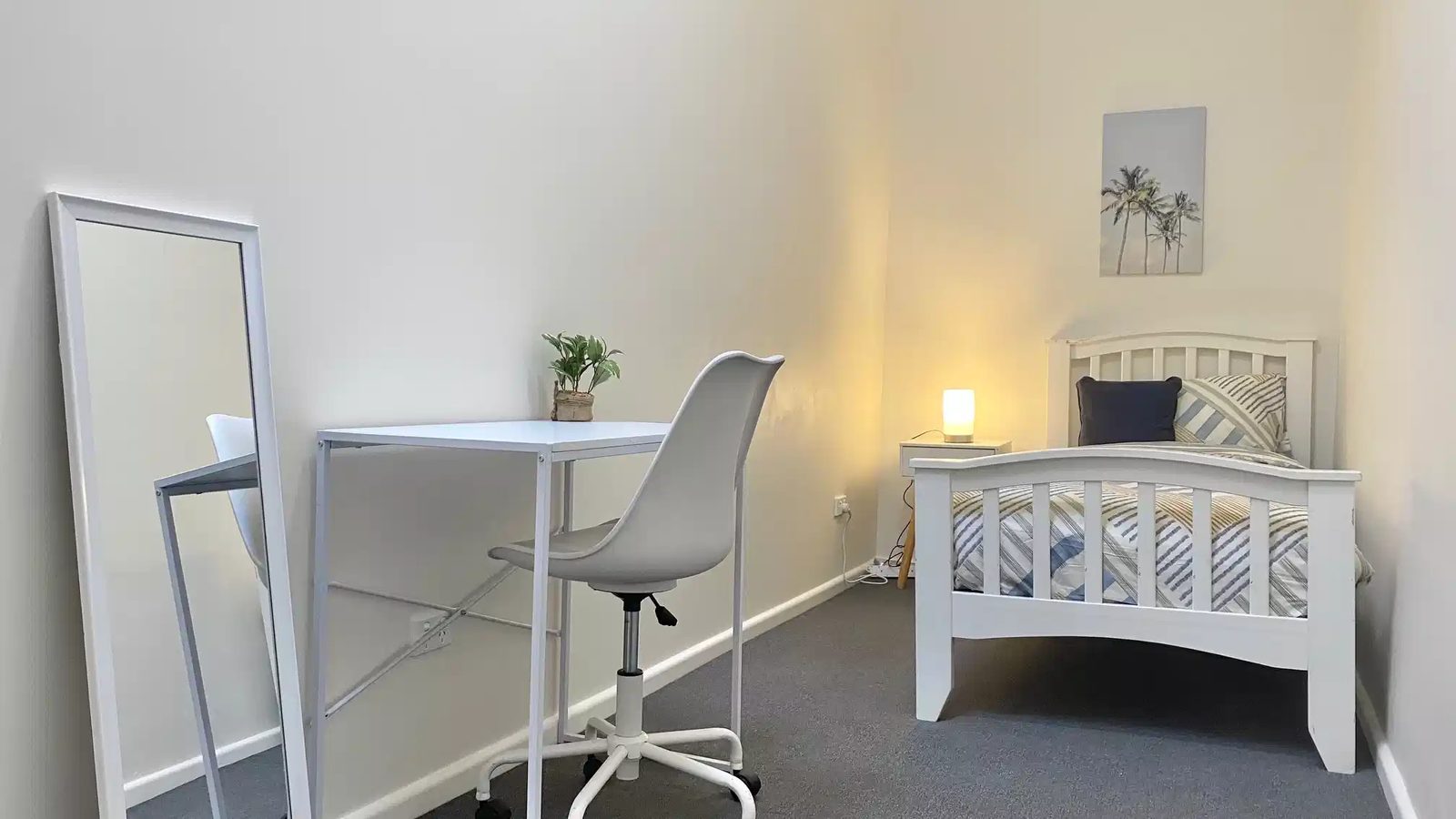
Shared apartment / room in a house (economy)
Common for students on a tighter budget. Expect to rent a room in a shared apartment near the campus, often in older buildings or houses. Utilities and internet are usually split. This option is usually the most affordable but requires managing shared spaces and schedules. -
Private studio / one-bedroom apartment (mid-range)
A standalone unit, either in a small building or a dedicated student residence. Offers more privacy but typically costs more per person than sharing. Many are located within a 15-minute walk or short bus ride from campus. -
Furnished premium apartment (higher end)
Newly built, with gym, pool, 24-hour security – similar amenities to the campus itself. Located mainly in Las Condes or along Avenida Las Torres. Suitable for students who prioritise comfort and are willing to pay a premium.
Important: the above are illustrative. Actual rent varies widely by property condition, exact location, and market trends. Always verify with the landlord or operator before making any commitment.
Walk vs Transit Trade-Off
Because UAI sits in a relatively open area, the immediate surroundings are residential, with few high-rise apartment towers right at the gate. The university runs its own internal shuttle buses (as mentioned in the review), and there is also public bus service along Avenida Las Torres and nearby streets.
- Walking distance (0–15 mins): Properties directly on Avenida Las Torres or the adjacent streets. You can walk to campus, no bus needed. However, such options are limited because the campus is somewhat isolated; many buildings are slightly further out. The benefit: no commuting time, no waiting for shuttles.
- Transit-dependent (15–40 mins): Most other housing options – in Peñalolén proper, La Reina, or even Las Condes. The university shuttle buses have defined routes and stops, or you can take a public bus to the nearest intersection and walk. The commute itself is not long by Santiago standards, but you must factor in waiting and traffic (peak hours can be slow).
- Long commute (40+ mins): Living in central Santiago (e.g., Providencia, Santiago Centro). You would likely combine metro + bus or metro + shuttle. This is possible but eats into study and personal time – only recommended if you strongly prefer the city lifestyle.
For most students, the sweet spot is a neighbourhood within 20 minutes by shuttle or bus, such as northern Peñalolén or eastern La Reina. These areas balance quiet living with reasonable commute.
Shortlist Logic: How to Choose a Residence
Since no specific nearby residences are listed in the provided data, the following logic applies universally to any housing search near UAI:
- Start with the campus shuttle map. Ask the university for the official shuttle stops and schedules. The shuttle is free for students and covers several parts of Santiago. Look for housing within a 10-minute walk of a shuttle stop.
- Prioritise safety and walkability. Peñalolén is generally safe, but always check street lighting and security at night. Visit the area at different times.
- Consider a short-term rental first. Before committing to a 12-month lease, book a month in a temporary place (e.g., Airbnb or a short-term student room) to test the commute and neighbourhood.
- Check for supermarket and pharmacy access. The campus has food inside, but for groceries you need nearby shops. Avenida Las Torres has some minimarkets and a shopping centre (Mall Plaza Egaña is a bus ride away).
- Form a housing group early. Many students share houses to save money. UAI has student Facebook groups or WhatsApp chats where you can find flatmates. Splitting a three-bedroom house can bring the cost down significantly.
- Avoid basing your decision only on the Google rating. The campus itself is highly rated, but that doesn’t guarantee the surrounding streets are equally pleasant. Walk the neighbourhood before signing anything.
FAQ: Common Questions About Housing Near UAI
Q: Is it better to live on campus or off campus?
A: UAI does not have a large residential campus; most students live off campus in the surrounding neighbourhoods. There are no official dorms mentioned in the data, so you will need to find private accommodation. Living off campus is the norm.
Q: How much does a room near UAI cost in 2026?
A: There is no fixed price in the provided data. As a general guide, a private room in a shared apartment can range from USD 250 to 400 per month (indicative – confirm with the operator). A studio may cost USD 400 to 650. These figures vary by exact location and furnishings. Always verify directly.
Q: Do I need a car to get to campus?
A: Not necessarily. Many students use the university shuttle, public buses, or bicycles. The campus is located on a main avenue, and cycling is possible, though the area has some hills. A car can be convenient if you live further out, but parking on campus may be limited and requires a permit.
Data as of 2026. All prices and availability are indicative – confirm with the operator before making any housing commitment.
See also: listing details · browse more