Campus and Surroundings: What Students Say
The University of Sydney’s main campus at Camperdown is often described by visitors in glowing terms. Mohamed Abdelbary, who gave a 5‑star review, wrote: “One of the top and most prestigious universities in the world. I visited the University of Sydney on a sunny day and explored their campus thoroughly. I fell in love with the Quadrangle that looks literally like the Harry Potter movies’ Quadrangle. An iconic masterpiece to enjoy exploring.” Joey Kappaz (also 5 stars) added: “Absolutely beautiful campus. The architecture is unreal, feels like you’re walking through something straight out of Europe with all the old sandstone buildings, but it’s mixed with modern facilities too which makes it feel really well balanced. The main quad especially stands out. Super open, great.” Hiep Nguyen (5 stars) echoed: “Visiting the University of Sydney feels like stepping into a beautiful blend of history and modern academic excellence. It is undoubtedly one of the most stunning campuses in the world. The first thing that captures your heart is the historic architecture.”
These reviews highlight a campus that is both visually striking and functional. However, the on‑campus experience can differ for visitors: the university restricts library access to enrolled students only, so if you rely on after‑hours study spaces, factor that into your housing decision—a nearby library or a quiet room in your accommodation becomes more important.
The university is rated 4.4 on Google from over 1,900 reviews, indicating a generally high satisfaction among visitors and students alike. Its global QS rank of 25 reinforces its academic reputation, making it a magnet for international students.
City Context – Sydney as a Student Hub
Sydney is Australia’s largest city, with a vibrant economy, extensive public transport network, and a high cost of living. The University of Sydney is located in the inner‑west suburb of Camperdown, about 3 km southwest of the city centre. The area is well‑served by buses, light rail (the Dulwich Hill line stops near the campus), and train stations such as Redfern (a 10‑15 minute walk) and Newtown.
The city’s rental market can be competitive, especially in the first quarter of the academic year. Weekly rents for a one‑bedroom apartment in the inner ring often exceed AUD 500, while shared houses or student accommodation offer more affordable entry points. All prices in this guide are indicative — confirm with the operator.
Budget Bands for Housing Near USyd
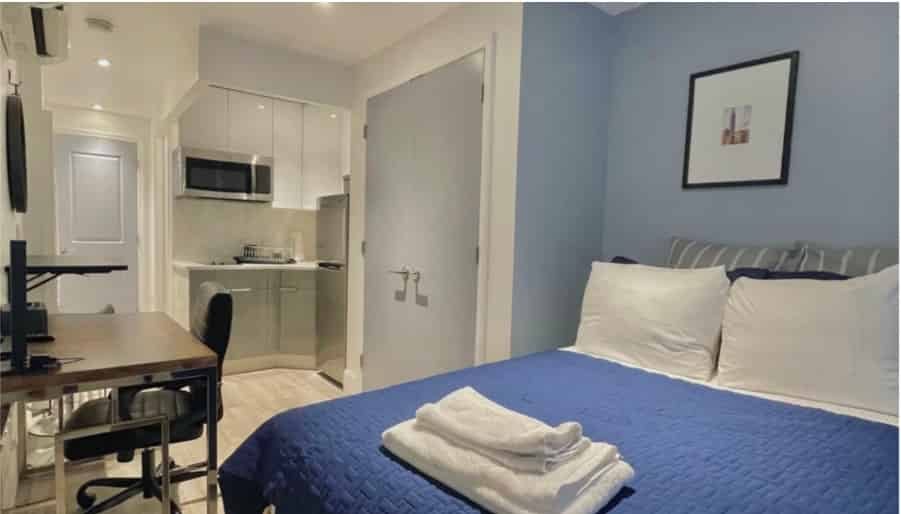
Your weekly housing budget is the single biggest factor shaping your options. Below are broad bands for 2026, based on typical market conditions for the Camperdown area.
Budget: Under AUD 350 per week This range usually covers a room in a shared house (often with 3–5 housemates) or a bed in a larger shared apartment. You may need to commute 20–30 minutes by bus or train. Properties in this band are often older, with shared amenities. All prices indicative — confirm with the operator.
Budget: AUD 350–550 per week At this level you can find a room in a purpose‑built student accommodation (PBSA) facility or a nicer share house closer to campus (within a 15‑minute walk). Many PBSAs include utilities, internet, and access to common areas. Studios in PBSAs start around AUD 450–550. All prices indicative — confirm with the operator.
Budget: Over AUD 550 per week This opens up a private studio or one‑bedroom apartment in a modern building near the university. You can also consider university‑owned colleges (on‑campus residences), which typically include meals and utilities, though availability is limited and applications open early. All prices indicative — confirm with the operator.
Walk vs. Transit: The Trade‑Off
Choosing between walking distance and using public transport involves balancing time, cost, and lifestyle.
Walking zone (0–15 minutes) Properties within a 10–15 minute walk of the main quadrangle are the most convenient but come at a premium. You save on transport costs (potentially AUD 40–60 per week on a MyMulti pass) and gain flexibility for late‑night study sessions. The trade‑off: you pay 20–30% more in rent compared to properties 20 minutes away by bus.
Transit zone (15–30 minutes by bus/train) Areas like Newtown, Darlington, Chippendale, Glebe, and parts of Redfern are still within a 10‑minute bike ride or a short bus journey. These neighbourhoods offer better value for money and a stronger local culture – Newtown’s King Street is lined with cafes, bookshops, and independent cinemas. The commute adds 10–20 minutes each way, but you gain a larger living space or lower rent.
Car‑based living Driving to campus is not recommended. Parking on campus is limited and expensive (up to AUD 30 per day). Many streets around Camperdown have timed restrictions. Most students rely on walking, cycling, or public transport.
How to Shortlist Accommodation – A Logical Approach
Instead of listing specific buildings (which change management, pricing, and availability year‑to‑year), here is a framework you can use with any rental platform or agent.
Step 1: Set your non‑negotiables
- Maximum rent per week (include utilities if possible)
- Maximum commute time (door‑to‑door) – be realistic: a 30‑minute commute is common
- Minimum room type (single room, studio, or flat)
- Essential amenities (laundry, gym, study room, bike storage, air conditioning)
Step 2: Map the catchment area Plot a 1‑km radius around the Camperdown campus on Google Maps. Within that circle, priority suburbs are Camperdown, Darlington, Chippendale, Glebe, Newtown (northern end), and parts of Forest Lodge. Outside that, expand to 2–3 km covering Annandale, Leichhardt, and Redfern.
Step 3: Filter by property type
- University‑owned accommodation: On‑campus colleges (like St John’s, St Paul’s, etc.) and “accommodation services” listings. These are often more expensive but include dining and social programs. Apply early (before October for a February start).
- Private PBSAs: Buildings marketed to students, often near universities. They offer studios and share apartments with all‑inclusive billing. Compare contracts length – some require 48‑week leases.
- Share houses: Use flat‑mate finders or real‑estate websites. Look for properties listed as “student‑friendly” or near bus stops that serve Parramatta Road or City Road.
Step 4: Verify with a visit (or video call) Ask about:
- Actual walking time to your faculty building (not just the campus gate)
- Internet speed and reliability
- Noise levels (especially on main roads like Parramatta Road)
- Security (buzzer, locks, CCTV)
Step 5: Read the fine print
- Bond: usually 4 weeks’ rent
- Lease duration (minimum 6 months? 12 months?)
- Exit clauses (what if you leave early due to internship or personal reasons)
- Bills included or not (electricity, gas, water, internet)
Following this process, you can evaluate any shortlisted property without relying on generic “#1” claims.
Frequently Asked Questions
Q1: When should I start looking for housing near USyd for a 2026 start?
Start your search in September–October 2025 for February 2026 enrolment (semester 1). For a July 2026 start (semester 2), begin in March–April 2026. PBSA and university‑owned residences often open waiting lists 6 months ahead. Private rentals become available 4–6 weeks before the lease start.
Q2: Do I need to sign a lease before I get a student visa?
No, it is not required. Many providers allow you to book or reserve a room with a deposit (refundable if your visa is refused, subject to terms). Check the cancellation policy carefully. Some university‑owned accommodation offers a “visa refusal guarantee.”
Q3: Is it better to live in university‑owned housing or private accommodation?
University‑owned housing often provides a ready‑made social community and includes meal plans, which can simplify life for first‑year international students. However, it is usually more expensive and less flexible (12‑month contracts, limited choice of room types). Private accommodation gives you more control over location, budget, and length of stay, but you must handle utilities and room‑mate arrangements yourself. Your choice should align with your budget, need for social support, and independence. All prices indicative — confirm with the operator.
Data‑date: 2026‑03‑19
See also: listing details · browse more