What TUM Campus Reviews Reveal
The Technical University of Munich (TUM) holds a QS ranking of 22 globally and is often described by reviewers as “Germany’s MIT.” On Google, it scores 4.5 out of 5 from 977 reviews. Students frequently praise the location and academic reputation, while some critiquing the exam system. One review by Jon L Albee (5 stars, 5 months ago) says: “Germany’s MIT, this is one of the best universities in the world. Imagine being able to study engineering and sciences in this wonderful location, where engineering and sciences are taken very seriously indeed. It’s extraordinary.” Another student, Tim Zhang (5 stars, 5 years ago), writes: “Proud to study EE here. Not a big fan of the exam system though. Most exams are extremly unfriendly. Because they are intentionally kept short, in order to give you time pressure…” Haval Sadiq (5 stars, 6 years ago) notes: “Friendly staff and beautiful building, it is located at a very nice place with all museums around.” A contrasting 1-star review from Adam Baluchh (a year ago) states: “As a passionate student of microbiology in my final year of undergraduate studies, I am enthusiastic about pursuing a Master’s degree in Food Science and Technology at the Technical University of Munich, particularly at the Weihenstephan campus.” Although the review is cut short, it highlights that TUM has multiple campuses, including Weihenstephan in Freising, about 30 km north of the main campus.
The campus atmosphere itself is described as modern and integrated into the city. The main address is Arcisstraße 21, 80333 München-Maxvorstadt, right in the heart of Munich’s museum district. This central location means students are close to cultural amenities, but housing in the immediate vicinity can be competitive.
City Context: Munich as a Student City
Munich is one of Germany’s most expensive cities for students. The city is a major hub for technology, automotive, and life sciences industries, which drives demand for rental housing. Public transport (U-Bahn, S-Bahn, trams, buses) is efficient and covers the entire metropolitan area. However, rental prices have risen steadily over the past decade.
For TUM students, the main campus is in Maxvorstadt. Other campuses include Weihenstephan (Freising) for agricultural and food sciences, Garching for physics and chemistry, and Klinikum rechts der Isar for medicine. Housing decisions often depend on which campus you attend.
The student population in Munich exceeds 100,000, shared among several universities. This creates a tight housing market. Many students rely on shared flats (WG), student dormitories offered by Studentenwerk München, or private apartments. Early application and flexibility on location are important.
Budget Bands for Student Housing
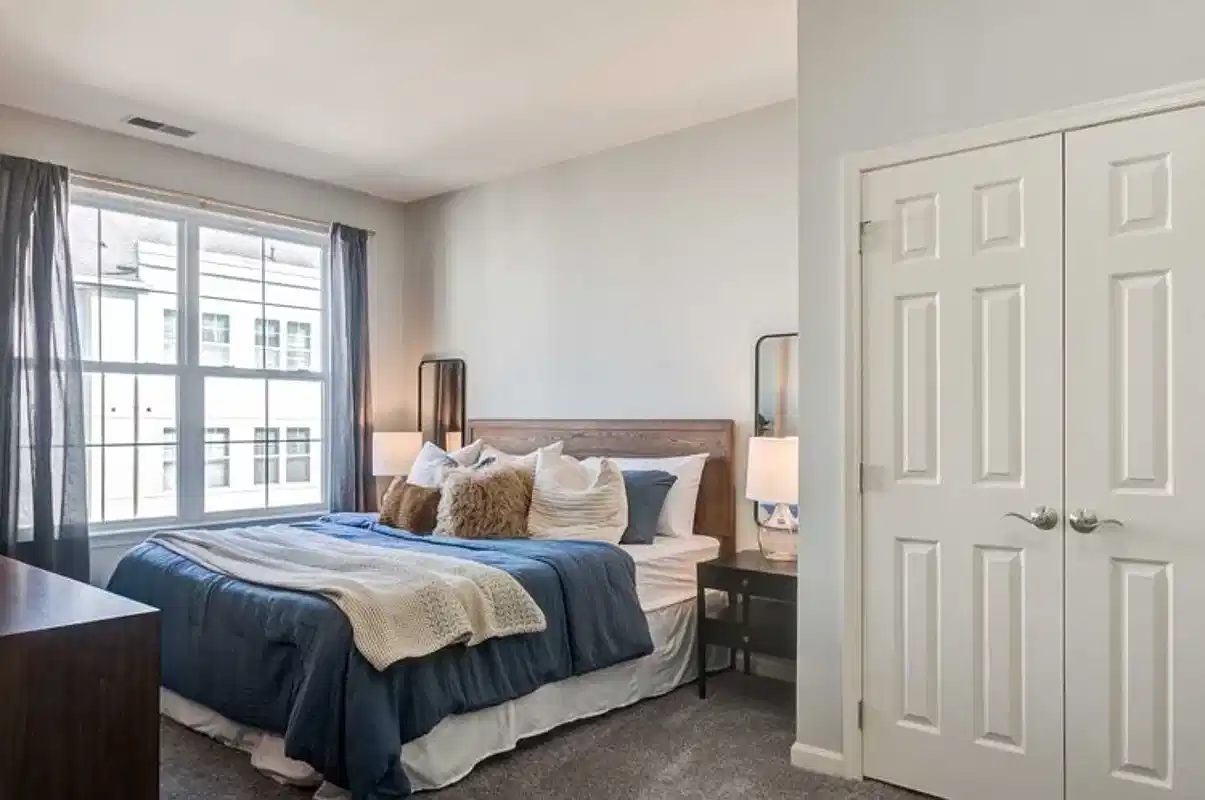
All prices below are indicative — confirm with the operator. The numbers represent typical monthly rents for a single person in 2026/2027.
- Budget-friendly (€350 – €550): Shared room in a WG in outer districts (e.g., Freimann, Milbertshofen, or near the Garching campus). Student dormitories (Wohnheim) offered by Studentenwerk often fall in this range, but waiting lists are long. Some private dormitories also start around €450.
- Mid-range (€550 – €800): A room in a WG in central districts (Maxvorstadt, Schwabing, Haidhausen) or a small studio apartment in a less central area. This is the most common price for a single student.
- Upper range (€800 – €1,200+): A one-bedroom apartment or a studio in the city centre. Also applies to modern private student residences with amenities (fitness room, study areas). These are often fully furnished and include utilities.
It is essential to check whether utilities (Nebenkosten) are included in the stated rent. Expect to pay an additional €50–100 for electricity, heating, and internet if not included.
Walk vs Transit Trade-off
Living within walking distance of the main campus (Maxvorstadt) can save time but comes at a premium. A room in Maxvorstadt or Schwabing might cost €700–1,000 for a room in a shared flat. Walking time to TUM main building (Arcisstraße) is under 10 minutes. However, the supply is limited and competition is high.
Using public transport widens options significantly. Munich’s U-Bahn lines U2 and U3 serve the main campus (Theresienstraße or Universität stations). A monthly student ticket (semester ticket – included in the semester fee) covers all public transport within the MVV network. This makes living in districts like Sendling, Au-Haidhausen, or even Freising (for Weihenstephan campus) feasible.
For the Garching campus (physics, chemistry), the U6 line runs directly from central Munich. Many students live along the U6 corridor (e.g., Studentenstadt, Freimann) to balance commute and cost. Commute times from outer districts average 20–40 minutes. The trade-off is a lower rent (€400–600) in exchange for 30 minutes of travel each way.
For the Weihenstephan campus (Freising), living in Freising itself is often cheaper than Munich. The S-Bahn S1 connects Freising to Munich centre in about 30–40 minutes. Rents in Freising can be €100–200 lower than comparable accommodation in Munich proper.
Shortlist Logic: Choosing a Residence Near TUM
When selecting housing, start by identifying your primary campus. Then consider these criteria:
- Commute tolerance: If you want under 15 minutes door-to-door, focus on Maxvorstadt, Schwabing, or Neuhausen. If you can accept 30–40 minutes, look at districts along major U-Bahn lines (U2, U3, U6) or S-Bahn lines (S1 for Freising).
- Budget: Set a hard ceiling. For budgets under €550, consider Studentenwerk dormitories or WG rooms in outer districts. Apply to Studentenwerk as early as possible (approximately 6 months before move-in) because they have the most affordable options.
- Type of housing: Shared flats (WG) are the most common for students. Private studios offer more privacy but are more expensive. Private student residences (operated by non-profit or commercial providers) often include all bills and have flexible contracts — but verify the exact location and distance to your campus.
- Availability: Check multiple platforms (university bulletin boards, local Facebook groups, housing portals). Avoid paying any fees without a contract and visit the room or apartment in person (or via video call) before signing.
- Safety and amenities: All districts in Munich are generally safe. Consider proximity to a supermarket, laundry, and public transport stop.
Since TUM has multiple campuses, the best shortlist for a student on the main campus might include addresses near U-Bahn stations like Theresienstraße, Universität, or Giselastraße. For Garching students, look near Garching-Hochbrück or Studentenstadt. For Weihenstephan, consider Freising city centre.
Because the exact list of nearby residences was not provided, a general rule is to use a map and filter by travel time (e.g., 20 minutes by public transport) and budget. Many students combine a room in a WG with a semester ticket to cut costs.
Frequently Asked Questions
1. Is it better to live in a student dormitory or a shared flat in Munich?
It depends on your priority. Student dormitories (offered by Studentenwerk) are usually cheaper (€350–550) and have fixed-term contracts, but waiting lists can be 2–3 semesters. Shared flats offer more flexibility in location and duration, but you may need to pay a higher rent (€550–800) and handle household responsibilities. A dormitory is a good starting point if you can secure one; otherwise, a shared flat is the most common solution.
2. What is the typical cost of a room near the TUM main campus in 2026/2027?
Indicative figures: a WG room within 1 km of Arcisstraße starts around €700–900 per month (warm rent with utilities). A studio apartment can exceed €1,000. These prices are indicative — confirm with the operator. For a more affordable option, living 20–30 minutes away by U-Bahn can reduce costs by €200–300 per month.
3. How do I apply for student housing through Studentenwerk München?
You need to register online on the Studentenwerk housing portal. The application is usually open from certain dates (e.g., for winter semester starting April 1st). You will need your TUM enrolment certificate (once you have it) and a valid ID. The earlier you apply, the better your chances. Note that some dormitories are specific to TUM, while others are open to all Munich universities. Waiting times vary, so have a backup plan (private room or WG).
Data as of early 2026. Reviews quoted from Google Maps as provided. All prices are indicative — confirm with the operator before making any commitments.
See also: listing details · browse more