What Campus Reviews Reveal About NYU Living
New York University (NYU) is located in the heart of Greenwich Village, Manhattan. The university holds a QS World University Ranking of 55 and maintains a Google rating of 4.4 from 1,942 reviews. Those reviews offer a direct window into what current and former students experience — and what prospective students should consider when choosing housing.
One five-star review from Bradley C (2 months ago) says: “Choosing NYU for my graduate program was the best decision I’ve made so far. I learned so much from the faculty and the curriculum. We often say that the city is our campus, and it’s totally true. I feel more connected to the neighborhood and the surroundings. I love sitting and reading in Washingto…” (truncated in source). The “city is our campus” phrase is repeated by many students. It means NYU does not have a single walled campus — its buildings are interwoven with city blocks. So your housing choice directly determines your daily commute route and your sense of belonging.
Another 5-star review from BA (3 months ago) says: “•One of the places I kept coming back to during my time in New York. •New York University has great facilities, visitor-friendly spaces, and a really nice vibe around campus. •It’s a nice place to walk around, sit for a while, and just take in the energy of the campus. •I also love that the Washingt…” (truncated). Washington Square Park is NYU’s unofficial central square. Students gather there between classes. Proximity to that park is a major factor for many when picking housing.
A 3-star review from D A (3 weeks ago) highlights financial reality: “My daughter was very serious about attending NYU, however unfortunately we can’t. Their ‘promise’ of free tuition for anyone earning under $100k is very misleading. My children and I have lived under the poverty level for 11 years after my spouse’s passing. Some years are better than others, so I wa…” (truncated). This shows that affordability is a real concern — not just for tuition but also for housing. The cost of living in Manhattan is high, and students need to budget carefully.
A 5-star review from Lindsay Taylor (2 years ago) mentions the Career Edge Program: “This week-long program was amazing as I was able to live on campus, attend events with other students, and learn in the classroom. Amazing school!” It reflects that on-campus or near-campus housing can enhance the student experience, especially for short-term programs.
These reviews together indicate that location, cost, and community are the top three factors that shape student satisfaction. When searching for housing, keep those priorities in mind.
City Context — New York City as Your Campus
NYU’s main campus is in the Greenwich Village neighborhood (often called “the Village”), bordered by Houston Street to the south, 14th Street to the north, Broadway to the east, and the Hudson River to the west. This area is dense, lively, and expensive. The university also has buildings in Union Square, Midtown, and Brooklyn (e.g., Tandon School of Engineering in Downtown Brooklyn).
Transportation in New York City is dominated by the subway system, buses, and walking. Most NYU students use the subway for longer commutes or walk if they live within a mile. Biking is also possible, but bike storage in apartments can be limited.
The city offers an enormous range of housing types: high-rise doorman buildings, brownstone apartments, converted lofts, modern student dormitories (both NYU-operated and private), and shared apartments in nearby boroughs like Brooklyn and Queens. Neighborhoods popular with NYU students include:
- East Village (east of NYU, cheaper than the Village)
- West Village (west of NYU, very expensive but charming)
- Union Square (north, good transit hub)
- Chelsea (further north, more modern)
- Lower East Side (southeast, more affordable)
- Williamsburg, Brooklyn (across the Williamsburg Bridge, cheaper and popular)
- Downtown Brooklyn near the Tandon campus (if you are in engineering)
Each area has different rent levels, commute times, and lifestyle vibes. The university itself does not guarantee housing for all students, so many rely on private rentals or purpose-built student accommodation.
Budget Bands for Housing Near NYU (2026–2027)
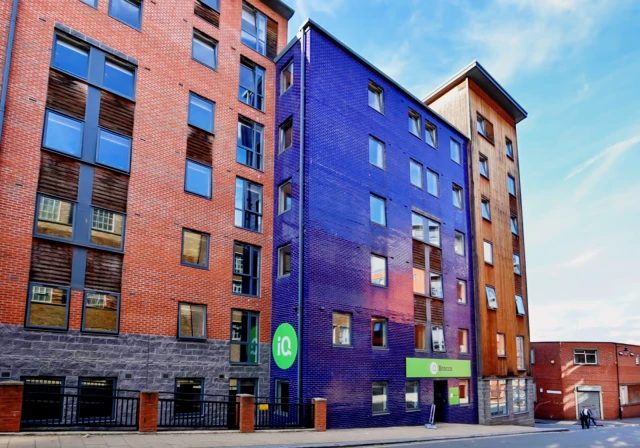
The rental market in New York is dynamic. Prices vary by season, building age, amenities, and lease length. The following bands are indicative — confirm with the operator before committing.
-
Low budget: under $1,500 per month per person
This range typically covers a room in a shared apartment in outer neighborhoods: Harlem, Washington Heights, Bushwick (Brooklyn), or Jersey City (New Jersey, accessible via PATH train). Expect a 30–50 minute subway commute to NYU. The room may be small and the building older. Some private student residence halls offer shared rooms in this range but are often fully booked early. -
Mid budget: $1,500 – $2,500 per month per person
This covers a private room in a shared apartment in areas like East Village, Lower East Side, parts of Chelsea, or Williamsburg. Commute is usually 15–30 minutes by subway or 20–40 minutes walking. You may also find a studio in a less central location (e.g., Stuyvesant Town or Long Island City). Purpose-built student residences often fall in this range for a private room in a shared unit. -
High budget: $2,500 – $4,000+ per month per person
This buys a studio or one-bedroom apartment in Greenwich Village, West Village, or Union Square — within a 10–15 minute walk to most NYU buildings. Some luxury student residences with gyms, lounges, and security also sit here. Commute is minimal, but the rent is steep. -
Very high budget: $4,000+ per month
Full-floor apartments or spacious studios in doorman buildings directly adjacent to campus. Usually only viable for students with strong financial support or those splitting with a partner.
All prices are indicative — confirm with the operator, as rents change frequently and leases may include utilities or not.
Walk vs. Transit — Deciding Where to Live
The walk vs. transit trade-off is central to housing decisions near NYU.
Walking saves time and money (no subway fare), keeps you active, and allows you to experience the city at street level. Living within a 15-minute walk to Washington Square Park means you can easily attend classes, use the library, and meet friends in the park. The downside is cost — every minute closer to campus adds a premium to rent. A studio in the West Village may cost $3,000+ per month, while a similar room in the East Village (20–25 minute walk) could be $2,000–$2,500.
Transit (subway or bus) opens up cheaper neighborhoods. The L train runs from Brooklyn (Williamsburg, Bushwick) to 14th Street-Union Square, a 10–15 minute ride plus a 5–10 minute walk to campus. The R/W trains serve Union Square and 8th Street. The A/C/E trains run near 14th Street and 8th Avenue, connecting to Upper Manhattan and Brooklyn. PATH trains from New Jersey stop at 14th Street and 23rd Street, also within walking distance of NYU.
Example transit options:
- Williamsburg (L train): 20–30 minutes door to door
- Downtown Brooklyn (R train or 4/5): 25–35 minutes
- Upper West Side (1 train to 14th Street): 30–40 minutes
- Jersey City (PATH to 14th Street): 35–45 minutes, but cheaper rent
The trade-off: you trade time and a monthly MetroCard (currently about $127 per month for unlimited rides) for lower rent. For a student who has two or three classes per day, the extra commute may feel manageable. For someone with early or late classes, walking might be worth the extra cost.
Some students also use Citi Bike, a bike-sharing system. Annual membership is roughly $200. Bikes can be faster than walking but less reliable in bad weather.
Shortlist Logic — How to Choose a Residence
When you begin searching for housing near NYU, treat the process like a shortlist. Evaluate properties on these criteria:
-
Distance to your main building – Check which NYU building you will use most (e.g., Silver Center, Stern, Tandon). A 20-minute walk to one building may be a 10-minute walk to another. Use online maps to measure walking time.
-
Budget transparency – Ask for total monthly rent, plus utilities (electricity, gas, internet, water). Some student residences include everything; others charge extra. Get a written breakdown.
-
Lease flexibility – Standard leases are 12 months. If you plan to leave for summer, sublet policies matter. Some purpose-built residences offer 9- or 10-month contracts aligned with the academic year.
-
Amenities – For student residences: laundry, gym, common room, study space, security. For private apartments: doorman, package acceptance, bike storage, elevator.
-
Roommate situation – If you need a private room, confirm it is truly private. Shared apartments may require you to find your own roommates or accept a room in a pre-matched flat.
-
Safety – Check crime maps (NYPD data) for the block. Most neighborhoods near NYU are safe, but avoid isolated side streets with poor lighting.
-
Public transit access – Ideally within a 5-minute walk to a subway station. Check which lines run there and how often they operate at night.
-
Noise – New York is loud. Street-facing apartments near bars or delivery restaurants may be noisy at night. High floors or rear-facing units help.
One common approach: start with a shortlist of three to five neighborhoods, then search for available rooms or studios online. Contact landlords or residence operators directly. Only sign after visiting (in person or via video tour).
Frequently Asked Questions
How far in advance should I start looking for housing near NYU?
For rental apartments, the market moves fast — most leases begin 30–45 days before move-in. Start browsing seriously about two months before your intended move-in date. For purpose-built student residences, applications often open six to twelve months ahead and fill up quickly. If you plan to arrive in August, begin researching in March or April. Some residences accept waitlist applications.
Are utilities and internet usually included in rent?
In private apartments, utilities are often separate. Landlords typically include water but charge separately for gas and electricity. Internet and cable are rarely included. In purpose-built student residences, utilities and high-speed internet are often bundled into the rent. Always ask: “What is included in the rent and what is extra?” Get it in writing. For 2026–2027 tenancies, confirm with the operator.
Is it cheaper to live off-campus versus in a student residence?
It depends on the location and room type. A private room in an NYU-operated dormitory can cost $2,000–$3,500 per semester (approx. $1,800–$3,200 per month). Off-campus, a room in a shared apartment in Manhattan below 14th Street might be $1,800–$2,500 per month. In outer neighborhoods like Brooklyn or Queens, a room can be $1,000–$1,500 per month. However, you also need to budget for commuting time and money, furniture (some dorms are furnished), and the hassle of dealing with landlords. Student residences tend to offer shorter leases and built-in community, which many freshmen prefer. There is no single “cheaper” option — it depends on your priorities.
All information above is based on publicly available data and typical market conditions. Prices and availability change constantly. Always confirm details directly with the operator or landlord before signing any agreement.
data-date: 2026
See also: listing details · browse more