What Campus Reviews Reveal About Lomonosov Moscow State University
Student reviews of Lomonosov Moscow State University (MSU) consistently highlight two things: the university’s architectural grandeur and its academic prestige. “Great and immerse historical building and park full of flowers!” writes Miki Tsuda, echoing a common sentiment about the vast, landscaped campus on Sparrow Hills. Mustafa Shahid calls it “one of the most remarkable buildings in Moscow, an amazing piece of architecture, one of the best Universities of the world and the best in Russia.” Reviewer J C notes the university’s size and ranking: “With over 100,000 students, the school is a very popular and prestigious college in the region, it is the best university in Russia, ranked first in the country and ranked in the top 100 of QS worldwide.” Another reviewer, aj, describes the setting: “Situated on the scenic Sparrow Hills, overlooking the Moskva River, MSU’s main building is an iconic symbol of Russian academic excellence.”
These reviews underline that MSU is both a tourist attraction and a functioning academic hub. For students, the beauty of the campus is a daily bonus, but the practical question is where to live. The main academic buildings – including the famous Stalinist skyscraper – are concentrated in a relatively compact area. This makes proximity to the heart of campus a key factor when choosing accommodation. Housing decisions must weigh walkability, public transit, and budget within a city that has a distinct transport network and cost of living.
Moscow as a Student City
Moscow is Russia’s capital, a city of roughly 12 million people, with a dense metro system, extensive bus and tram lines, and a growing network of suburban trains. The city is expensive by Russian standards, but still cheaper than many Western European capitals. For a student, daily expenses include rent, utilities, groceries, transport, and entertainment. The Moscow Metro is efficient and affordable: a single trip costs around 62 RUB (indicative – confirm with the operator), and monthly passes for unlimited travel (including buses and trams) are available for about 2,500–3,000 RUB.
The area around MSU – known as the South-Western Administrative Okrug – is relatively green and less congested than the city centre. The nearest metro stations are Universitet (on the red Sokolnicheskaya Line), which is a 10–15 minute walk from the main building, and later stations on the same line like Prospekt Vernadskogo and Yugo-Zapadnaya. Beyond these, there are also stations on the Ring Line and other radial lines that require a change. The university also runs its own internal bus network and is served by multiple city bus routes.
Student housing in Moscow generally falls into three categories: university dormitories, private shared apartments (flatshares), and private studios/one-bedroom apartments. University dormitories are the most affordable but often have limited availability for international students and may be located in buildings that are older or further from the main campus. Private options are more flexible but come with higher costs. The rental market in Moscow is regulated; deposits and agency fees are common. Most landlords require a deposit of one to two months’ rent, and a passport registration (registration at place of residence) is mandatory.
Budget Bands for Student Housing Near MSU
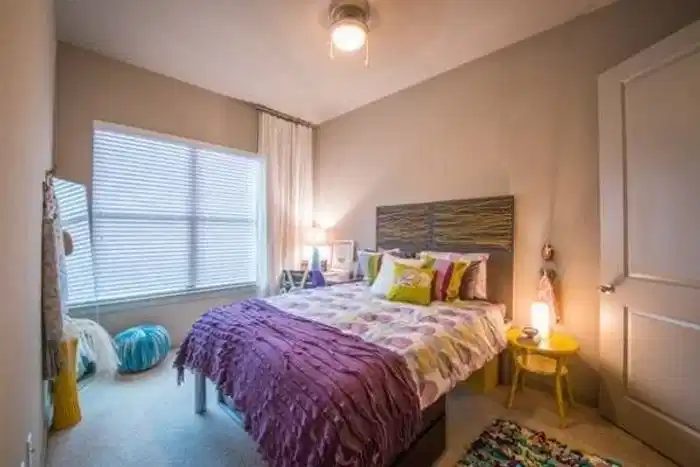
All prices below are indicative – confirm with the operator. They reflect the market in 2026–2027 and vary with season, condition, and exact location.
Low budget (under 25,000 RUB per month)
- Shared room in a flat with 2–3 other students. This is typical for dorms or older buildings 20–30 minutes from campus by metro or bus. Utilities may be included or extra.
- University dormitory beds (if available) can cost 5,000–15,000 RUB per month, but spaces are limited and allocation often prioritises first‑year or international students with agreements.
Mid budget (25,000–45,000 RUB per month)
- Own room in a shared flat in the Ramenki, Lomonosovsky, or Prospekt Vernadskogo districts. These areas are within 15–20 minutes’ walk or one metro stop from MSU. Flats are typically old Soviet–era apartments with basic furnishings.
- Small studio apartment (18–25 m²) in a newer residential complex near Yugo-Zapadnaya station may start at around 38,000 RUB, but these are less common.
High budget (45,000–70,000+ RUB per month)
- One-bedroom apartment (40–50 m²) in a modern building close to Universitet or on Michurinsky Prospekt. These offer full privacy, a kitchen, and often a balcony. Equipped with new appliances and fast internet.
- Premium studios or furnished flats in the “Moscow City” business district are considerably more expensive and require a 30–40 minute commute by metro.
Additional costs
- Utilities (electricity, gas, water, heating): 3,000–7,000 RUB per month depending on season and flat size.
- Internet: 500–1,000 RUB per month.
- Agency fee: up to 50% of one month’s rent (one‑time).
- Registration: often free if arranged by landlord; otherwise a small fee (500–2,000 RUB) for a “temporary registration” stub.
Walk vs. Transit Trade-off
The main building of MSU is located on Vorobyovy Gory (Sparrow Hills). The nearest metro station, Universitet, is about 1.2 km away – a 12–15 minute walk. However, students who need to go to other university buildings (Faculty of Mechanics and Mathematics, Faculty of Physics, etc.) may find that some departments are 800 metres to 2 km from the central building. Walking is feasible for many.
Walking distance (0–1.5 km)
- Streets within a 20‑minute walk include Ulitsa Kolmogorova, Leninskiye Gory, Universitetsky Prospekt, and parts of Michurinsky Prospekt. Flats here are in high demand and usually in the mid‑to‑high budget range. In 2026–2027, rents for a room in this zone start at around 30,000 RUB.
Transit‑reliant (>1.5 km)
- Areas further out – such as Ramenki (beyond the university sports facilities) or along Prospekt Vernadskogo – require either a bus (routes 1, 113, 661, T34) or a walk to the metro. A single metro ride from Universitet to central Moscow is about 10 minutes; from Yugo‑Zapadnaya it is 15–18 minutes.
- Monthly metro/bus pass: 2,500–3,000 RUB. If you live far and travel daily, this is a fixed cost that adds up. Conversely, a flat closer to campus may cost 10,000–15,000 RUB more per month, so the trade‑off is worth calculating.
Practical tip
- In winter (November–March), walking even 1.5 km can be unpleasant in ice and snow. A flat within 500 metres of the main entrance or with a direct bus stop becomes more attractive during these months.
Shortlist Logic for Choosing Accommodation
When comparing apartments near MSU, consider these criteria in order of personal priority:
-
Distance to main building – If most of your classes are in the central high‑rise, a 10‑minute walk is far more time‑efficient than a 20‑minute bus ride. For students in sciences, some faculties are in separate buildings along Michurinsky Prospekt; check your faculty location.
-
Metro access – Even if you don’t plan to go into the centre every day, you will need groceries, services, and entertainment. Universitet station has a few supermarkets and cafes. For a wider selection, the stations Oktyabrskaya or Park Kultury are a short ride away.
-
Utilities and internet – Ask explicitly whether heating, hot water, and electricity are included in the rent. Moscow’s central heating is generally reliable, but in older buildings it may be turned on only after the city sets the date.
-
Registration – Landlords are legally required to register foreign tenants. Confirm that they will provide a temporary registration for the duration of your lease. Failure to do so can cause issues with visa extensions.
-
Noise and neighbours – student‑oriented flats in older Soviet panels can be thin‑walled. Check for double‑glazed windows, especially on main streets.
-
Deposit and contract duration – Most landlords ask for a 11–12 month contract. Short‑term (6‑month) leases are harder to find. In 2026–2027, a deposit of one month’s rent is standard; be wary of requests for two months’ deposit.
FAQ
Q: Is it better to live in a university dormitory or a private flat near MSU?
A: Dormitories are cheaper (indicative 5,000–15,000 RUB per month) but often have strict rules, limited kitchen space, and shared bathrooms. Private flats offer more freedom and privacy, but cost significantly more (mid‑budget 25,000 RUB+). Your choice depends on your budget, tolerance for communal living, and visa registration requirements (dorms usually handle registration automatically). Confirm availability for international students directly with the university housing office – in 2026, many dorms are fully‑occupied by Russian students.
Q: How do I find a reliable rental without being scammed?
A: Use only established online platforms that verify listings (avoid direct‑deal postings on social media without a contract). Never transfer money before viewing the flat in person or via a trusted local contact. Demand a written contract in Russian (with translation), itemising rent, deposit, utilities, and length of stay. A 2026‑2027 tip: ask for the landlord’s passport and cadastral number of the apartment to cross‑check at the municipal property registry. If you cannot view in person, hire a verified local agent recommended by international student offices – but be prepared to pay a one‑time fee (up to 50% of monthly rent).
Q: What is the typical deposit and how quickly can I finalise a flat?
A: Most landlords ask for a deposit equal to one month’s rent, refundable at the end of the lease minus any damage. The process (search, viewing, contract signing) takes 3–10 days in the off‑peak season (September–October). During the intake period (August–September), flats near MSU go quickly – expect to decide within 24–48 hours of a viewing. A 2027 trend: some landlords accept e‑signatures and online payments for the deposit, but a personal visit is still safest.
data-date: 2026-03-15
See also: listing details · browse more