What Campus Reviews Reveal About ITU
Istanbul Technical University (ITU) has a strong reputation among students, and its Google rating of 4.6 from over 2,300 reviews reflects a generally positive experience. The reviews highlight the university’s focus on engineering, architecture, and applied sciences, as well as the quality of its main Ayazağa campus in Maslak.
Abdullah Alrujoubi, rating ITU 5 out of 5, wrote: “Istanbul Technical University (ITU) is one of the oldest and most respected technical universities in the region, with a very strong focus on engineering, architecture, and applied sciences. The main Ayazağa campus is large and well equipped, almost like a small city with its own research centers…” This suggests the campus is self-contained, which can reduce the need to travel far for daily needs — a point to consider when choosing housing.
Another reviewer, B T, also gave 5 stars and noted: “Main campus with lots of activities and fun. Great library and free wifi connection.” The library is mentioned multiple times: Adnan Ali described it as “all time open” with students studying until late night, and a cafe next door open 24/7. For students who value study spaces, proximity to the library and 24-hour facilities might influence where they live.
Mehmet keçeci called ITU “very well organized university campus. One of the top technical university of Turkey.” The consistent praise for organisation and facilities indicates that on-campus amenities are sufficient, but housing decisions still depend on budget, commute, and lifestyle preferences.
Istanbul City Context for Students
ITU’s main campus is located in the Maslak business district on the European side of Istanbul. Maslak is a hub of office towers and shopping malls, with excellent metro connectivity via the M2 line (Yenikapı–Hacıosman) that runs through the city centre. The campus itself sits within the Reşitpaşa neighbourhood in Sarıyer district, about 20-30 minutes by metro from Taksim Square.
Istanbul is a sprawling metropolis of over 15 million people, and housing costs vary dramatically by neighbourhood. The area around ITU — Maslak, Levent, and 4. Levent — is relatively upscale, with modern apartment blocks and higher rents compared to districts further out. Students on tight budgets often look towards Şişli, Mecidiyeköy, or even Beşiktaş, where shared flats are more affordable and still offer a reasonable commute by metro or bus.
Public transport is comprehensive but can be crowded during peak hours. The university provides some shuttle services, and many students rely on the metro, metrobüs, or dolmuş (shared minibus). Bicycle lanes are limited in Istanbul, so walking and public transit are the practical options for most.
Budget Bands for Student Housing (2026/2027)
All figures in this section are indicative — confirm with the operator for current rates and availability.
Budget-friendly (shared rooms or dormitories)
Many students start with shared flats (3–4 bedrooms) in districts like Mecidiyeköy or Şişli. Monthly rent per person typically falls in the range of 5,000–9,000 Turkish lira (TRY) depending on location and condition. Private dormitories near campus may cost 7,000–12,000 TRY per month, often including utilities and internet. Always verify whether bills are included.
Mid-range (private studios or 1-bedroom flats)
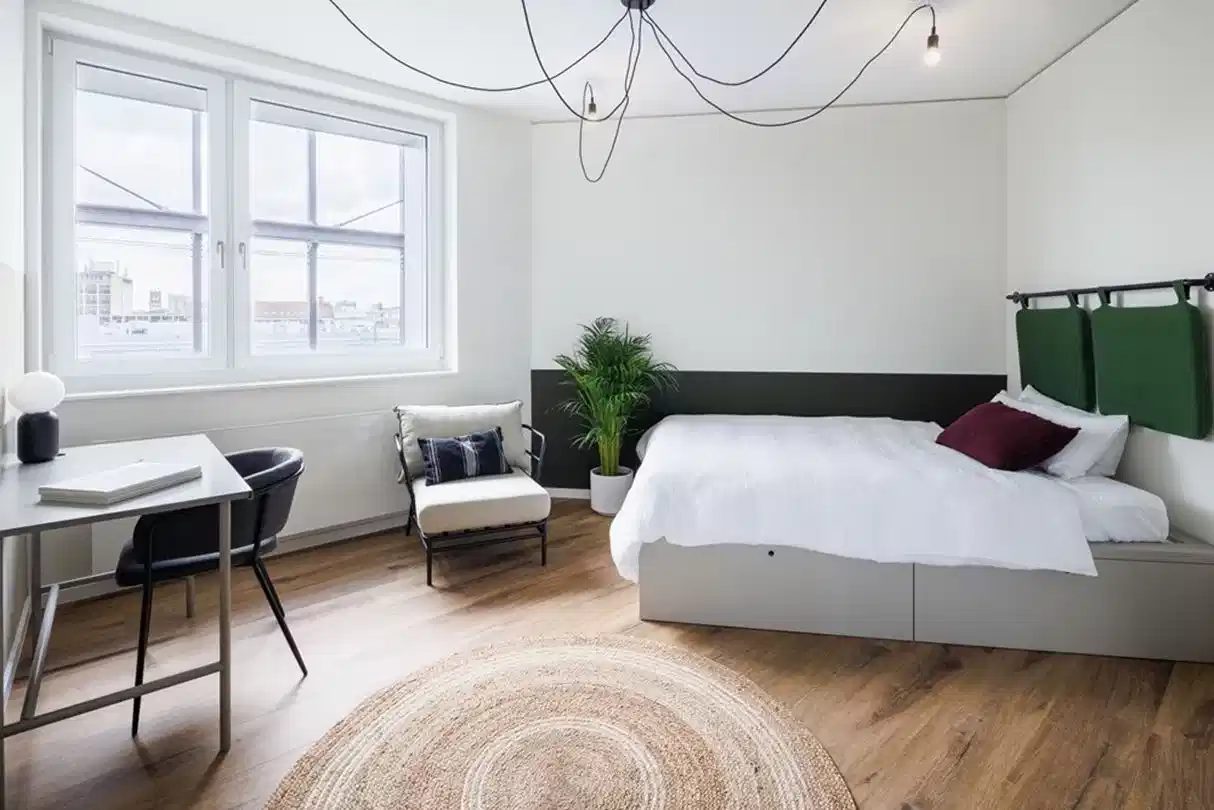
A private studio near Maslak or Levent can range from 12,000 to 18,000 TRY per month. These are usually in newer buildings with lifts and security. For a 1+1 apartment (one bedroom plus living room) in the same area, expect 15,000–22,000 TRY.
Higher-end (spacious apartments or premium residences)
Luxury residences in Maslak or along the Bosphorus (e.g., Tarabya, Yeniköy) can exceed 25,000 TRY per month for a 2+1 apartment. These are less common among undergraduates but may suit postgraduate students or those sharing with 2–3 people.
Keep in mind that rent is often quoted in TRY but sometimes in USD or EUR for foreign students. Lease terms are usually 1 year, with a deposit of 1–2 months’ rent. It is essential to ask about agency fees and whether utilities (electricity, water, gas, internet) are separate.
Walk vs Transit Trade-off
Walking distance (within 15–20 minutes on foot)
Flats immediately around the Ayazağa campus — in the Reşitpaşa and Maslak neighbourhoods — command a premium. The advantage is zero commuting cost and the ability to pop home between classes. However, this area is primarily commercial; grocery shopping and everyday errands may require a short bus or taxi ride. Noise from traffic and construction can also be a factor.
Transit commute (20–45 minutes)
Taking the metro from stations like 4. Levent, Levent, or Mecidiyeköy adds 10–30 minutes to your day but can significantly lower rent. A student in Mecidiyeköy might pay 30–40% less for a shared room than someone living right next to campus. The M2 metro runs frequently until midnight, and buses connect to the campus gate. The trade-off is the monthly transport cost (an Istanbulkart monthly pass currently around 1,200 TRY for students, indicative) and the time spent commuting.
Most students compromise by living within 2–3 metro stops of ITU. Areas like Levent offer a good balance: plenty of shops and cafes, a direct metro line to campus, and a wide range of housing types.
Shortlist Logic: How to Choose a Residence
When you start searching for housing near ITU, keep these factors in mind:
-
Distance to campus – Rank your tolerance for walking vs public transit. If you prefer walking, limit your search to Reşitpaşa, Maslak (north of the metro line), and parts of Huzur neighbourhood. Use Google Maps walking time from the residence to the ITU Ayazağa Campus address: Reşitpaşa, İTÜ Ayazağa Kampüsü Rektörlük Binası, 34467 Sarıyer/İstanbul.
-
Budget – Decide on a monthly rent ceiling (including utilities). Shared flats are usually cheapest; ensuite rooms in private dormitories offer more privacy at a moderate price. Studios give independence but cost more per square metre.
-
Transport – Check metro and bus stops within 500 metres. The M2 line’s İTÜ station is the most convenient. If the residence is near a metrobüs stop, note that metrobüs does not directly serve the campus — you would need a transfer.
-
Amenities – Do you need a 24-hour library or cafe? The campus already provides these, so you may not need them at home. But a supermarket, pharmacy, and laundry within walking distance are practical.
-
Contract and landlord – Always view the property in person or via a live video call. Ask about deposit refund conditions, maintenance responsibilities, and whether the lease is registered (e-Devlet). For international students, it is wise to have a local contact who can help with Turkish bureaucracy.
-
Seasonality – Most leases start in September or October. Starting your search two months earlier increases options. Prices are indicative for 2026/2027 — confirm with the operator before signing.
Frequently Asked Questions
Q1: Is it cheaper to live near ITU or further away?
In general, flats close to the campus (Reşitpaşa, Maslak) are more expensive per square metre than those in districts like Mecidiyeköy or Şişli. However, you save on transport costs and time. The overall cost difference may be minimal if you budget 1,000–1,500 TRY per month for a monthly transit pass and occasional taksi. For a typical student, living 20–30 minutes away by metro can reduce rent by 2,000–4,000 TRY per month, often making it the more affordable option overall. All figures are indicative — confirm with the operator.
Q2: Which neighbourhoods do ITU students recommend?
Based on reviews and common student feedback, popular areas include:
- Maslak (walking distance, but expensive)
- Levent and 4. Levent (1–2 metro stops, mid-range prices, good shops)
- Mecidiyeköy (3 stops, lower rent, many shared flats)
- Beşiktaş (social life, metro+bus connection, moderate rent)
Always visit the area at different times of day to assess noise and safety.
Q3: How can I find housing before arriving in Istanbul?
Start with independent student-housing platforms that list verified properties near ITU. Contact the university’s international office for advice on reputable dormitories or private residences. Avoid paying deposits without a written contract and proof of ownership. Use video tours and ask for a 360° view. Prices in euros or dollars are common for foreigner-oriented apartments; convert to TRY for comparison. Remember that all prices in this guide are indicative — confirm with the operator for the 2026/2027 academic year.
Data based on university information and reviews as of 2025. All rental figures are indicative for the 2026/2027 academic year and should be confirmed directly with the housing operator or landlord.
See also: listing details · browse more