What Campus Reviews Reveal About Studying at EPFL
Google reviews give EPFL a solid 4.7 out of 5 from 855 reviewers. The campus itself draws frequent praise. Abhijit Rajwade calls it a “nice campus in a picture frame setting by Lake Geneva” and notes it is an “excellent top rated university not to be missed” — though he suggests having a student guide for a full tour. Dariusz Prokopowicz describes EPFL as a “high-octane laboratory for the future” that “redefined the standard for technical moxie on a global scale,” based on in-depth conversations with researchers. Christoph Ebell gives 4 stars and highlights the “Learning Center (sponsored by Rolex)” and the view of Lake Geneva and the Alps. He also mentions that EPFL’s “Zürich sister is even better ranked,” though EPFL itself ranks 22nd globally in QS.
These comments point to a campus that is research-intensive, visually stunning, and set by a lake — but location matters a lot when you need to get to lectures, labs, and that Learning Center. Several reviews mention professional and supportive staff, like Vlad Savin’s experience with a course coordinator who “went above and beyond” to check programme fit. That level of attention suggests that EPFL students value practical support, including finding housing.
City Context: Lausanne and the Lake Geneva Region
Lausanne sits on the northern shore of Lake Geneva, with the Alps visible on clear days. The city is compact but hilly, split between the old town on the hill and the lakeside neighbourhoods. EPFL’s main campus is in the Ecublens district, about 4 kilometres west of the city centre, close to the lake. Public transport is efficient: metro line m1 connects the campus to Lausanne Flon station in about 10 minutes, and buses serve nearby areas.
The city has a student population of around 25,000, with EPFL and the University of Lausanne (UNIL) sharing parts of the same campus area. This creates a student corridor along the m1 line. Shops, supermarkets, and basic services are available near campus in the Bussigny and Ecublens zones, while the city centre offers more nightlife, culture, and restaurants.
Housing demand is high, especially at the start of the academic year. Many students look for accommodation in Ecublens, Renens, or Chavannes-près-Renens to be close to campus. Others choose neighbourhoods along the m1 line such as Prilly or Malley, or the city centre for a livelier atmosphere. Lake Geneva itself attracts some students who prefer views and a quieter environment, but those areas tend to be more expensive and farther from campus.
Budget Bands for Student Housing (Indicative — Confirm with the Operator)
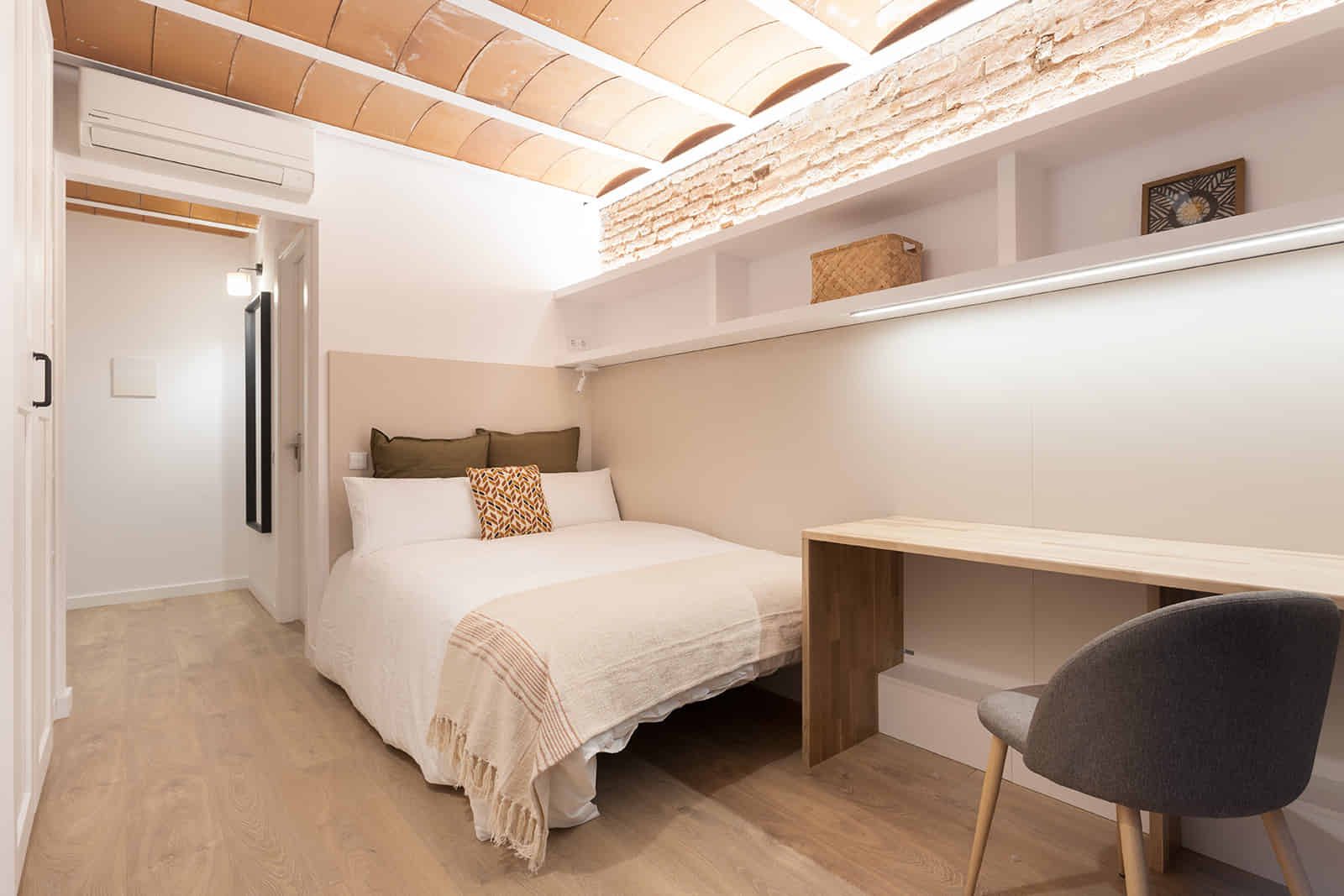
Rents in Lausanne are among the highest in Switzerland, but student housing options vary widely. No single source applies to all, so the ranges below are based on typical market observations and should be verified directly with each provider.
- Low budget (CHF 500–850 per month): Shared flats (WG/colocation) or university-managed student residences. Rooms are often furnished, utilities may be included, and contracts often run for a fixed term (e.g., one semester). Demand is high, and early application is essential. Example areas: Ecublens, Renens (older buildings).
- Mid-range (CHF 850–1,200 per month): Studio apartments or larger shared flats in newer buildings, closer to campus or along the m1 line. Many private residences for students fall in this band. Utilities and internet are sometimes extra. Areas: Chavannes, Prilly, Malley, Lausanne city centre (small studios).
- Upper budget (CHF 1,200–1,800 per month): Private one-bedroom apartments, often unfurnished. Also includes larger studios with lake views or newer buildings with amenities. Typical for postgraduate students or couples. Neighbourhoods: Ouchy (lakeside), Lausanne centre, Pully.
- Premium (above CHF 1,800 per month): Larger apartments, penthouses, or properties with direct lake views. Rarely taken by students unless sharing among several people.
All figures are indicative — confirm with the operator. Most landlords require a deposit (usually three months’ rent) and proof of enrolment.
Walk vs Transit Trade-off
Walking to EPFL campus is feasible if you live in Ecublens, Chavannes, or parts of Renens and Bussigny. Many student residences are within a 10–15 minute walk of the main lecture halls and the Rolex Learning Center. The campus itself is spread out, but internal walking paths and free shuttle buses help. Walking saves money and time on transport, and it encourages a routine. However, the hilly terrain means some routes are steep.
Transit offers flexibility. The m1 metro runs from Lausanne Flon through Prilly, Malley, Renens, and Ecublens to the EPFL/UNIL stop. Frequency is every 4–5 minutes during peak times. A monthly student travel card (available through the CFF or regional network) costs roughly CHF 40–55, depending on zones. Buying a bike is a popular alternative, with used bikes available for CHF 100–300. Many students combine cycling with trains or buses.
The trade-off is clear: living close to campus reduces commuting time and cost but limits your choice of neighbourhoods and may mean higher rent per square metre. Living farther out (e.g., Lausanne city centre or along the lake) gives you more social options and larger flats but adds 15–30 minutes each way. If you have early labs or late study sessions, proximity matters. If you prefer a lively atmosphere and don’t mind transit, a central room may suit you better.
Shortlist Logic Using Given Nearby Residences
Since the dataset does not provide a list of specific residences, the logic below applies to any student searching for housing near EPFL. Use these criteria when evaluating offers:
-
Distance to the m1 line or bus stop. Anything within a 500-metre walk to a metro station (especially Ecublens, Renens, or Prilly) is convenient. Check the exact stop: “EPFL” and “UNIL” are the closest to campus, but “Renens Gare” also works if you walk or take a bus.
-
Lease duration and flexibility. Student residences often offer fixed-term contracts aligned with semesters (September–February, February–July). Private rentals usually require a 12-month minimum. If your programme ends in June, a September–June contract may be ideal. Check notice periods — some student residences allow early cancellation with a replacement.
-
Included utilities. Many student flats include water, heating, electricity, and internet in the rent. Private apartments often exclude these, adding CHF 100–200 per month. Always ask for a breakdown.
-
Furnishing level. Student residences typically come fully furnished (bed, desk, wardrobe, kitchenette). Private flats may be empty or partially equipped. Buying furniture in Switzerland can cost CHF 500–1,500 for a basic set.
-
Deposit requirements. Most landlords require a bank guarantee or cash deposit of one to three months’ rent. Some student residences accept a lower deposit (one month). Plan your cash flow accordingly.
-
Room type and privacy. Decide whether you prefer a shared flat (cheaper, social) or a studio (private, more expensive). Studios near campus may cost CHF 900–1,300 per month.
-
Application timing. Start searching 2–4 months before arrival. Demand peaks in August and January. Many university-affiliated residences have waiting lists.
Using these rules, a typical shortlist would include:
- A studio in Ecublens (walk to campus) for a single student who values quiet study.
- A shared flat in Renens (2 minutes by m1) for someone who wants lower rent and more social life.
- A room in a private shared house in Chavannes for a group of friends.
- A studio in Prilly or Malley for a balance of cost and commute.
Do not rely on a single source. Visit the property if possible, or ask a current student to check it. Use the EPFL housing office (non-branded as per rules) for verified listings. Avoid paying any deposit before seeing the contract and identity of the landlord.
Frequently Asked Questions
Q: When should I start looking for housing near EPFL?
A: For the autumn semester (starting mid-September), begin your search in May or June. For the spring semester (starting mid-February), start in October or November. Many university-managed residences open applications three to four months before the semester. Private listings appear on local platforms from about two months before move-in. The earlier you apply, the more choice you have. Last-minute searchers may have to accept higher rent or longer commutes.
Q: Is it cheaper to live in Lausanne city centre or near campus?
A: In general, rents in Ecublens, Renens, and Chavannes are slightly lower per square metre than in the city centre or lakeside neighbourhoods. A studio in Ecublens might cost CHF 850–1,100, while a similar studio in central Lausanne could be CHF 1,000–1,400. However, the city centre offers more amenities, nightlife, and grocery stores within walking distance. Factor in transport costs: living in the centre adds about CHF 40–55 per month for a transit pass, but you save time if you enjoy the city. There is no universal “cheaper” — it depends on your lifestyle and willingness to commute.
Q: What documents do I need to rent a room or flat in Lausanne?
A: Landlords typically require: a copy of your passport or ID, proof of enrolment (student certificate or acceptance letter), proof of income or a guarantor/solvency statement (many Swiss landlords ask for a salary slip or a parental guarantee), and a deposit (usually three months’ rent, placed in a blocked account or a rental guarantee insurance). Some student residences only need a one-month deposit. You may also need a Swiss residence permit (permit B or L) if you are a non-EU national, which you can start after arrival. Prepare digital copies of all documents in advance.
Data as of March 2027. Prices are indicative — confirm with the operator. Reviews quoted verbatim from Google Maps.
See also: listing details · browse more