What Campus Reviews Reveal About Duy Tan University
The student reviews collected on Google offer a mixed but useful picture of day-to-day life at Duy Tan University (DTU) in Da Nang. With a 3.9 rating from 342 reviews, the feedback is neither universally glowing nor harsh — it points to specific areas that matter when choosing where to live nearby.
Jack Vu gave a 2-star review and wrote: “This is me at the library. Today they turned off air conditioner. It sucks. Also students can talk with each other. We should have 2 types of rooms with silent rooms and non-silent rooms.” This complaint about noise and temperature control is worth noting. If the campus library can be noisy and air-conditioning unreliable, a student who needs quiet study space might benefit from living in an apartment where they can control the environment — a private room with good ventilation or a working AC unit becomes a priority.
Le, Tuan Anh gave 4 stars and wrote: “I have worked at DTU for 2 weeks. The facilities is okie so far. Very centrally located.” This confirms that the main campus (3 Quang Trung, Hải Châu) is in a central part of Da Nang. Centrality is a strong advantage for students: access to shops, food, and public transport is easier. On the other hand, central areas can be noisier and more expensive.
Quốc Việt Đỗ Phú gave 5 stars: “Yup, I’m currently studying here. Great infrastructure and organization.” And Todd Tabberer (4 stars) simply noted: “This is the main campus where most of the admin offices are located.” So the campus itself is seen as well-organised and well-equipped by some, though the library complaint suggests not every facility meets the same standard.
Takeaway for housing: if you are sensitive to noise or require reliable cooling for study, plan to have a quiet, air-conditioned room off campus. If you value convenience and don’t mind some bustle, living very close to campus will save commute time.
City Context: Da Nang as a Student City
Da Nang is a coastal city in central Vietnam, often described as more liveable than Hanoi or Ho Chi Minh City. It has a growing student population, with DTU being one of the larger private universities. The city is known for its beaches (My Khe, Non Nuoc), the Han River, and a relatively low cost of living compared to the country’s bigger economic hubs. Public transport includes buses, but many students rely on motorbikes or walking. The weather has two distinct seasons: dry (roughly February to August) and wet (September to January), with occasional typhoons. A good housing choice should account for both heat and rain.
The main campus is in Hải Châu district, the central commercial area. This means you are close to supermarkets, local markets, street food, and coffee shops where many students study or socialise. If you prefer a quieter environment, you could look further toward the beaches (Sơn Trà district) or into residential alleys in Hải Châu, but you’ll need to factor in travel time.
Budget Bands and Price Expectations
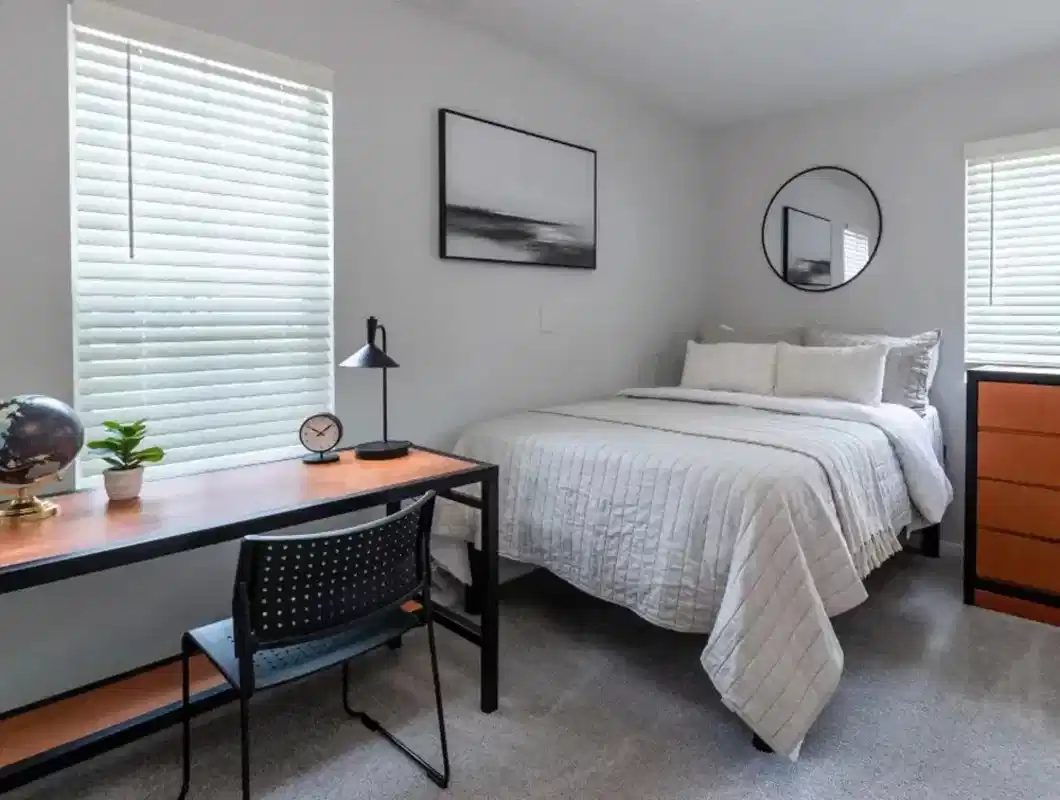
No specific rental figures were provided in the university data-set, so the following is a general outline based on typical conditions in Da Nang for the 2026–2027 academic year. All prices are indicative — confirm with the operator before committing.
- Low budget (shared room or basic studio in a local alley): very affordable, often basic furnishings, limited English support. Common in older apartment blocks or private houses rented room-by-room. You may need to provide your own Wi-Fi router or AC unit.
- Mid-range (one-bedroom apartment or serviced studio in a central building): includes air conditioning, basic furniture, and sometimes a small kitchen. Many such units are found within walking distance of DTU’s main campus.
- Higher budget (luxury serviced apartments or condos near the city centre or beach): full amenities, 24-hour security, gym, pool. These cater to international students or professionals and carry a premium.
Since the university itself receives mixed feedback on library facilities, students on a tight budget might want to ensure their housing has a quiet desk space. Those with a higher budget may prioritise a reliable work-from-home setup.
Walk versus Transit Trade-Off
DTU’s main campus is on Quang Trung Street, Hải Châu. Many students choose to rent within a 10–15 minute walk to reduce commuting cost and time. Walking is free, reliable, and gives you access to the street food and shops along the way. The trade-off: rent in the immediate vicinity can be higher, and the area can be noisy — especially near main roads.
If you are willing to use transport, you open up more affordable options. A motorbike is the most common mode for local students. Renting or buying a cheap scooter costs a modest amount per month (including petrol). Public buses exist but are less frequent and may not always align with class schedules. Rideshare apps like Grab are available but can add up if used daily.
The rule of thumb: if you have morning classes, living within walking distance removes the risk of traffic delays. If you don’t mind a 15–20 minute ride, areas like An Hải Tây (near the beach) or Thanh Khê district offer quieter, sometimes cheaper rooms. However, during the rainy season, motorbike commuting becomes less comfortable.
Shortlist Logic — How to Choose a Place Near Duy Tan University
Since no specific list of nearby residences was provided in this data, here is a logical framework you can apply when searching in Da Nang:
-
Confirm the campus location — DTU has multiple facilities? According to one reviewer, the main campus (3 Quang Trung) houses most admin offices. Some courses may be held in other buildings. Verify your department’s location before signing a lease.
-
Set a commute limit — Decide: walking distance (under 1.5 km) or motorbike distance (2–5 km). Walking gives you no transport cost but higher rent. Riding saves rent but adds time and fuel cost.
-
Check the room’s study environment — Given the library issue (noisy, no AC at times), your room may become your primary study space. Look for a room with a window, good airflow, and a desk. Ask the landlord whether the AC works reliably.
-
Inspect the neighbourhood — Visit the street at different times of day. Is it too loud? Is there street food (convenient) or honking (annoying)? Are there coffee shops with Wi-Fi as backup study spots?
-
Ask for a contract in English (if needed) — Many local landlords speak limited English. If you are an international student, consider using a serviced-apartment company that caters to foreigners. Alternatively, ask a Vietnamese-speaking friend to help.
-
Budget for utilities — Rent is only part of the cost. Electricity rates in Vietnam can be higher in serviced apartments. Ask for an estimate of monthly electricity (especially if you use AC heavily). Water, internet, and garbage fees should be clarified upfront.
-
Shortlist 3–5 places — Compare using the criteria above. Do not rush into a one-year lease; many places offer monthly or semester contracts.
FAQ: Housing Near Duy Tan University
1. What is the best neighbourhood for a Duy Tan University student on a mid-range budget?
Hải Châu district around Quang Trung Street is the most convenient, but rents can be higher. For a balance, consider the area near the intersection of Nguyễn Văn Linh and Lê Duẩn — about a 10-minute walk or a short ride. You will find many mid-range serviced studios. Confirm the exact distance to your classroom. All rental prices should be treated as indicative — confirm with the operator.
2. Is it better to sign a lease before arriving in Da Nang or find housing in person?
If possible, book a guesthouse or hostel for the first two weeks and look in person. You can inspect the room, test the AC, hear the street noise, and verify walking distances. Online photos can be misleading. If you must sign remotely, ask for a video call walk-through. Avoid wiring large deposits without a signed contract in English or Vietnamese certified by a third party.
3. Are there month-to-month rental options, or only standard 6–12 month leases?
Yes, month-to-month options exist, especially in serviced apartments and guesthouses. They usually cost a bit more per month than a long-term lease. This flexibility can be useful if you are unsure about a neighbourhood or plan to travel. Always ask about cancellation terms. For the academic year 2026–2027, expect many landlords to offer short-term contracts specifically for students.
This guide was prepared using publicly available review data and general city knowledge. For specific vacancies and pricing, please contact housing operators directly. Last updated: April 2026.
See also: listing details · browse more