What Campus Reviews Reveal About Columbia University
Columbia University’s Google rating of 4.6 stars (from 2,781 reviews) paints a picture of a highly regarded institution, but individual student experiences vary. Reviews reveal both the strengths and friction points that matter for anyone considering housing nearby.
Five-star reviewer Lina writes: “I’ve been studying at Columbia University for two semesters now, and I can confidently say it’s an absolutely incredible place. The faculty is outstanding, and the level of support for student life is truly impressive. There is something for everyone — from yoga and meditation sessions to academic l” (text truncated in original). This praise points to a campus with strong student services and a vibrant community—factors that make on-campus or immediate off-campus living attractive for accessing activities.
Another five-star review from Fabiana Arcila says: “Best atmosphere ever and the service is very attentive and kind. Pim P was my server and she did an amazing job. I think it’s a good place for dates because the atmosphere allows for conversation and the food is nicely portioned. Their soy sauce is good too.” While this text reads like a restaurant review (perhaps mistakenly left on the university page), it suggests the area around Columbia offers good dining and social spots—a plus for people who want to live within walking distance of cafes and eateries.
Jessica Collier, a parent, shares: “My child was gifted this school by OUR GOD! I’m a single mother so these Ivy schools, Columbia, Yale, Harvard was not discussed due to financial. My child went in thinking it was museum filled a form & 2wks later she was BLESSED to get her Masters. And it’s not a school bill for me, MY GOD IS GREAT!” This emotional account highlights that financial concerns are real for many families, and that finding affordable housing near campus is a key challenge.
On the other hand, Daniel Donnelly gives a 2-star review: “Some of the scholarship which this institution produces is worthwhile, but some of it is bunk. Likewise, some of the students are down to earth, whilst others are overly full of themselves. Choose wisely.” This warns that the social environment is mixed—some students are humble, others less so. The kind of housing you choose can affect your daily interactions; for example, living in a close-knit student residence might help you find “down to earth” neighbors, while a solo apartment could leave you more isolated.
Takeaway: Columbia’s campus life is rich and well-supported, but housing decisions influence how you experience the university. Proximity to campus opens access to the activities Lina describes, but budget and personal preferences matter just as much.
City Context: New York City
Columbia University is located at 116th and Broadway, New York, NY 10027, USA—in the Morningside Heights neighborhood of Upper Manhattan. New York City is a global city with extreme density, high living costs, and an extensive public transit system.
Key facts for housing shoppers:
- The campus sits near the 1 train (subway line) at 116th Street, offering quick rides to Midtown and Downtown Manhattan.
- Morningside Heights itself is a residential area with a mix of pre-war apartment buildings, newer student housing complexes, and brownstones.
- The surrounding neighborhood includes grocery stores, restaurants, parks (Morningside Park, Riverside Park), and Columbia’s own facilities.
- New York costs are among the highest in the United States. Rents for a single room in a shared apartment near campus start at around $1,200 per month (indicative — confirm with the operator). Private studios can range from $1,800 to $2,500 or more (indicative — confirm with the operator).
Given that 2781+ people have rated the university, the area sees constant residential demand. Many students choose to live within 10–15 minutes’ walk of campus; others venture to Harlem, the Upper West Side, or across the river to Brooklyn or New Jersey for lower rents.
Budget Bands for Student Housing (2026–2027)
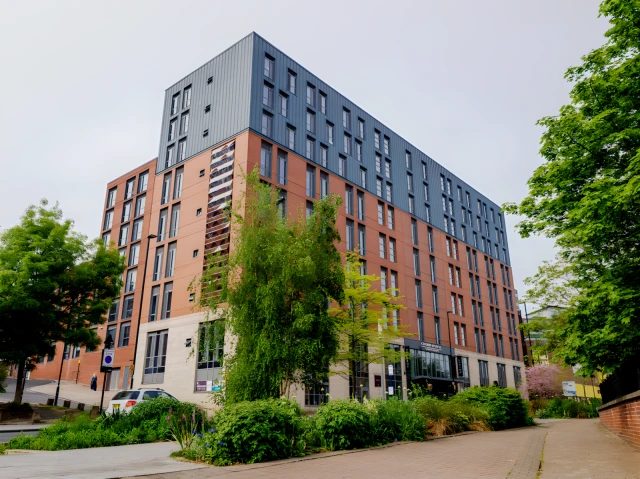
All prices shown are indicative — confirm with the operator. These are typical ranges for a student housing unit (room in shared apartment or studio near Columbia) in the 2026–2027 academic year.
-
Economy band (budget-conscious)
~$1,000–$1,400 per month (indicative — confirm with the operator)
Usually a room in a shared apartment with 2–4 other people, located 20–40 minutes away by subway (e.g., Harlem, Washington Heights). Older buildings, maybe no elevator or in-unit laundry. -
Mid-range band
~$1,400–$1,900 per month (indicative — confirm with the operator)
Shared apartment in Morningside Heights or nearby (within 15–20 minutes’ walk). Better condition, possibly newer appliances. Could be a larger bedroom or with one roommate only. -
Premium band
~$1,900–$2,800 per month (indicative — confirm with the operator)
Studio or one-bedroom within walking distance (0–10 minutes). Dedicated space, modern amenities, often in purpose-built student housing or newer condos. Some may include fitness center or rooftop. -
Luxury
$2,800+ (indicative — confirm with the operator)
High-end studio/one-bedroom near Central Park or in a doorman building. Very low vacancy; mostly for PhD students or those with family.
Walk vs Transit Trade-off
The decision to live within walking distance or rely on the subway involves trade-offs in time, cost, comfort, and lifestyle.
Walking (0–15 minutes from campus)
- Pros: immediate access to classes, library, campus activities, and the community feel Lina praised. No subway fare ($2.90 per ride in 2025, expected to rise in 2026). Less time wasted commuting.
- Cons: higher rent (premium band). Fewer quiet residential options—nightlife noise can be an issue. Limited choice of grocery stores and restaurants compared to farther areas.
- Best for: students who have back-to-back classes, party or study late, or want to maximize campus involvement.
Transit (subway ride of 15–40 minutes)
- Pros: significantly lower rent (economy or mid-range). Access to larger apartments, quieter neighborhoods (e.g., Harlem, Hamilton Heights). Explore more of New York.
- Cons: daily commute of 30–80 minutes round trip. Subway delays and crowds. Extra monthly cost of $100–$130 for unlimited MetroCard. Less spontaneity for campus events.
- Best for: students who are comfortable with commuting, want to save money, or need more space.
A common compromise is to live within a 10-minute walk of the 1 train, along Broadway, so you can walk 5 minutes to campus but also jump on the subway to other parts of the city.
Shortlist Logic for Choosing Housing
When evaluating options near Columbia, follow this shortlist logic:
-
Set your maximum monthly rent (indicative — confirm with the operator). Include utilities (typically $100–$150 extra in New York). Use the budget bands above as a rough guide.
-
Define your acceptable commute time. Walk only? Up to 20 minutes by subway? This will filter neighborhoods.
-
Decide on roommates vs solo. Shared apartments reduce cost but require compatibility. Purpose-built student residences often offer roommate matching and all-inclusive rent.
-
Prioritize essential amenities. Laundry in building? Grocery store within 3 blocks? Subway station? Fitness center? These vary greatly in New York.
-
Check reviews of the building or property management company. Look for mentions of maintenance responsiveness, noise, and safety. Number of reviews matters—a property with 100+ reviews is more reliable than one with five.
-
Consider the neighborhood vibe. Morningside Heights is academic and busy; Harlem is historic and diverse; UWS is family-oriented with parks. Visit during both day and evening to gauge noise and safety.
-
Avoid signing a lease with a brand name that appears in search results for hidden fees. Always ask for a breakdown of total move-in costs (deposit, broker fee, first month, last month, admin fee).
-
Use the Columbia University housing portal for official listings. (Do not mention specific website domain; just refer to “official campus listings”). Off-campus: use word-of-mouth or student groups.
FAQ
Q: When should I start looking for housing near Columbia for the 2026–2027 academic year?
A: Start your search in February–March 2026 for September 2026 move-in. New York leases often require 60–90 days’ notice. However, many student housing operators begin releasing inventory in January. Early birds get lower prices and more choices. Wait until May and the best units are gone.
Q: Is it cheaper to live across the river (e.g., Brooklyn or New Jersey) and commute to Columbia?
A: Yes, generally. A room in Brooklyn near a quick subway line (A, C, or B/D) can be $200–$500 cheaper per month (indicative — confirm with the operator) than a comparable room in Morningside Heights. However, the commute may be 40–50 minutes each way. Also factor in the monthly MetroCard cost (around $132 in 2026, subject to change) and time lost. For students on a tight budget, crossing the river works. For those who value time and energy, staying in Manhattan is worth the premium.
Q: What safety concerns should I consider when choosing housing near Columbia?
A: Morningside Heights is generally safe, with a lower crime rate than many other Manhattan neighborhoods. Still, avoid dimly lit side streets after midnight, especially near parks. Most student housing buildings have keycard or 24-hour doormen. If you take the subway late, stay in well-lit stations and wait in the part of the platform visible to the station agent. The area around 125th Street (Harlem) can be rougher at night but is improving. Check local crime maps and talk to current students.
Data current as of 2026. Prices are indicative — confirm with the operator before making any commitment.
See also: listing details · browse more