Housing Near Boston College: What the Campus and Neighborhood Reveal About Living Options
Choosing housing for a year in Chestnut Hill means understanding what the campus itself feels like and how that atmosphere translates into day-to-day living. Boston College occupies a distinct physical space in the Boston metro area – a Gothic revival campus that visitors consistently describe as beautiful and structured. The academic environment demands focus, and students report a strong sense of accountability and mentorship. For a student looking at accommodation for 2026 or 2027, the first step is to match these campus traits with the right off-campus setting.
What Campus Reviews Tell You About the Student Experience
Recent reviews on the college’s location and campus give a clear picture of the atmosphere. Robert Cullum gave a 5-star review and wrote: “Did you want to go to hogwarts? Did you forget that it’s not real and you’re probably not a Jedi? Well if you got the smarts and your parents got the money, this place is for you.” The comment is a lighthearted acknowledgement of the campus’s top-tier look and the financial reality that comes with attending a private university. It also signals that the surroundings are designed to impress – consistent stone buildings, manicured lawns, a sense of tradition.
Little Gene, another 5-star reviewer, said: “It’s certainly one of the premium college of this region run by Catholic church. It’s very beautiful and lovable place. The library is a lovely place and one of the best in the country. Most of the students are aspiring achievers, get influenced to become one.” The mention of “limited number of parking” is a practical detail: students who drive may pay a significant premium for parking on campus, and off-campus housing options should factor in whether a car is needed at all.
Mitchman gave a pure campus review: “This review is just the physical campus and has nothing to do with the school’s curriculum or getting accepted into the University. That said, this is the most beautiful campus I have ever seen in my life. It was a complete surprise and got me completely off guard. All of the buildings have the same” – the review cuts off, but the sentiment is clear: the physical environment is a major selling point. Students who value aesthetics and a cohesive architectural style may be willing to pay more for housing that offers a similar visual appeal, or at least a pleasant commute.
A longer review from C. offers a more academic perspective: “Boston College tends to run on a clear sense of structure and expectation. The academic environment is deliberately shaped, with an emphasis on mentorship, writing, discussion, and accountability that keeps students visibly engaged. Faculty interaction is not abstract; it is built into the experience.” This reinforces that students at BC are expected to be present and active. Housing that is too far from campus or requires a long, unreliable commute could cut into study time and faculty interaction opportunities. Proximity matters.
City and Neighborhood Context
Boston College sits in Chestnut Hill, a neighbourhood that straddles Boston proper and the suburb of Newton. The campus address is 140 Commonwealth Ave, a location that is at once close to the city centre and set apart by green space and quiet residential streets. The area is considered one of the more expensive in the region, reflecting strong demand from both students and families commuting into Boston.
To the east, the Brighton neighbourhood and Cleveland Circle offer the densest concentration of student housing, with apartments, houses converted into flats, and a few larger complexes. To the south and west, Newton Centre and Newton Highlands provide quieter, pricier single-family homes and luxury apartments. To the north, Watertown and Waltham are farther but sometimes more affordable.
Public transit is available via the MBTA’s Green Line B branch (Boston College station on the B line, located at the edge of campus) and the D branch (Chestnut Hill station on the D line, about 2 km from the main quad). Many students use the 57 bus route to Kenmore Square and the 501 express bus. The MBTA has been investing in reliability, but delays and service changes still occur. The trade-off between walking distance and transit access is central to any housing decision.
Budget Bands for 2026/2027
Rental prices in the area near Boston College vary widely by distance, building age, and whether utilities are included. Based on typical listings in the Boston area for 2025–2026, the following budget bands are indicative for a full academic year (September to May) and should be confirmed with the operator (landlord or management company):
- Low band (under $1,100 per person per month): Usually a room in a shared older house in Brighton, Allston, or Watertown, about 25–45 minutes by bus and train from campus. Units often lack central air conditioning and may have shared laundry. Parking if included is street-only.
- Mid band ($1,100 – $1,600 per person per month): A private room in a well-maintained apartment or a studio near the B line (Cleveland Circle, Washington Street, or near the Chestnut Hill station on the D line). Commute is 15–30 minutes door to campus. Many units include heat and hot water. Modest amenities like in-building laundry and off-street parking may be available.
- Upper band (above $1,600 per person per month): Newer or renovated studio or one-bedroom within walking distance (within 0.8 km) to campus, or a luxury apartment in Newton Centre with gym, concierge, and parking. Walk time is under 10 minutes. Some buildings offer individual leases and roommate matching.
Keep in mind that rents in Boston rise 4–7% year over year. For the 2026–2027 lease cycle, these bands may shift upward by 5–8%.
Walk to Campus vs. Transit Trade-off
Boston College’s main academic buildings are clustered along Commonwealth Avenue and Beacon Street near the Chestnut Hill Reservoir. The campus itself is not enormous, but walking from the western edge (the Mods, the sports complex) to the eastern edge (Higgins Hall, Conte Forum) takes about 15 minutes. Therefore, any off-campus housing within about 1.5 km on either side of the central quad is a comfortable walk – roughly 10–20 minutes.
Advantages of walking: No transit fare, no schedule worry, ability to go back to an apartment between classes. The immediate walkable zone includes Upper Chestnut Hill (south of Commonwealth Avenue, known as “College Heights” area) and parts of Cleveland Circle to the north. These areas are expensive but offer the highest quality of life for students who value time.
Advantages of transit: You can live in areas with lower rent (Brighton Avenue, Allston, Watertown) while still reaching campus in 25–35 minutes on the Green Line B or the 57 bus. The B line runs along Commonwealth Avenue, directly past the BC station. However, the B line is slow and crowded during rush hours; the D line (which stops at Chestnut Hill station) is faster but requires a shuttle or a 15-minute walk from the station to central campus.
Trade-off example: A student living near Brighton Avenue and Harvard Street (Brighton) might pay $1,200 for a share, commute 30 minutes bus/train, and accept that the walk to a grocery store is 10 minutes. A student living 200 metres from campus in a College Heights three-bedroom might pay $2,000 per person (indicative – confirm with the operator) but walk to class in 5 minutes and be near the reservoir for running.
Shortlist Logic: How to Choose a Residence Area
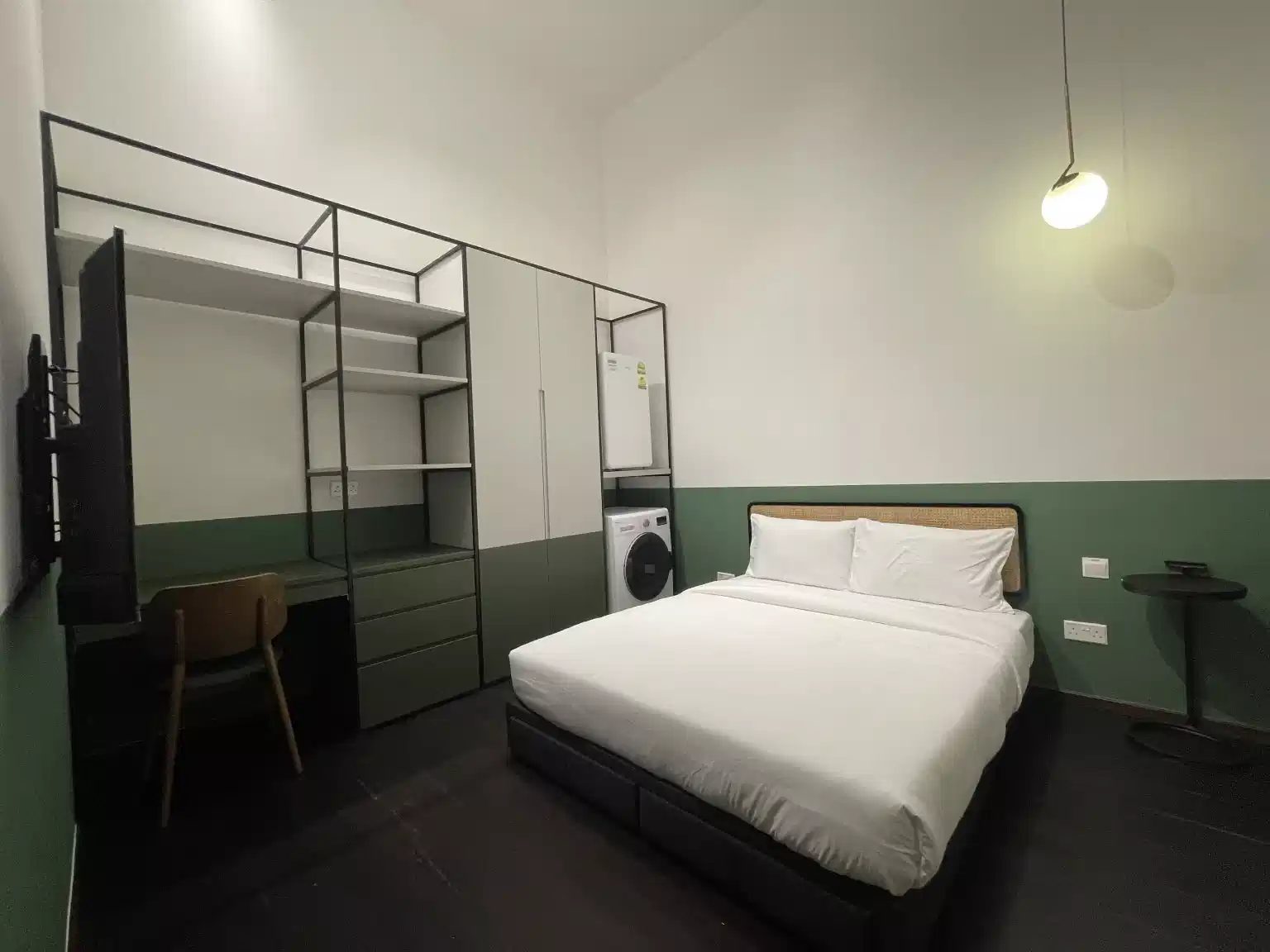
Because no single set of residences is provided by the data, a shortlist logic can be built from the combination of budget, lifestyle, and campus feedback. Use the following criteria to narrow down areas:
-
Prioritise walkability if you have heavy course loads or late nights. The campus review by C. emphasises “faculty interaction is built into the experience” – this often means evening office hours, study groups, and library access until midnight. Being able to walk home at 11 pm after the library closes is safer and more reliable than waiting for a bus. Look at the area bounded by Beacon Street, Chestnut Hill Avenue, and South Street. This includes the College Heights apartments, the Tudor-style houses on Commonwealth Avenue, and the dorms are on campus but off-campus rentals are available.
-
Choose transit proximity if budget is the main constraint. The cheapest rentals in the area are along the 57 bus line (Washington Street through Brighton) or near the B line’s Allston stops. You can share a large multi-unit house for $800–1,000 per person per month (indicative – confirm with the operator). The trade-off is that you will need a monthly MBTA pass ($90 for students with a semester pass) and you may have to walk 5–10 minutes to the bus stop. Check the bus schedule for late-night frequency: the 57 bus runs until about 1 am weekdays.
-
Look for a balance in Cleveland Circle or Newton Centre if you can stretch the budget to $1,200–1,500. These neighbourhoods have restaurants, grocery stores (Trader Joe’s, Whole Foods in Newton Centre), and direct access to both B and D lines. The walk to campus from Cleveland Circle is about 20 minutes along Beacon Street, which is pleasant in good weather. The area has a mix of small apartment buildings and single-family rentals.
-
Consider shared houses with graduate students or upperclassmen for lower utility costs. Many rentals in Brighton and Newton Corner include utilities in the rent, which can save $100–$200 per month compared to apartments where tenants pay separate electric and gas bills. Always confirm with the operator what is included.
-
Factor in parking limitations. The campus review by Little Gene noted “limited number of parking” – this also applies to many off-campus areas. Street parking in Cleveland Circle is restricted; some landlords offer off-street parking for an additional $150–$250 per month. If you bring a car, you may need to budget this cost and also consider that the BC campus is quite compact – a car is not necessary for daily life except for grocery runs and weekend trips.
A practical shortlist for 2026–2027 might look like this (all prices are indicative – confirm with the operator):
- Budget option: Shared apartment in a Brighton house near Washington Street (3 bedrooms, $1,050 per person per month, utilities included, 30 min commute via 57 bus). Suitable for students who are okay with a longer transit ride and want to minimise rent.
- Mid-range option: Two-bedroom apartment in a Cleveland Circle brownstone (near Beacon Street, $1,400 per person per month, heat/hot water included, 15 min walk or 5 min D line to Chestnut Hill station). Good for those who want neighbourhood life without a car.
- Walkable premium: Studio or one-bedroom in College Heights (under 1 km from campus, $1,750 per person per month, parking available for extra $200). For students who value time and are willing to pay a premium for zero commute.
Frequently Asked Questions
What is the typical rent for a student near Boston College in 2026?
Rents vary by type and location. In 2026, a room in a shared house in Brighton or Allston will likely cost $1,000–$1,300 per month (indicative – confirm with the operator). A studio within walking distance of campus will range from $1,700 to $2,200 per month. The most expensive options are luxury apartments in Newton Centre (over $2,400 for a one-bedroom). These figures assume a 12-month lease starting in September; some landlords offer a shorter academic-year lease, often at a 5–10% premium.
Is it advisable to use public transit or to walk from off-campus housing?
The answer depends on your schedule and tolerance for uncertainty. Walking is recommended for students who frequently stay on campus until evening or who have labs and dining commitments. Transit (Green Line B or D, or the 57 bus) is acceptable for students with a regular 9–5 class schedule and who live in Brighton or Allston. Keep in mind that the MBTA has experienced service reductions; always check real-time tracking apps. If you have an early morning class at 8 am, walking is more reliable than a bus that may be packed or delayed.
Are there safe neighbourhoods within walking distance of Boston College?
Yes, the area immediately around campus is considered very safe. The Chestnut Hill neighbourhood has a low crime rate, and the campus has its own police force that patrols off-campus streets within a defined zone. Cleveland Circle and Newton Centre also have good safety records. Brighton near Cleveland Circle is generally safe but has occasional incidents after bars close on weekends. Use common sense: avoid poorly lit side streets alone at night, but overall, the area is one of the safest in the Boston metro region.
data-date: 2026-07-01
See also: listing details · browse more